
That familiar whistle of your pressure cooker transforms tough chickpeas into creamy perfection in 20 minutes and turns weeknight dinners into effortless victories. But neglecting proper care turns this kitchen hero into a potential hazard—leaving you with stubborn stains, steam leaks, or worse, compromised safety. Whether you’re using a vintage stainless steel model passed down through generations or a modern triply steel cooker, mastering how to maintain pressure cooker routines ensures it serves you safely for decades. This guide cuts through generic advice to deliver actionable steps backed by decades of Indian kitchen wisdom, revealing why overnight dal storage ruins your cooker and how to revive burnt interiors without damaging surfaces.
Stop Overnight Food Storage Before Damage Occurs
Why Leaving Dal Overnight Ruins Your Cooker
Never let cooked food sit in your pressure cooker after meals. Salted dishes like dal or curries left overnight trigger rapid pitting and discoloration of stainless steel surfaces, especially in humid climates. This isn’t just cosmetic—trapped moisture breeds bacteria in the gasket folds and creates cement-like residue that requires aggressive scrubbing, scratching your cooker’s interior. Always transfer leftovers to storage containers within two hours of cooking to preserve both your appliance and food safety.
Immediate Post-Cook Cleaning Protocol
While your cooker is still warm but safe to handle (not hot!), disassemble all components. Wash the pot, lid, and gasket separately using warm soapy water and a soft sponge—never steel wool or abrasive pads that permanently scar the surface. For stubborn rice or lentil stains, rub half a lemon over the interior, wait 5 minutes, then rinse. Alternatively, fill with water and 1 cup white vinegar, let it simmer for 10 minutes on low heat to loosen debris before washing. Dry every piece thoroughly with a kitchen cloth to prevent water spots before reassembly.
Fix Steam Leaks by Mastering Gasket Care

Remove and Dry Gaskets After Every Single Use
That rubber sealing ring needs airflow to prevent mildew and warping. After washing, pop the gasket out of the lid groove and inspect for food particles trapped in its folds. Wash it again if needed with mild soap, then lay it flat to dry completely—never reinstall a damp gasket. Store your cooker with the lid inverted or place a folded paper towel between the pot and lid to allow air circulation. This simple habit prevents the sour odors that ruin your next batch of biryani.
Spot When to Replace Gaskets Immediately
Check your gasket monthly for these failure signs: cracks along its inner edge, loss of elasticity (it won’t spring back when pinched), or visible steam escaping during cooking. Replace it every 6-12 months even if it looks fine—frequent users need replacements sooner. Installing a new gasket? Press it firmly into the clean, dry groove all the way around, then test with water before cooking: lock the lid, heat until pressure builds, and verify no steam escapes from the sides. It may take 2-3 uses to form a perfect seal.
Unblock Vents in 60 Seconds to Prevent Pressure Buildup
Clear Steam Pathways Before Every Use
Blocked vents cause dangerous pressure spikes. Before cooking, use a toothpick to dislodge grime from the main vent tube—never a wire that could enlarge the hole. Gently scrape valve notches with a butter knife to remove hard water deposits or food particles. If your model has an anti-block shield (a small metal guard over the vent), lift it to check for trapped debris. This 60-second check ensures steam releases smoothly when needed.
Test Safety Valves During Monthly Maintenance
Your resettable safety valve (RSV) is the critical backup if vents clog. Monthly, verify it moves freely: with the lid open, push the steel pin upward from inside the lid, then pinch the valve top from outside to remove it. Clean the socket with a damp cloth before reinserting. If the valve sticks or feels damaged, replace it immediately using only manufacturer-approved parts—never attempt repairs on this safety component.
Avoid Burnt Bottoms With Perfect Liquid Management

Calculate Minimum Liquid for Foolproof Cooking
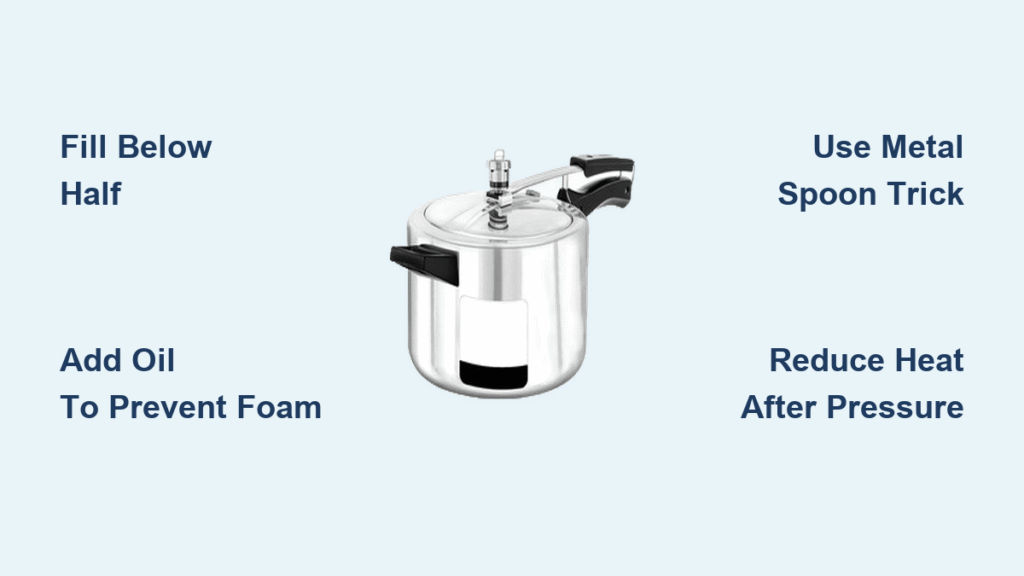
Always add at least 1 cup of liquid (water, broth, or sauce) before heating—this generates the steam required for pressure cooking. Too little liquid causes scorching and triggers safety cut-offs. For expanding foods like rice or beans, never fill beyond half capacity; liquids should stay below the two-thirds mark. Overfilling blocks vents, while underfilling risks burnt residue that requires intensive cleaning.
Remove Hard Water Spots Without Scratching
White mineral deposits from hard water aren’t permanent damage. After washing, rinse the interior with warm lemon juice or a 1:3 vinegar-water solution. For stubborn spots, boil water with lemon slices inside the cooker for 5 minutes, then wipe clean. Regular treatment prevents buildup that can interfere with pressure sealing.
Adapt Heat Control for Your Stove Type
Gas Stove Pressure Management Technique
Gas burners offer instant heat adjustment. Bring your cooker to pressure on high heat, listening for the characteristic hiss from the release valve. The moment pressure builds, reduce the flame to the lowest setting that maintains gentle hissing—usually just enough to keep steam escaping steadily. This prevents overheating and extends gasket life.
Electric Range Workaround for Precise Pressure
Electric coils respond slowly, causing dangerous pressure spikes. Use the two-element method: preheat one burner on high and another on simmer. Start cooking on high to reach pressure (watch for hissing), then immediately move the cooker to the simmering element. Turn off the high-heat burner after transfer. This mimics gas stove control and prevents boil-overs.
Prevent Rust With Smart Storage Solutions
Store Lids Upside Down to Stop Moisture Traps
Never nest the lid tightly on the pot for storage—this traps humidity inside, causing mildew in gaskets and rust spots on metal. Instead, place the lid upside down on the counter or use a paper towel spacer between pot and lid. For non-stick interiors, lightly coat the surface with cooking oil after cleaning to create a protective barrier against moisture.
Avoid Dishwasher Damage to Critical Components
Never run gaskets, valves, or lids through the dishwasher. Harsh detergents degrade rubber gaskets 3x faster, while high heat warps plastic components. Hand-wash all parts with mild soap and air-dry completely. Triply steel models may be dishwasher-safe for the pot body only, but hand-washing preserves all components longer.
Replace Critical Parts Before Failure
Install Resettable Safety Valves Correctly
When replacing your RSV:
1. Open the lid fully
2. Push the steel pin upward from inside the lid
3. Pinch the valve top and pull gently to remove
4. Insert the new valve until it clicks securely
5. Push the steel pin down to reset
Critical: Use only manufacturer-specified valves—generic parts compromise safety. Discard old valves immediately to avoid accidental reuse.
Avoid These Costly Maintenance Mistakes
Never heat an empty cooker—this causes irreversible warping and discoloration. Skip bleach entirely as it etches stainless steel permanently. Avoid metal utensils in non-stick models; even light scratches ruin the coating. And never ignore minor steam leaks—they signal gasket failure that escalates to dangerous pressure loss.
Follow This Maintenance Schedule for 20+ Year Lifespan
Weekly Tasks That Prevent Major Repairs
- Clean vents and valves with a toothpick
- Inspect gasket for cracks or stiffness
- Verify lid locks securely when twisted
- Remove hard water deposits with lemon rinse
Monthly Safety Protocol
- Replace gaskets showing wear signs
- Test all safety valves and pressure indicators
- Deep clean exterior with baking soda paste
- Check storage conditions for moisture
Annual Longevity Boosters
- Replace gaskets regardless of appearance
- Schedule professional inspection for cookers over 5 years old
- Inventory spare parts (valves, gaskets)
- Update your maintenance log with performance notes
Your pressure cooker isn’t just saving gas bills—it’s preserving generations of Indian culinary tradition in your kitchen. By implementing these specific how to maintain pressure cooker habits, you transform routine care into lifelong safety. Remember: that faint whistle signaling perfect pressure only happens when every component works in harmony. Start tonight by removing the gasket after dinner, and you’ll hear the difference tomorrow. Consistent care today means decades of effortless meals tomorrow—without a single safety scare.