Your Ninja pressure cooker works hard every day, transforming ingredients into delicious meals in record time. But that convenience comes with a messy reality—stubborn food residue, lingering odors, and hidden grime that compromise both performance and food safety. Learning how to clean Ninja pressure cooker properly isn’t just about appearance; it prevents dangerous mold growth, extends your appliance’s lifespan, and ensures every meal tastes fresh rather than recycled. Before you consider replacing your Foodi after just a few years, discover these professional cleaning techniques that restore functionality and protect your kitchen investment.
This comprehensive guide reveals exactly how to clean Ninja pressure cooker components safely without damaging delicate parts. You’ll eliminate stubborn residue that dishwasher cycles can’t touch, banish persistent odors from last night’s curry, and establish a simple maintenance routine that keeps your appliance performing like new for years to come. Let’s transform your grimy pressure cooker into a sparkling kitchen workhorse.
Skip the Dishwasher Trap
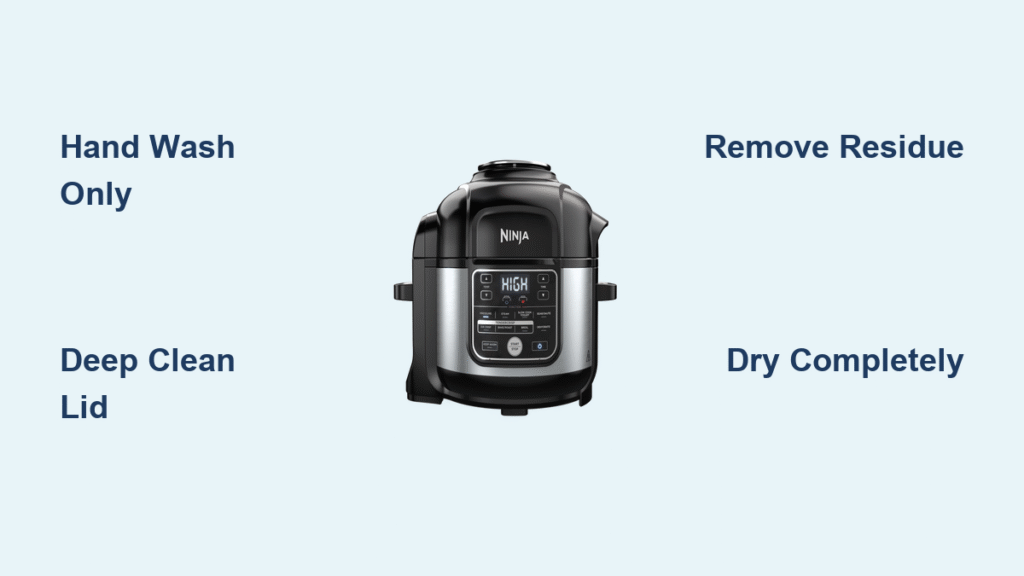
Your Ninja Foodi will never survive a dishwasher cycle—this critical mistake ruins thousands of appliances annually. Unlike standard cookware, Foodi components warp under intense heat and harsh detergents, compromising seals and electrical connections. Every piece requires gentle hand washing to maintain structural integrity and food safety standards.
Never subject your pressure cooker to these damaging cleaners:
– Oven cleaners (creates toxic residues)
– Bleach solutions (corrodes metal components)
– Steel wool scrubbers (scratches non-stick surfaces)
– Abrasive cleaning powders (damages heating elements)
Instead, stock your cleaning kit with these Foodi-safe essentials:
– Mild dish soap (phosphate-free)
– Warm water (never boiling)
– Soft sponges or microfiber cloths
– Baking soda paste for stubborn spots
Quick Daily Clean Method
Prevent residue buildup with this 10-minute post-cooking routine that maintains your Ninja pressure cooker’s performance:
- Fill the pot with 1 cup hot water plus 1 cup lemon juice
- Pressure cook for exactly 10 minutes at high pressure
- Wipe surfaces with paper towels while warm (not hot)
- Air dry with lid open for 30 minutes
This simple cycle eliminates odors from fish, garlic, or strong spices while loosening fresh residue before it hardens. For best results, perform this immediate cleaning after cooking strongly-scented foods like crab legs or curries—waiting just an hour makes the job exponentially harder.
Deep Clean Every Component

Power Down Safely
Always unplug completely before cleaning—never rely on the power button alone. Your Ninja pressure cooker retains heat for 30+ minutes after cooking, creating scalding risks. Complete electrical disconnection prevents accidental activation during cleaning, especially critical when handling the pressure release valve.
Remove Everything First
Detach these parts systematically:
– Cooking pot and crisping basket
– Reversible rack and drip pan
– Detachable diffuser plate
– Sealing ring and anti-block shield
Wash methodically using this sequence:
1. Soak removable parts in warm, soapy water for 10 minutes
2. Use soft sponge in circular motions (never abrasive pads)
3. Rinse thoroughly until water runs clear
4. Dry with lint-free towel or air dry completely
Tackle Stubborn Residue
When food refuses to budge after regular cleaning:
Create baking soda paste:
– Mix 2 tablespoons baking soda with 1 teaspoon water
– Apply to stubborn spots using soft toothbrush
– Let sit 5 minutes before gentle scrubbing
– Rinse completely to remove all residue
For burnt-on disasters:
– Fill pot with 2 inches water
– Add ½ cup white vinegar
– Simmer 15 minutes on sauté mode, then cool
– Lift residue with wooden spatula (never metal)
Clean the Pressure Lid Properly
The pressure lid harbors hidden grime in valves that directly impact cooking performance. Clean these critical areas weekly:
- Steam release valve: Remove completely and soak in warm, soapy water
- Float valve: Check for food particles blocking movement (should move freely)
- Anti-block shield: Remove and wash separately with soft brush
- Sealing ring: Wash with mild soap, replace immediately if cracked
Pro tip: Store sealing ring separately to prevent odor absorption. Many owners keep dedicated rings for sweet and savory dishes—label them to avoid flavor transfer.
Handle the Air Fryer Lid Correctly
Foodi models with air fryer lids need special attention—these components must detach for thorough cleaning.
Safe removal process:
1. Locate T15 screws on hinge mechanism
2. Support lid while removing screws completely
3. Wash lid with warm, soapy water (never submerge)
4. Dry 100% before reassembly (moisture causes electrical damage)
5. Tighten screws securely—finger tight plus quarter turn
Warning: Moisture trapped near heating elements causes permanent damage. Ensure complete dryness for 24 hours before reattaching.
Clean Interior Surfaces Thoroughly
The main cooking chamber collects grease splatters that affect flavor transfer and heating efficiency.
Interior cleaning protocol:
– Wipe walls with damp cloth using vertical strokes
– Clean heating element gently with soft, dry cloth (never wet)
– Remove diffuser plate and wash separately
– Check corners for hidden food particles with flashlight
For stainless steel exteriors:
– Use dedicated stainless steel cleaner
– Wipe with microfiber cloth in direction of grain
– Buff dry to prevent water spots
Eliminate Lingering Odors Completely
Persistent smells indicate incomplete cleaning or moisture trapped in seals—dangerous for food safety.
Odor removal protocol:
1. Run lemon-water cycle twice (10 minutes each)
2. Leave lid open 24 hours for complete air circulation
3. Place activated charcoal inside overnight
4. Replace sealing ring if odors persist after cleaning
Prevention tip: After each use, leave the pressure release valve in venting position to prevent moisture buildup.
Reassemble Like a Pro
Critical drying checklist before reassembly:
– All components bone-dry (test with paper towel)
– No moisture in electrical connections
– Sealing ring seated properly in groove (no twists)
– All accessories returned to correct positions
Function test before cooking:
– Run empty pressure test for 2 minutes
– Check all indicator lights function
– Verify steam release operates smoothly
Monthly Maintenance Schedule
Weekly deep clean:
– Remove and wash all accessories
– Clean interior chamber thoroughly
– Check sealing ring for cracks
Monthly overhaul:
– Complete disassembly of all parts
– Deep clean heating elements
– Inspect for wear or damage
– Replace worn components proactively
Daily habits that prevent major cleaning:
– Wipe spills immediately after cooling
– Run lemon-water cycle after strong foods
– Store with lid slightly open
Fix Common Cleaning Problems

When Baking Soda Isn’t Enough
For mineral deposits from hard water:
– Mix equal parts white vinegar and water
– Simmer 20 minutes, then scrub gently
– Rinse thoroughly to prevent vinegar taste
Dealing with Discoloration
Stainless steel stains from overheating:
– Apply specialized stainless steel cleaner
– Use non-abrasive scrubbing pad
– Polish with microfiber cloth
Stuck-On Residue Won’t Budge
- Soak overnight in warm, soapy water
- Use plastic scraper—not metal
- Repeat baking soda treatment if needed
Store Your Clean Foodi Properly
Proper storage prevents future cleaning headaches:
- Completely dry all components before storing (moisture causes mold)
- Vent position keeps seals fresh (never store sealed)
- Accessory storage in dry cabinet prevents dust accumulation
- Cover lightly with breathable cloth—not plastic (traps moisture)
Location matters: Store in well-ventilated area away from heat sources. Avoid stacking other appliances on top—this warps components and damages seals.
Your Ninja pressure cooker represents a significant kitchen investment. Following these precise cleaning protocols ensures every meal tastes fresh while extending your Foodi’s lifespan well beyond typical expectations. A clean appliance cooks better, lasts longer, and protects your family’s health with every delicious meal. Implement just one of these techniques today, and you’ll immediately notice improved performance—tomorrow, your pressure cooker will thank you with years of reliable service.