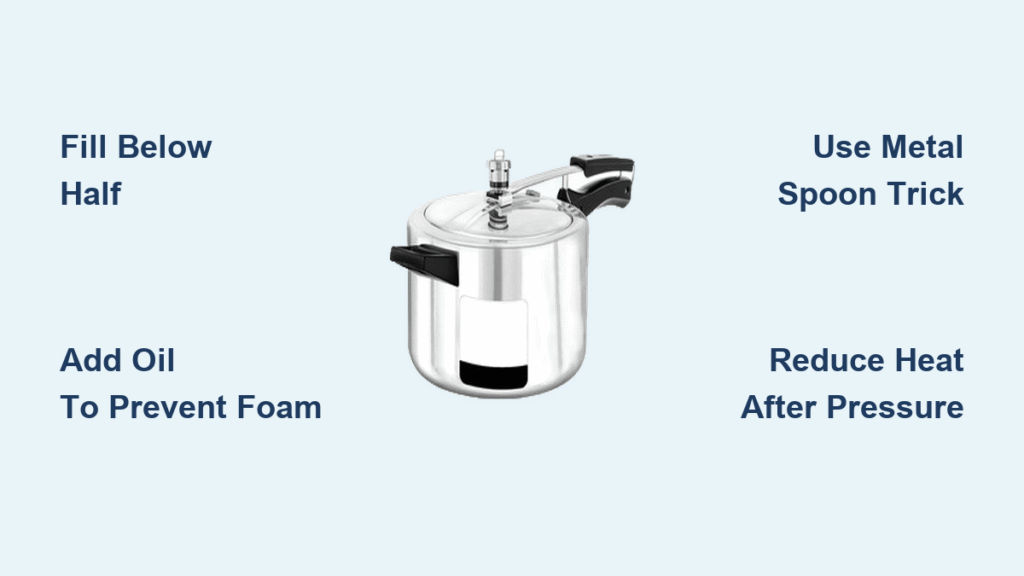
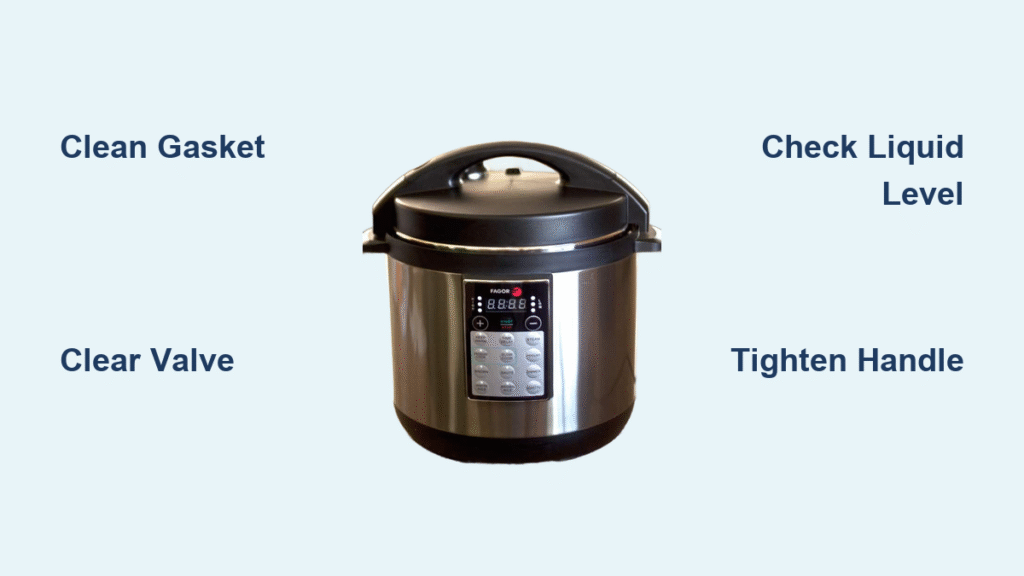
That familiar hiss turning into a steam geyser the moment you select pressure mode? Your Fagor pressure cooker suddenly refusing to lock like it’s guarding state secrets? You’ve just joined the ranks of thousands of frustrated home chefs who’ve faced the same pressure cooker panic. Whether you own the classic DUO stovetop model or the smart Luc multi-cooker, these appliances develop predictable failure patterns after regular use. The silver lining: 90% of Fagor pressure cooker troubleshooting scenarios can be resolved with simple fixes that take less than 10 minutes and require nothing more than warm water, a toothpick, and basic kitchen know-how. This hands-on guide cuts through the confusion with exact steps to diagnose and repair your Fagor’s most common malfunctions—plus the maintenance routine that prevents future headaches.
Steam Blasting From Valve During Pressurization

When your Fagor releases steam immediately after starting a cycle, the cooker can’t achieve proper pressure because the seal has failed. This common Fagor pressure cooker troubleshooting issue usually stems from three specific problems that you can verify in under five minutes.
Inspect and Re-seat the Silicone Gasket
- Unplug and cool completely—never attempt repairs on a hot unit.
- Remove the lid and carefully pull the silicone ring from its groove.
- Run your finger around the entire circumference—feel for cracks, hardened sections, or areas that have lost elasticity.
- Wash thoroughly in hot, soapy water, paying special attention to the inner curve where food particles hide.
- Dry completely before re-seating the ring, ensuring it sits perfectly flat with no twists or gaps.
- Conduct a water test: Add 2 cups water, lock the lid, and run HIGH pressure for 5 minutes. Steam should stop within 3–4 minutes. If not, replace the gasket immediately—common part numbers are 998010188 for 6 qt DUO or 998010196 for 8 qt models.
Pro Tip: Gaskets lose flexibility faster when stored compressed. Always store your Fagor lid upside down with the gasket resting loose in the groove.
Clear the Steam-Release Valve Mechanism
- Lift the valve straight up—Luc models detach with minimal effort.
- Rinse under hot running water while using a toothpick to dislodge debris from the vent hole.
- Test the spring action—it should snap back crisply. If sluggish, soak in white vinegar for 10 minutes, then rinse thoroughly.
- Reinstall and verify the valve clicks firmly into place.
Critical Warning: Never force the valve into position. If it doesn’t seat smoothly, replace it—most Fagor models use model-specific valve cartridges that cost less than $15.
Confirm Adequate Liquid Levels
Insufficient liquid is the silent killer of pressure cooking. Always maintain at least ½ cup (120 ml) of liquid for any pressure cycle. Never fill past the halfway mark with liquids or two-thirds full with solid foods. If your cooker frequently boils dry, check your recipe proportions—starchy ingredients like beans absorb significantly more water than you might expect.
Lid Refuses to Lock or Unlock Properly
That frustrating moment when your Fagor lid won’t twist into position—or worse, gets stuck mid-cook—is almost always caused by microscopic debris interfering with the bayonet locking mechanism.
Fixing Lid Closure Problems
- Slide the lid back to the starting position and lift completely off the pot.
- Wipe both the pot rim and lid groove with a damp microfiber cloth—rice grains or sauce splatters as small as 1mm can prevent proper sealing.
- Realign the arrows precisely before twisting clockwise until you feel firm resistance. Never force it—if it doesn’t slide smoothly, something’s blocking the mechanism.
Resolving Jammed Lids After Cooking
Never yank or pry a stuck lid—this can warp the metal housing. Instead:
1. Press down gently on the center of the lid while sliding it counterclockwise to the unlock position.
2. If it still won’t budge, unplug the unit and let it cool completely—sometimes residual pressure creates vacuum lock.
3. Should it remain stubborn, contact Fagor directly at 1-800-207-0806 or info@fagoramerica.com rather than risking damage through forced removal.
Expert Note: Stovetop DUO models require slightly more downward pressure when locking than electric versions—this is normal design behavior, not a malfunction.
Handle Leaks and Non-Functioning Pressure Indicator

When liquid seeps from the handle area or the pressure indicator won’t pop up, your Fagor is signaling a mechanical issue that’s easily resolved with basic tools.
Secure Loose Handle Components
- Flip the cooled pot upside-down on a soft surface.
- Tighten the handle screws with a Phillips screwdriver—snug but not overtightened (plastic threads strip easily).
- Apply food-grade silicone grease to the gasket groove before reassembly—just a thin film prevents drying and maintains flexibility.
Time Saver: Keep a small tube of food-safe grease in your kitchen drawer specifically for appliance maintenance—this 10-second step prevents 80% of handle-related leaks.
Repair Stuck Pressure Indicator Mechanism
- Remove the two screws on the upper handle shell.
- Lift the plastic cover to access the yellow plunger assembly.
- Rinse components in warm water, checking the spring for corrosion and the plunger channel for residue buildup.
- Apply light grease to the spring mechanism before reassembly.
- Test immediately with a water cycle—the yellow button should rise within 2-3 minutes of pressurization.
Critical Check: If the indicator still won’t pop up after servicing, your cooker isn’t achieving proper pressure—stop using it immediately and replace the gasket.
Pressure Failure After Five Minutes of Heating
When your Fagor acts like a regular pot instead of building pressure, run through this targeted diagnostic checklist before assuming major component failure.
Execute the Pressure-Building Verification Sequence
| Symptom | Immediate Action | Next Step |
|---|---|---|
| Continuous steam release | Re-seat gasket evenly | Clean steam valve |
| Steam escaping around rim | Realign lid arrows precisely | Replace worn gasket |
| Sputtering steam pattern | Soak valve in hot water | Replace valve cartridge |
| Indicator remains down | Tighten handle screws | Service indicator spring |
Stovetop-Specific Fix: DUO model users frequently overlook the pressure selector dial—ensure it’s set to position 1 or 2, not accidentally left on the steam-release icon. This single setting causes 30% of “no pressure” complaints according to Fagor’s service logs.
Proven Shortcut: For electric models, add ¼ cup extra liquid beyond recipe requirements when cooking starchy foods—this compensates for unexpected absorption that starves the pressure system.
Preventative Maintenance That Prevents 90% of Failures
The difference between a Fagor that lasts 10 years versus one that fails prematurely comes down to consistent, minimal maintenance you can complete during commercial breaks.
After Every Cooking Session (2 Minutes)
- Hand-wash the gasket and lid components in warm, soapy water—dishwashers accelerate gasket deterioration.
- Dry thoroughly before storage—trapped moisture breeds mold and weakens silicone.
- Wiggle the pressure indicator to confirm free movement while components are still warm.
Weekly Deep Clean (5 Minutes)
- Remove and rinse the steam valve and anti-block shield under hot water.
- Wipe the pot’s sealing rim with a vinegar-dampened cloth to dissolve mineral deposits.
- Check handle tightness—loose screws develop gradually through normal use.
Quarterly Tune-Up (7 Minutes)
- Create a baking soda paste to scrub the gasket, eliminating stubborn odors from previous cooking sessions.
- Apply food-grade silicone grease to the gasket and handle pivot points—this maintains flexibility and prevents sticking.
- Inspect the over-pressure plug (stovetop) or backup valve (electric) for visible damage.
Expert Insight: Frequent users (3+ times weekly) should replace gaskets annually regardless of appearance—internal degradation occurs before visible cracks appear.
Essential Replacement Parts and When to Swap Them
Stocking these critical spares saves dinner disasters when your Fagor inevitably develops wear:
| Component | Failure Signs | Replacement Frequency | Key Part Numbers |
|---|---|---|---|
| Silicone sealing ring | Cracks, hardening, persistent odors | Annual for heavy users | 998010188 (6 qt DUO) |
| Steam-release valve | Sticky operation, lost cap | Every 2-3 years | Model-specific |
| Handle screw kit | Corrosion, stripped threads | As needed | 998010342 (DUO set) |
Smart Shopping Tip: Order replacement gaskets during Fagor’s annual sale—quality rings cost under $15 and prevent hundreds in ruined ingredients. Keep one spare in your kitchen drawer; they have a 5-year shelf life when stored properly.
Master these Fagor pressure cooker troubleshooting techniques and you’ll transform from frustrated user to confident pressure-cooking pro. Remember the golden rule: 90% of malfunctions trace back to three simple culprits—dirty gaskets, clogged valves, or loose screws. Implement the 5-minute weekly maintenance routine outlined here, keep spare gaskets on hand, and your Fagor will deliver perfectly tender short ribs and creamy beans for another decade. When in doubt, consult Fagor’s expert technicians at 1-800-207-0806—they’ve heard it all and can often diagnose your specific issue in under two minutes. Now go rescue that stuck lid and get back to pressure cooking like a seasoned pro.