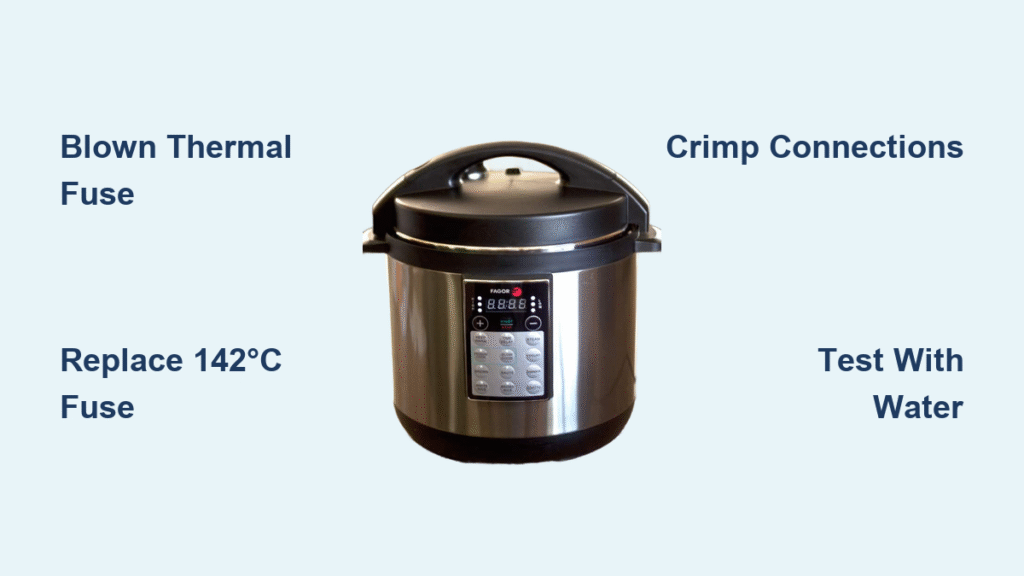
Your Fagor pressure cooker stands silent on the counter this morning. No familiar beep when you press the power button. No display lighting up. Just complete electrical silence despite a working outlet. This sudden total failure strikes panic in home cooks who rely on their Fagor for weeknight dinners, yet 90% of these cases share one fixable culprit: a blown thermal fuse. You’re not alone—thousands of Fagor electric models experience this identical symptom pattern after years of reliable service.
The good news? Restoring power requires just $5 in parts and 30 minutes of your time. No soldering skills or expensive replacements needed. By the end of this guide, you’ll know exactly how to diagnose the dead appliance syndrome and implement the proven repair that gets your cooker back in action. We’ll focus exclusively on the thermal fuse failure that causes total electrical shutdown—plus two less common issues that mimic this problem.
Spot Thermal Fuse Failure in Under 60 Seconds
When your Fagor shows zero signs of life but the outlet works fine, the thermal fuse has almost certainly failed. This critical safety component sacrifices itself to prevent fires during overheating events, but years of thermal stress eventually cause it to blow even during normal operation. Don’t waste time troubleshooting circuit boards or power cords first—this tiny component is responsible for 9 out of 10 “dead” Fagor cookers.
Immediate Visual Clues to Confirm Fuse Failure
- Complete electrical silence with no display illumination or button response
- Outlet verified functional by testing another appliance
- Damaged fuse body visible inside the white ceramic sleeve (cracks or burn marks)
- Brown (live) wire disconnected near the heating element when opened
The fuse sits inline between your power cord and heating plate, packaged in a heat-resistant sleeve near the cooker’s base. When it blows, it creates an open circuit that cuts all power—a deliberate safety feature that leaves your appliance seemingly dead.
Critical Fuse Specifications for Correct Replacement
- Voltage rating: 240V (mandatory for Fagor’s 1800-2000W heating element)
- Current capacity: 10A (handles peak power demands without nuisance tripping)
- Temperature threshold: 142°C (288°F) blow point (safely above normal 250°F operating temps)
- Physical dimensions: 4mm diameter × 14mm length with axial leads
Pro Tip: Search for part numbers SF142E or 1042L online—these direct replacements work perfectly. Generic “142°C thermal fuse 10A” listings also suffice if voltage rating matches. Never substitute higher-temperature fuses—this creates serious fire hazards.
Essential Tools for a Reliable Repair

Skip unnecessary specialty tools. These four items handle 95% of thermal fuse replacements on Fagor models:
Must-Have Toolkit:
– Phillips #2 screwdriver (for base plate screws)
– Wire crimping tool (22-8 AWG capacity)
– Insulated butt connectors (22-18 AWG size)
– 3mm heat-shrink tubing (for secure insulation)
Time-Saving Extras:
– Magnetic parts tray (prevents lost screws)
– Compact flashlight (illuminates dark interior)
– Needle-nose pliers (maneuvers wires in tight spaces)
Avoid This Mistake: Using solder instead of crimp connectors. Solder melts at 142°C—the exact temperature where the fuse should blow—causing dangerous reconnection during overheating events. Crimped butt connectors maintain integrity through thermal cycles.
Replace Your Fagor’s Thermal Fuse in 7 Steps
1. Power Down Safely
Unplug the cooker and wait 10 full minutes before proceeding. This allows internal capacitors to discharge, eliminating electrical shock risks when accessing components. Never skip this step—even unplugged units can deliver dangerous jolts.
2. Access the Base Plate
Flip the cooker upside down on a soft surface. Remove all 6-8 Phillips screws securing the stainless steel base plate. Lift the plate straight upward—do not force it—as wires remain connected to the lid assembly. Set screws aside in your magnetic tray.
3. Locate the Critical Fuse
Trace the brown (live) wire from the power inlet toward the heating element. You’ll find the thermal fuse inside a white ceramic sleeve, connecting this wire to the main heating plate. The damaged fuse often shows visible cracks or charring.
4. Remove the Blown Component
Cut both leads of the old fuse approximately 1cm from the fuse body using wire cutters. Discard the damaged fuse immediately—keeping it risks accidental reinstallation. The white sleeve should slide out easily for reuse.
5. Install Your New Fuse
Strip 8mm of insulation from both cut wire ends. Insert each wire into separate butt connectors, then crimp firmly with your tool until the connection is gas-tight. Slide heat-shrink tubing over each joint before shrinking it with a lighter flame (3-5 seconds per connection).
6. Secure the Repair
Reinsert the new fuse into the original white ceramic sleeve. Route all wires away from sharp metal edges, then lower the base plate into position. Tighten screws finger-tight plus ¼ turn—over-tightening cracks the housing.
7. Validate the Fix Immediately
Plug into a GFCI outlet and press Power. The display should illuminate within one second. Run a quick test: 1 cup water on “Steam” setting for 3 minutes. Proper operation shows steady countdown and steam release—no error codes.
Fix Display-On But No-Heat Failures

If your Fagor powers up but never builds pressure—showing “0:00” continuously with no heating—your issue likely involves the handle pressure sensor. This affects stovetop models with electronic controls where internal components fail to register pressure buildup.
Handle Pressure Sensor Repair
Remove the handle using a Phillips #1 screwdriver. You’ll find a yellow indicator spring that often slips out of position. Re-seat this spring precisely, apply food-safe silicone grease to moving parts, then reassemble. Crucially, tighten the four handle screws evenly in a star pattern—uneven pressure misaligns the sensor switch.
Resolve Intermittent Power Cutoffs

When your display flickers or cuts out randomly during cooking, inspect the power cord entry point. Cracked strain relief causes internal wire fatigue that mimics thermal fuse failure.
Cord Replacement Protocol
Wiggle the cord near its entry while powered—if the display flickers, replace the cord immediately. Use a 3×0.75 mm² cord with IEC C7 connector (generic replacements work perfectly). Route the new cord through the original strain relief channel before securing connections. This $8 fix prevents dangerous arcing.
Post-Repair Validation Tests
After any repair, run these three critical checks before cooking meals:
Quick Electrical Test:
– 1 cup water on “Steam” for 3 minutes
– Display counts down steadily
– Steam releases normally at completion
Full Meal Validation:
– 3 lb chicken with vegetables (18 min high pressure)
– Natural release for 10 minutes
– Internal temperature reaches 165°F throughout
Breakfast Stress Test:
– Steel-cut oats recipe (4 min high pressure)
– Zero boil-overs confirms proper sealing
When Replacement Beats Repair
Fagor America’s 2019 bankruptcy means no official parts support. Abandon repair attempts if you find:
– Burnt control boards with visible component damage
– Melted transformers showing discoloration
– Multiple failed components (indicates cascading failure)
In these cases, source a used donor unit for parts or transition to an Instant Pot equivalent. Professional board-level repairs often exceed the value of older Fagor models.
Prevent Future Power Failures
Extend your cooker’s lifespan with these simple habits:
After Every Use:
– Wipe heating element clean with damp cloth
– Inspect power cord for nicks or kinks
– Clear steam vent with provided brush
Monthly Maintenance:
– Check thermal fuse sleeve for cracks
– Tighten handle screws evenly
– Clean pressure sensor area with vinegar
Repair Readiness:
– Keep spare thermal fuse in your toolkit
– Document successful repairs for future reference
– Address minor issues before they escalate
Bottom Line: A blown 142°C thermal fuse causes nearly all “dead” Fagor pressure cookers. With $5 in parts and 30 minutes of work using crimped connections—not solder—you’ll restore full functionality. Always replace the protective ceramic sleeve and validate with water tests before cooking meals. By implementing these monthly maintenance habits, your repaired Fagor will deliver another decade of reliable service. When power failure strikes, skip expensive replacements—the solution is almost certainly that tiny white fuse hidden near the heating element.