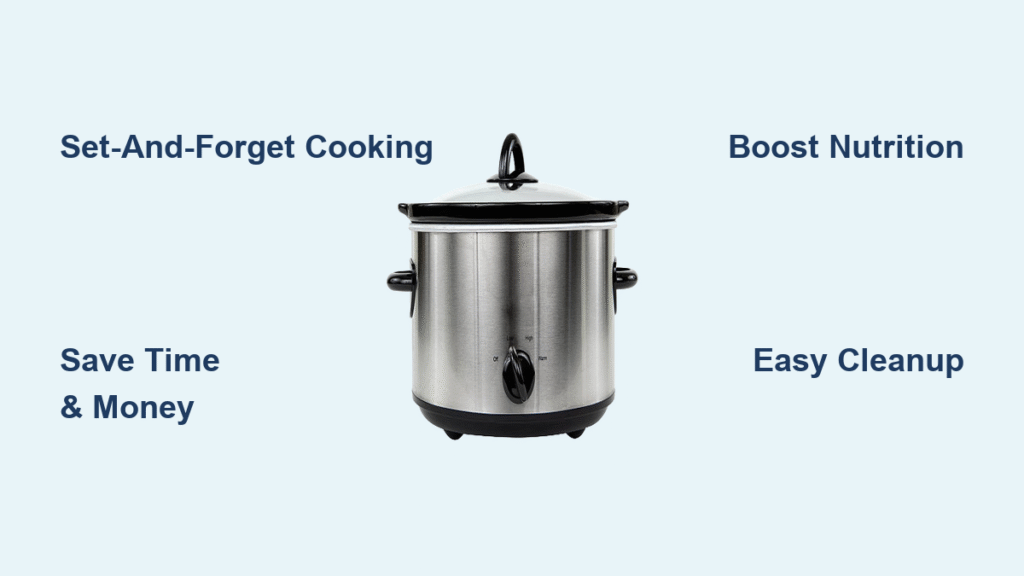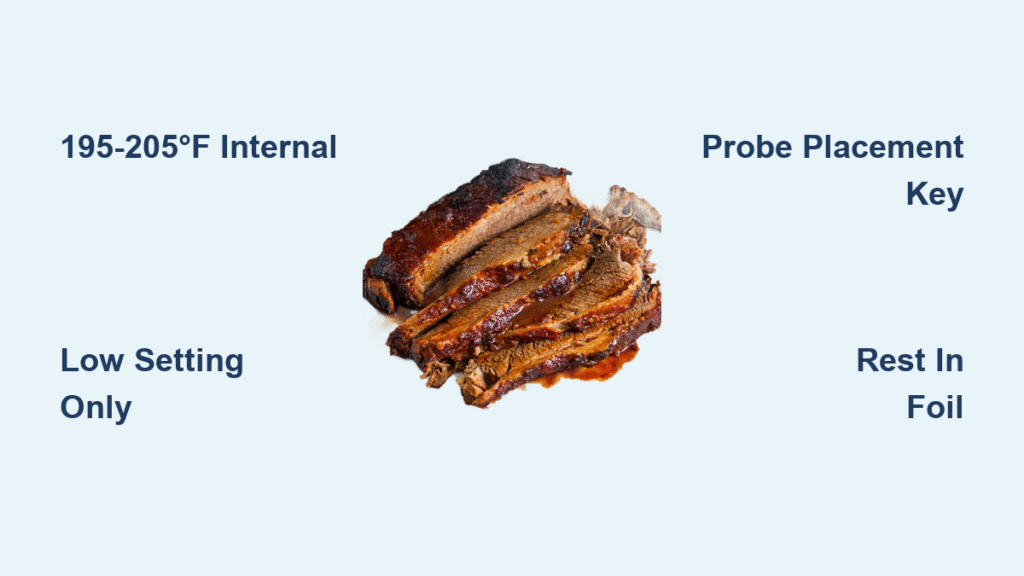
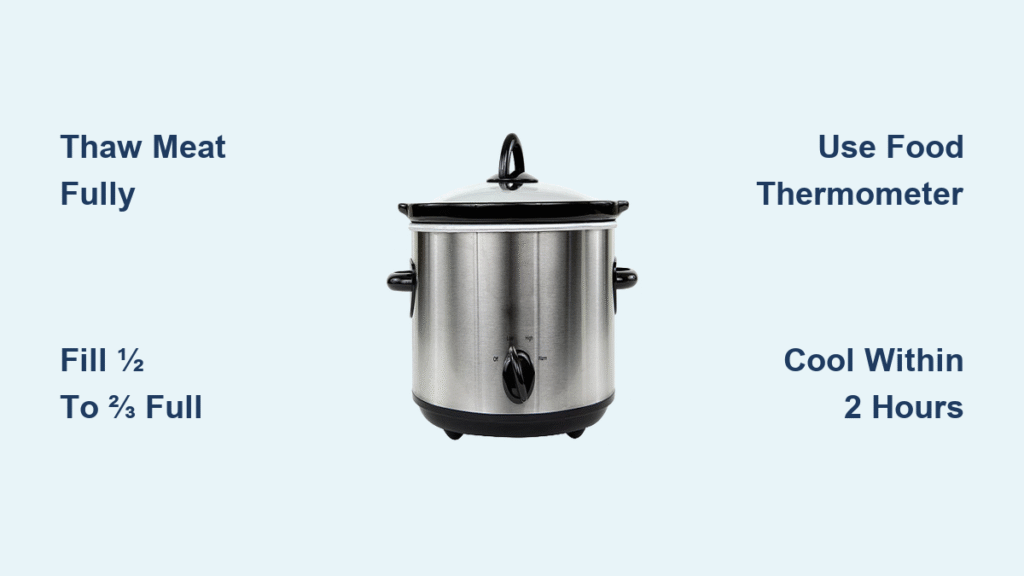
You set your slow cooker before work, expecting a comforting meal when you return. But without proper slow cooker safety tips, that dinner could become a breeding ground for harmful bacteria or even create a fire hazard. Every year, thousands of home cooks unknowingly take risks that compromise both food safety and household security—simply because they don’t know these critical mistakes. This guide transforms complex food safety data into simple, actionable steps that ensure every meal is not just delicious, but completely safe for your family.
Why Your Slow Cooker’s Temperature Range Matters Most
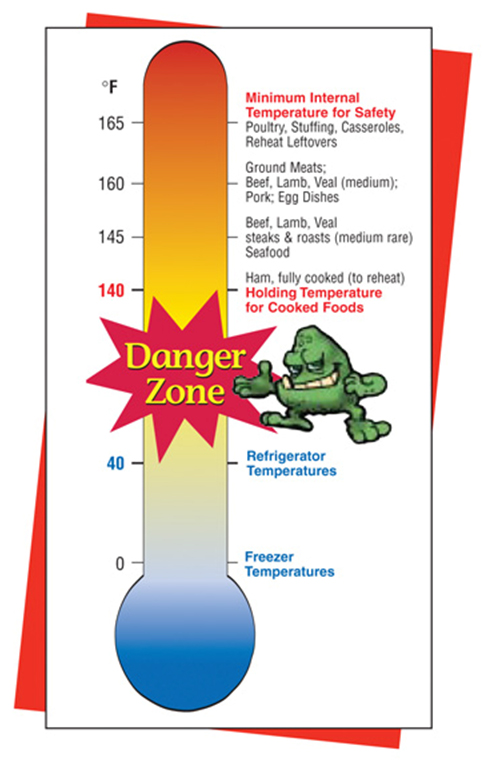
Your slow cooker operates between 170-280°F, creating the perfect environment for breaking down tough cuts while maintaining food safety—when used correctly. The danger zone sits squarely between 40-140°F, where bacteria multiply rapidly. Your goal is moving food through this range quickly and keeping it above 140°F throughout cooking. This means understanding your appliance’s specific heat patterns and planning accordingly.
Safe Internal Temperatures by Food Type
Different foods require specific internal temperatures for safe consumption:
– Roasts and beef cuts: 145-160°F minimum
– All poultry: 165°F without exception
– Soups, stews, and sauces: 165°F throughout
Why Pork Shoulder Needs Special Attention
Pork shoulder presents a unique challenge because its dense texture requires sustained heat penetration. The minimum 145°F internal temperature must be followed by a 3-minute rest period. This rest allows heat to distribute evenly, ensuring any remaining bacteria are eliminated.
Pre-Use Inspection Checklist: What 90% of Home Cooks Miss
Before each use, dedicate two minutes to a systematic safety check that prevents problems before they start. This simple routine eliminates most potential safety issues before they become dangerous.
Visual Damage Assessment
Start with the stoneware insert—look for hairline cracks, chips, or crazing. Even microscopic cracks can harbor bacteria and lead to sudden breakage during cooking. Next, examine the power cord for cuts, exposed wires, or heat damage. Any visible damage means immediate replacement. Check the heating base for signs of overheating: discoloration, warping, or melted areas.
Stability and Placement Protocol
Position your slow cooker on a completely flat, heat-resistant surface. Granite, quartz, or ceramic countertops work perfectly. Maintain a minimum 6-inch clearance from walls, curtains, or other appliances to prevent heat damage and ensure proper ventilation.
Pro tip: Place a heat-resistant silicone mat underneath to protect delicate surfaces and provide additional stability—this simple step prevents dangerous tipping accidents.
Frozen Meat Danger: Why You Must Thaw Before Slow Cooking

Frozen meat is your slow cooker’s enemy. Never place frozen proteins directly into the stoneware. The extended time spent in the danger zone (40-140°F) allows bacteria to multiply to dangerous levels before the food reaches a safe temperature.
Safe Thawing Methods That Work
Use one of these safe thawing methods before slow cooking:
– Refrigerator thawing: 24 hours per 5 pounds of meat
– Cold water method: Submerge in cold water, changing water every 30 minutes
– Microwave thawing: Use defrost setting, cook immediately after
Cutting Size Matters for Safety
Large, uneven chunks create cold spots where bacteria survive. Cut all proteins into uniform, 1-2 inch pieces. This ensures rapid, even heat penetration and eliminates dangerous temperature variations within your dish.
Filling Your Slow Cooker: The ½ to ⅔ Rule That Prevents Burns
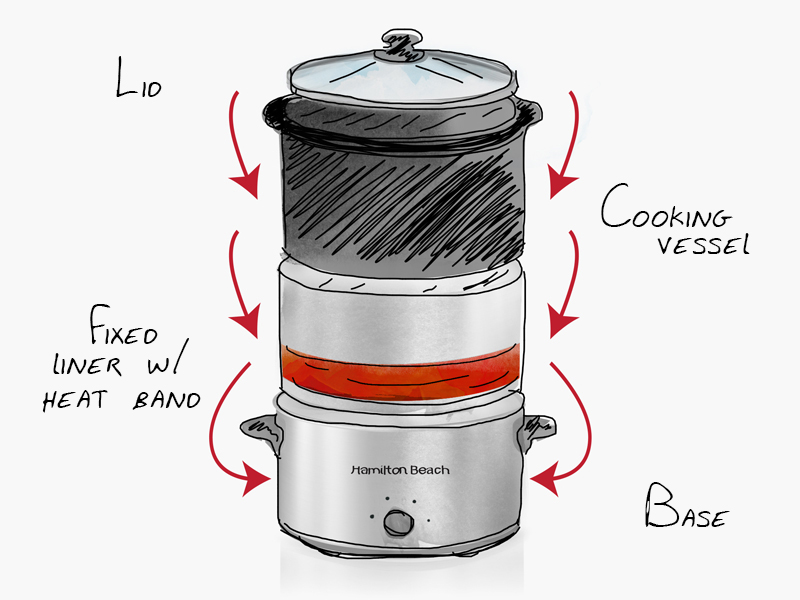
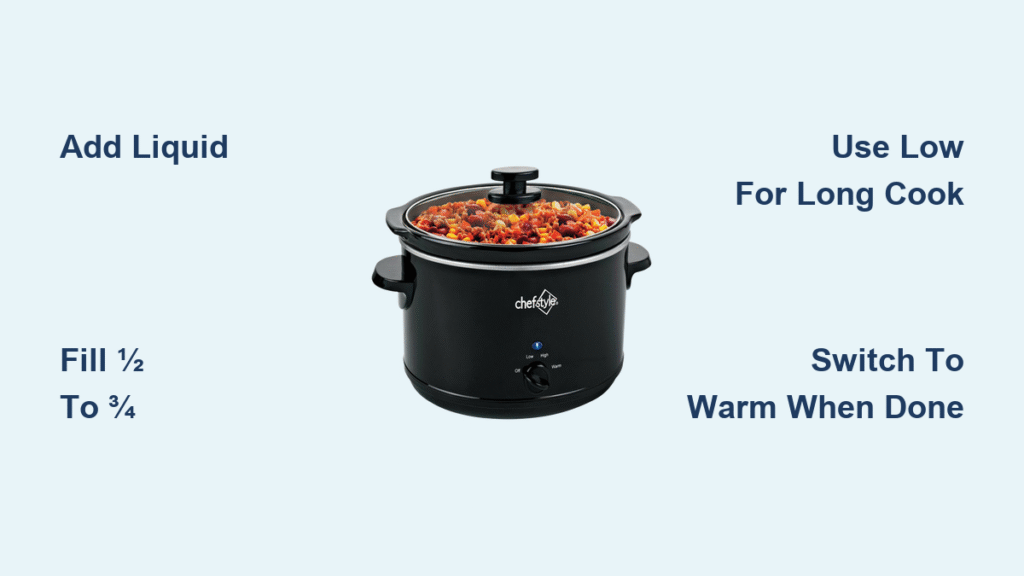
Your slow cooker’s fill level directly impacts both safety and cooking quality. Overfilling leads to uneven heating and potential overflow, while underfilling causes scorching and temperature fluctuations.
Strategic Layering for Even Cooking
Place vegetables on the bottom—they require more time and direct heat contact. Position meat on top where it receives gentler, more even heat. This arrangement prevents meat from sitting in potentially cooler liquid zones and ensures everything reaches safe temperatures simultaneously.
Critical warning: Never fill beyond ⅔ full. The National Fire Protection Association reports that overflow is the #1 cause of slow cooker-related fires in homes.
Lid Discipline: How Every Peek Adds 30 Minutes of Bacteria Growth
Every lid lift drops the temperature 10-15°F and adds 15-30 minutes to cooking time. This extended time in the danger zone allows bacteria to multiply exponentially.
Strategic Checking Protocol
Plan your lid checks strategically:
– First check: After 2 hours on LOW or 1 hour on HIGH
– Subsequent checks: Every 2-3 hours maximum
– Final check: 30 minutes before expected completion
Programmable Features for Safety
Modern slow cookers with automatic temperature reduction provide an extra safety net. These models switch to “warm” mode after the set cooking time, maintaining food above 140°F without overcooking. However, don’t rely solely on these features—always verify final temperatures with a food thermometer.
Food Thermometer Verification: Don’t Guess When It’s Safe

A reliable food thermometer is your most important safety tool. Digital instant-read thermometers provide accurate readings in 2-3 seconds, while probe thermometers monitor continuously without lid removal.
Correct Thermometer Placement
Insert the thermometer into the thickest part of the meat, away from bone, fat, or the stoneware walls. For mixed dishes like stews, check multiple locations—the center typically represents the coolest spot. Stir thoroughly before taking final readings.
Pro tip: Keep your thermometer in a visible spot near your slow cooker. The USDA reports that only 35% of home cooks use thermometers consistently—don’t be part of that unsafe majority.
Leftover Transfer Protocol: The 2-Hour Rule That Saves Lives
The danger doesn’t end when cooking stops. Improper cooling and storage create perfect conditions for rapid bacterial growth.
Immediate Transfer Requirements
Remove food from the stoneware within 2 hours of cooking completion—1 hour if room temperature exceeds 90°F. Transfer to shallow containers no more than 2 inches deep to enable rapid, even cooling.
Critical mistake: Never cool food in the slow cooker insert. The thick stoneware retains heat for hours, creating an extended danger zone where bacteria multiply exponentially.
Safe Reheating Methods
Never reheat in the slow cooker. Instead, use these safe methods:
– Stovetop: Heat to 165°F, stirring frequently
– Microwave: Cover and rotate for even heating
– Oven: 325°F until internal temperature reaches 165°F
Overnight Cooking Safety: When It’s Safe (and When It’s Not)
Modern slow cookers are engineered for 8-hour unattended cycles, making overnight cooking possible when following specific protocols.
Safety Prerequisites for Overnight Cooking
Only use models with automatic temperature reduction and “keep warm” features. Place the cooker on a stable, heat-resistant surface away from flammable materials. Ensure the cord runs safely along the counter, not dangling over edges.
Vintage Appliance Warning Signs
Discard slow cookers with fabric cords, non-removable inserts, or missing safety certifications. These older models lack modern safety features and pose significant fire risks during extended operation.
Child and Burn Prevention: 3 Essential Kitchen Safety Measures
Slow cookers operate at temperatures hot enough to cause serious burns. Implement these protective strategies in homes with children.
Safe Handling Techniques
Always use side handles when moving a hot slow cooker, never the base. Wear oven mitts when lifting the lid or stoneware insert. Tilt the lid away from your face to direct steam safely away from skin.
Supervision Strategies
Position the slow cooker toward the back of counters, out of reach of small children. Use cord shorteners to prevent dangling hazards. Never leave children unsupervised in the kitchen during operation.
Quick-Reference Safety Checklist
Before Each Use:
– [ ] Inspect for cracks or damage
– [ ] Place on stable, heat-resistant surface
– [ ] Maintain 6-inch clearance from walls
– [ ] Thaw all proteins completely
– [ ] Wash hands and sanitize surfaces
During Cooking:
– [ ] Fill ½-⅔ full with adequate liquid
– [ ] Keep lid closed except essential checks
– [ ] Verify final temperature with thermometer
– [ ] Use programmable features when available
After Cooking:
– [ ] Transfer to shallow containers within 2 hours
– [ ] Refrigerate at 40°F or below
– [ ] Reheat to 165°F before serving
– [ ] Clean thoroughly after cooling
Master these slow cooker safety tips, and you’ll enjoy perfectly cooked, completely safe meals every time. Remember: safety isn’t just about following rules—it’s about creating consistent habits that protect your family’s health while maximizing the convenience of this essential kitchen appliance. Implement these practices today, and never worry about foodborne illness from your slow cooker again.