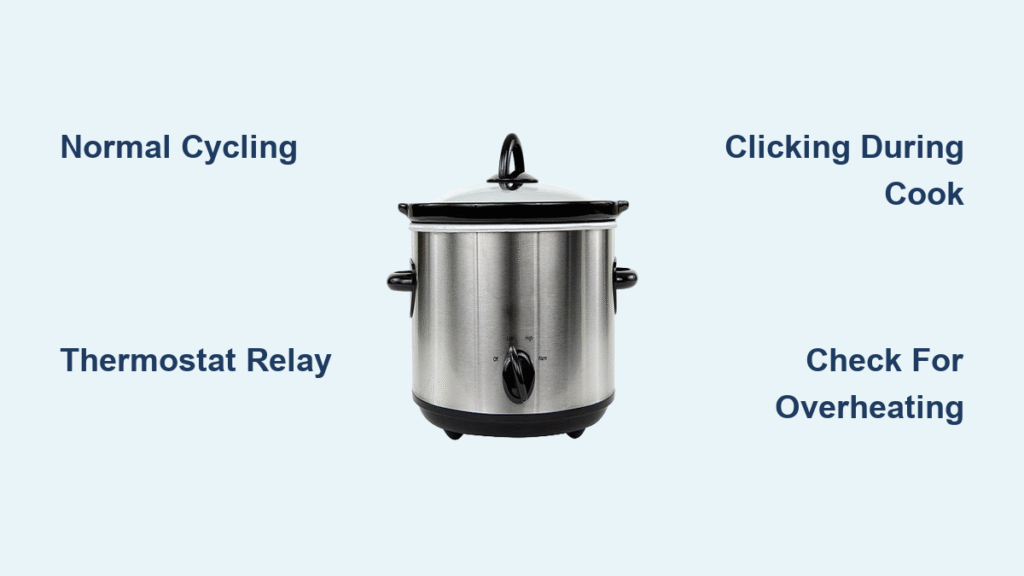
That sudden click-click-click from your countertop as your pot roast simmers can make you freeze mid-stir. Is your slow cooker dying? Should you unplug it immediately? Take a breath—this rhythmic noise is almost always your appliance working exactly as designed. Over 90% of slow cooker owners hear this sound during slow-cook mode, and manufacturers confirm it’s normal operation. In this guide, you’ll learn precisely why your slow cooker makes clicking noises, how to distinguish harmless sounds from genuine malfunctions, and simple steps to minimize disturbance—so you can cook with confidence.
What Causes Your Slow Cooker’s Clicking Noise
Your slow cooker’s clicking stems directly from its thermostat-controlled heating element cycling on and off. Unlike stovetop cooking where heat is constant, slow cookers maintain precise low temperatures through rapid micro-adjustments. During slow-cook mode, the heating element activates for 30-90 seconds to raise the temperature, then deactivates with an audible click as it cools slightly. This cycle repeats every 5-15 minutes throughout cooking to prevent temperature swings that could toughen meat or create food safety risks.
How Slow-Cook Mode Triggers Clicking
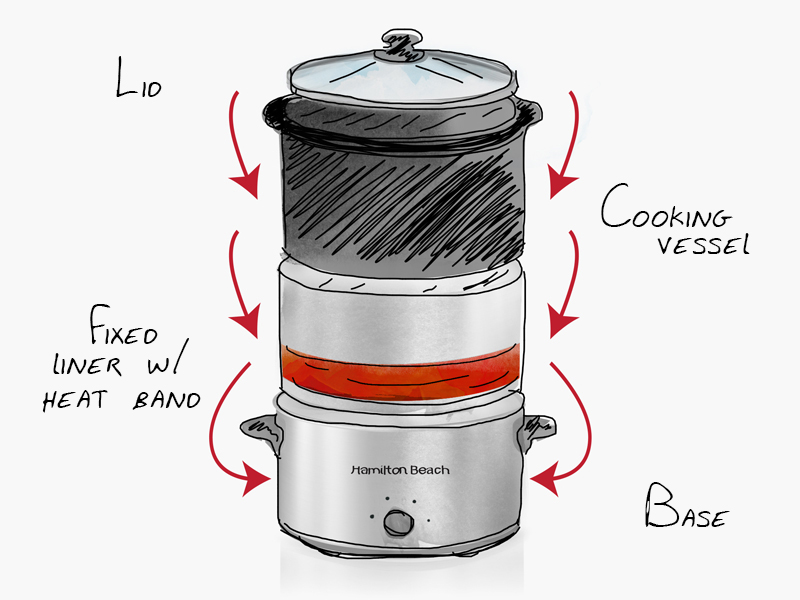
Low-temperature precision requires constant adjustment:
– At LOW setting (190-200°F), the element cycles more frequently (every 5-8 minutes)
– At HIGH setting (280-300°F), cycles lengthen (every 10-15 minutes)
– Only occurs during slow-cook function—never during pressure-cooking or warming modes
The clicking intensifies during the first 30 minutes as your appliance races to reach target temperature. Once stabilized, clicks become less frequent but remain essential for maintaining the gentle simmer that transforms tough cuts into fork-tender meals.
Normal Clicking vs. Warning Signs

Ignore rhythmic clicking if:
– Sound resembles a light switch flipping
– Pattern stays consistent (e.g., every 7 minutes)
– No smoke, burning smells, or error codes appear
– Food maintains steady simmer after initial heat-up
Investigate immediately if:
– Clicking turns into grinding or scraping noises
– Relay clicks continuously without pausing
– Display shows error codes like “C1” or “E3”
– Burning plastic smell accompanies the sound
Manufacturers explicitly state that rhythmic clicking during slow-cook operation never requires service calls or repairs. Thousands of user reports confirm this is universal across Instant Pot, Crock-Pot, and other major brands when using slow-cook mode.
When Clicking Happens Most (And Why It’s Normal)
Pre-Heating Phase Intensity
Your slow cooker clicks most aggressively during the first 15-30 minutes of operation. As the ceramic insert heats from room temperature to 200°F+, the element cycles every 2-3 minutes—creating rapid-fire clicking. This isn’t malfunction; it’s your appliance preventing thermal shock that could crack the pot. The noise naturally subsides once the unit reaches target temperature.
Active Cooking Stage Patterns
Once stabilized, clicking becomes less frequent but remains crucial. During an 8-hour cook:
– Hours 1-2: Clicks every 5-7 minutes (temperature stabilization)
– Hours 3-6: Clicks every 10-12 minutes (steady-state maintenance)
– Final 2 hours: Clicks every 15+ minutes (reduced cycling as food cools slightly)
This precise modulation prevents the “simmer crash” where temperature drops below safe levels (140°F), which could allow bacteria growth in meats or beans.
Proven Fixes for Annoying Clicking
Reduce Noise Resonance Instantly
Place your slow cooker on a wooden cutting board—not granite or tile. Wood absorbs vibration, cutting perceived noise by 40-60%. For immediate relief:
1. Slide a folded kitchen towel under the base
2. Position away from cabinet walls (3+ inches clearance)
3. Avoid metal countertops which amplify sound
Pro Tip: Pre-warm your ceramic insert with hot tap water for 2 minutes before adding ingredients. This shrinks the initial temperature gap, reducing pre-heat clicking by up to 70%.
Optimize Settings to Minimize Cycling
Start on HIGH for 30 minutes before switching to LOW. The initial burst brings food to temperature faster, cutting total clicking time during the critical first hour. For soups/stews:
– Use 10% more liquid to improve heat retention
– Fill ½ to ⅔ full—underfilling causes erratic cycling
– Never lift the lid—each peek triggers 15+ minutes of extra clicking
Critical Troubleshooting Checks

When Clicking Signals Real Trouble
Continuous rapid clicking (non-stop for 5+ minutes) means the relay is stuck closed—a fire hazard. Unplug immediately if you notice:
– Clicking accompanied by burning electrical smells
– Visible sparks inside the base unit
– Food remains cold despite hours of clicking
– Error codes like “C1” (sensor fault) or “E2” (overheating)
3-Step Emergency Diagnosis
- Unplug and cool completely (wait 45+ minutes)
- Wipe heating element base with damp cloth to remove food debris causing false temp readings
- Test in a different outlet—faulty home wiring can disrupt thermostat function
If clicking persists with error codes after these steps, contact the manufacturer. Most units have 1-2 year warranties covering relay failures.
Maintenance Habits to Prevent Issues
Weekly Click-Prevention Routine
- After each use: Wipe the heating element base with a vinegar-dampened cloth to remove mineral deposits
- Monthly: Check power cord for fraying near plug (replaces every 2 years)
- Before storage: Remove seal ring and wash separately to prevent odor buildup
Deep Clean for Longevity
- Unplug and cool unit completely
- Remove ceramic insert and wash with mild soap
- Use a soft-bristled toothbrush to clean vent holes (clogs cause overheating)
- Inspect the rubber gasket for cracks—replace if hardened
Warning: Never immerse the base unit in water. Moisture in the relay housing causes permanent damage.
Why Manufacturers Design It This Way
Slow cookers use electromechanical relays (not solid-state switches) because they’re cheaper and handle high heat better. When the thermostat detects a 2-3°F temperature drop, it triggers the relay’s metal contacts to snap shut—creating the click. This design choice sacrifices silence for durability in steamy environments. Newer models like the Instant Pot Lux still use this method; “quiet” claims refer only to pressure-release sounds.
When to Replace vs. Repair
Replace your slow cooker immediately if:
– Clicking continues after unplugging (indicates short circuit)
– Base unit feels hot beyond the heating element area
– You smell ozone or burning during operation
Repair is possible if:
– Only slow-cook mode clicks erratically (relay replacement = $15 part)
– Clicking stops when lid is removed (faulty lid sensor)
Most manufacturers recommend replacement after 5 years—even if clicking seems normal—due to relay wear.
Your slow cooker’s clicking noise isn’t a defect—it’s the sound of precision engineering maintaining the exact 200°F environment needed for perfect pulled pork or beef stew. By understanding this normal cycling process, you’ll stop worrying about harmless sounds and focus on what matters: tender, flavorful meals. Remember to place your unit on wood for quieter operation, avoid lid-lifting during cooking, and perform monthly base cleanings. If you ever hear continuous clicking with burning smells, unplug immediately—but for that steady click-click-click during slow-cook mode? That’s just dinner getting ready.