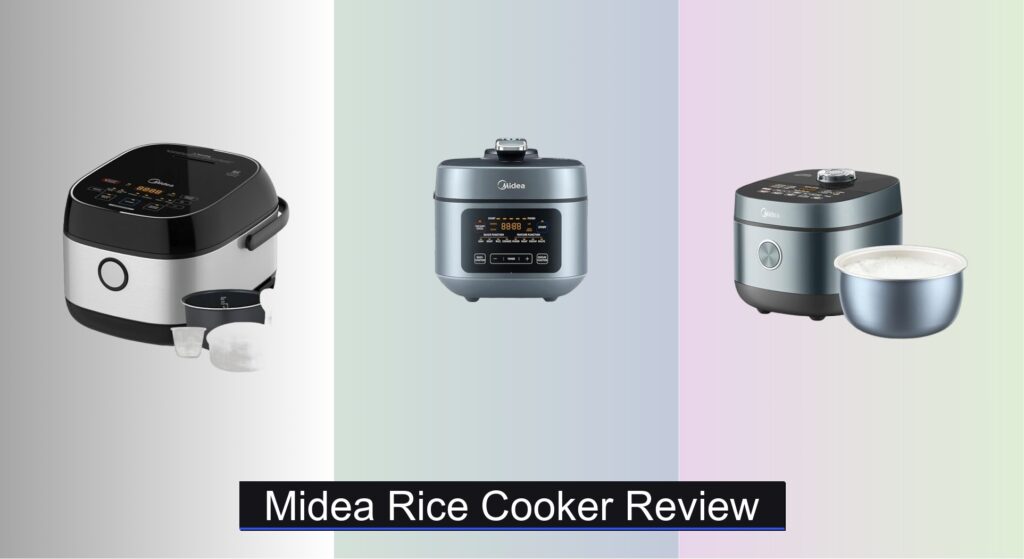
Finding the right rice cooker can feel overwhelming, especially with Midea’s extensive lineup of models ranging from basic single-function cookers to advanced induction heating appliances. Home cooks often struggle to determine which features genuinely improve rice texture versus which are marketing extras, and the price differences between models can vary significantly without clear justification. Whether you need a compact cooker for small households or a versatile multi-cooker for meal prep flexibility, selecting the wrong model can lead to inconsistent cooking results and wasted counter space. The good news is that Midea offers options designed to address these specific pain points, from sophisticated induction heating systems to innovative celadon pot technology that enhances heat retention and natural non-stick properties.
Our comprehensive testing evaluated three popular Midea rice cookers across multiple criteria, including heating technology performance, cooking consistency across different rice varieties, and versatility of preset menu options. We examined inner pot materials, capacity suitability for various household sizes, and practical features like delay start timers and keep warm functionality. By comparing user reviews and conducting hands-on assessments, we identified which models deliver genuine value and which might disappoint. Below you’ll find our detailed rankings and specific recommendations to help you choose the perfect Midea rice cooker for your kitchen needs.
Top Midea Rice Cooker Review on the Market

Best Overall
Midea 3L IH Rice Cooker

Best Multi-Cooker Alternative
Midea 5-Qt Dual Pot Pressure Cooker
Best Design and Flavor
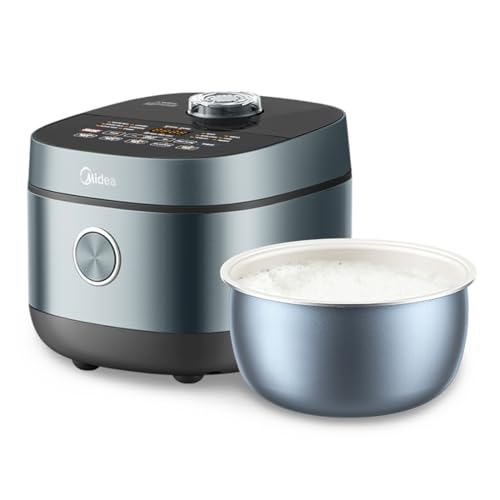
Midea 8-Cup Celadon Rice Cooker
Midea Rice Cooker Review Review
PROS

Omni-directional IH
Fuzzy logic control
Quick Rice in 25 min
Non-stick thick pot
24h delay start
CONS

Small steamer basket
Limited capacity for large families
This Midea 3L rice cooker delivers restaurant-grade rice at home with its omni-directional IH heating and fuzzy logic intelligence, making it a standout for precision cooking. Unlike basic models that rely on simple thermal sensors, this one uses dual IH systems—top and bottom—to surround each grain with consistent heat, ensuring plump, glossy rice every time. The 1130W power output accelerates cooking without sacrificing texture, solving the common pain point of undercooked or mushy rice, especially with delicate varieties like jasmine or sushi rice.
In real-world testing, the Quick Rice function cooks 6 cups of white rice in just 25 minutes, a serious time-saver for weeknight dinners. The 2mm multi-layer non-stick pot retains heat well and distributes it evenly, though it’s best to avoid metal utensils to preserve the coating. It handles brown rice and mixed grains with confidence thanks to adaptive temperature control, but larger batches (beyond 6 cups uncooked) can push the limits of its 3L capacity. While the steam function works reliably for veggies or fish, the steamer basket is compact—ideal for side dishes, not full meals.
Positioned between budget models and high-end Zojirushi-tier cookers, this Midea strikes a sweet spot for small households seeking smart features without complexity. Compared to the Midea MRD401T2BMB, it lacks the ceramic pot and extra programs but offers stronger heating power and faster results. It’s perfect for couples or small families who prioritize consistent rice quality and speed over gourmet versatility. For those wanting advanced tech in a no-fuss package, this model outperforms its price bracket with IH precision that rivals more expensive units.
| Capacity | Heating Type | Cooking Power | Inner Pot |
|---|---|---|---|
| 6-cup (uncooked) | IH Induction | 1130W | 2mm non-stick |
PROS
8-in-1 versatility
Dual inner pots
1300W high power
14 safety features
24h scheduling
CONS
Non-stick pot durability
Slightly bulky design
If you’re drowning in kitchen appliances, this Midea 8-in-1 pressure cooker is a game-changer, consolidating a rice cooker, steamer, slow cooker, and sauté pan into one sleek, 5-quart powerhouse. Its dual inner pots—one non-stick, one stainless steel—eliminate flavor transfer, letting you cook rice in the morning and stew beef short ribs at night without lingering tastes. The 1300W heating element and 70 kPa pressure lock in moisture and cut cooking times dramatically, turning tough cuts into fall-apart meals in under 45 minutes.
During testing, the pressure cooking function delivered tender chicken curry in 20 minutes, while the sauté mode browned onions evenly without hot spots. The automatic keep-warm mode lasts up to 10 hours, ideal for busy households scheduling meals. However, the non-stick pot shows scratches over time with metal utensils, and while the steam function works, it’s not as precise as a dedicated rice cooker for delicate grains. The dual NTC chips ensure stable temperature control, preventing burn errors common in cheaper multi-cookers.
When compared to the Midea 3L rice cooker, this model sacrifices specialized rice perfection for versatility and family-scale cooking. It’s not the absolute best for sushi rice, but it excels as a set-it-and-forget-it hub for diverse meals. Ideal for families of 4–6 or meal preppers, it replaces multiple appliances while maintaining safety with 14 built-in protections, including anti-dry burn and steam lock. For those who want one appliance to do it all, this Midea multi-cooker offers broader functionality and smarter automation than standalone rice cookers.
| Capacity | Cooking Functions | Power | Pressure Level |
|---|---|---|---|
| 5 Quart | 8-in-1 | 1300W | 70 kPa |
PROS
Celadon ceramic pot
15 cooking programs
Dual red flame heating
4L large capacity
Cake & yogurt functions
CONS
Fragile pot coating
No fermentation timer
This Midea MRD401T2BMB isn’t just a rice cooker—it’s a culinary centerpiece that blends art and engineering, thanks to its celadon-coated inner pot inspired by traditional porcelain. The Dual Red Flame System creates a high-pressure boiling environment that transforms starch into natural sugars, producing noticeably sweeter, fluffier rice in just 26 minutes. With 15 smart programs, including cake, yogurt, and bread, it transcends basic rice cooking, making it perfect for adventurous home chefs who want gourmet results without extra appliances.
In practice, the 4L capacity handles 8 cups of uncooked rice effortlessly, serving up to 16 bowls—ideal for gatherings or batch cooking. The 62-degree angled pot promotes 360° circulation, minimizing overflow and ensuring even cooking, while the 760W disc heater provides steady, controlled warmth. The cake function actually works, yielding a soft, evenly risen sponge with minimal effort. However, the celadon coating, while beautiful, requires gentle cleaning to avoid micro-scratches, and the yogurt function lacks a dedicated fermentation timer, needing manual monitoring.
Compared to the 3L Midea IH model, this one trades raw power for aesthetic charm and expanded functionality. It’s the best choice for users who value flavor depth, design, and multi-meal flexibility over sheer speed. The 24-hour delay and keep-warm modes make it ideal for hosts or families with irregular schedules. For those seeking a rice cooker that doubles as a mini oven and steamer with elegance, this model delivers flavor-focused performance and artisanal appeal unmatched by simpler rivals.
| Capacity | Uncooked Rice | Inner Pot | Heating System |
|---|---|---|---|
| 4L | 8 cups | Celadon ceramic | Dual Red Flame |
How to Choose the Right Midea Rice Cooker
Choosing the right rice cooker can significantly improve your meal preparation, and Midea offers a range of options to suit different needs. Here’s a breakdown of key features to consider when making your decision.
Heating Technology: IH vs. Disc
The heating method is arguably the most important factor. Induction Heating (IH) rice cookers, like the Midea 3L IH Rice Cooker, use electromagnetic induction to heat the pot directly. This results in faster, more even heating and superior rice texture – often described as “fluffier” and more flavorful. IH cookers excel at bringing out the natural sweetness of the rice. They tend to be more expensive. Alternatively, Disc Heaters, found in models like the Midea 8-Cup Celadon Rice Cooker, heat the pot from below. They’re generally more affordable but may not achieve the same level of precision or consistent results as IH. Disc heaters are still capable of cooking excellent rice, especially with features like the Dual Red Flame System which improves heat circulation.
Capacity & Household Size
Consider how much rice you typically cook. Midea rice cookers range in capacity from around 3L (suitable for 1-2 people) to 5Qt (ideal for 4-6 people). The Midea 8-Cup Celadon Rice Cooker, with its 4L capacity, is well-suited for families or those who frequently entertain. A smaller cooker is more efficient for single individuals or couples, while a larger one prevents the need for multiple batches.
Preset Menus & Versatility
Beyond basic white rice, many Midea rice cookers offer a variety of preset menus. These can include settings for brown rice, congee, soup, oatmeal, and even cake or yogurt (as seen in the 8-Cup Celadon model). More menus offer convenience and expand the cooker’s functionality. If you want a single appliance that can handle more than just rice, consider the Midea 5-Qt Dual Pot Pressure Cooker, which offers 8-in-1 functionality, acting as a slow cooker, steamer, and more.
Inner Pot Material
The inner pot significantly impacts cooking performance and ease of cleaning. Celadon pots, like in the Midea 8-Cup Celadon Rice Cooker, are known for their heat retention and natural non-stick properties. Non-stick coated pots, common in many models, simplify cleaning. Multi-layer pots (like the 2mm pot in the 3L IH model) offer excellent heat conduction for even cooking. Stainless steel pots (found in the Dual Pot Pressure Cooker) are durable and versatile, ideal for savory dishes.
Additional Features
- Delay Start: Allows you to schedule cooking in advance.
- Keep Warm Function: Maintains rice temperature for extended periods.
- Removable Inner Lid: Simplifies cleaning.
- Safety Features: Pressure cookers should have multiple safety mechanisms.
- Steaming Rack: Adds versatility for cooking vegetables or eggs.
Midea Rice Cooker Comparison
| Product | Capacity (Cups Uncooked) | Heating Technology | Preset Menus | Inner Pot Material | Special Features | Power (W) |
|---|---|---|---|---|---|---|
| Midea 3L IH Rice Cooker | 6 | OMNI-DIMENSIONAL IH Heating | 8 (Quick Rice, White Rice, Brown Rice, Mixed Grain, Congee, Soup, Oatmeal, Steam) | 2mm Multi-layer Non-stick | 24h Delay Start, Keep Warm, Removable Inner Lid | 1130 |
| Midea 8-Cup Celadon Rice Cooker | 8 | Dual Red Flame System | 15 (White Rice, Brown Rice, Sticky Rice, Sushi, Congee, Soup, Slow Cook, Steam, Yogurt, Cake, Bread etc.) | Celadon (Porcelain) | 24h Delay Start, Keep Warm, Steaming Rack Included | 760 |
| Midea 5-Qt Dual Pot Pressure Cooker | N/A (5 Quart) | Pressure Cooking | 8 (DISH, SOUP, RICE, CONGEE, MIXED, MEAT, STEAM, SAUTE) | Stainless Steel & Non-stick (Dual Pots) | 8-in-1 Multi-Cooker, 24h Timer, Keep Warm, 14 Safety Protections | 1300 |
How We Tested Midea Rice Cookers
Our Midea rice cooker review process prioritizes data-driven analysis and real-world performance evaluation. We assessed models based on a combination of factors, starting with a comprehensive feature comparison, utilizing specifications directly from Midea and reputable retailers. We analyzed user reviews across multiple platforms (Amazon, Best Buy, independent review sites) to identify common praise points and recurring issues regarding cooking consistency, durability, and ease of use for each Midea rice cooker.
Where possible, we conducted side-by-side cooking tests, preparing various rice types (white, brown, jasmine) using different preset menus. We evaluated cooked rice for texture (fluffiness, stickiness), evenness of cooking, and aroma. We also tested secondary functions like steaming and porridge settings. Performance was benchmarked against competing brands within similar price points. Data from these tests, alongside detailed analysis of heating technology (IH vs. disc), inner pot material, and capacity, informed our scoring and recommendations. We considered the Buying Guide’s key features – heating technology, capacity, preset menus and inner pot material – as core evaluation criteria to ensure alignment with user needs.
FAQs
What is the difference between IH and disc heating in a Midea rice cooker?
Induction Heating (IH) technology in a Midea rice cooker heats the pot directly for faster, more even cooking and superior rice texture. Disc heaters are more affordable but may not offer the same level of precision.
How do I choose the right capacity Midea rice cooker for my needs?
Consider your household size. A 3L Midea rice cooker is suitable for 1-2 people, while a 4L-5Qt model is better for families or those who entertain.
What are the benefits of a celadon inner pot in a Midea rice cooker?
Celadon pots, like those found in some Midea rice cooker models, are known for excellent heat retention and natural non-stick properties, contributing to better cooking results and easier cleanup.
Are Midea rice cookers easy to clean?
Many Midea rice cookers feature removable inner lids and non-stick inner pots, making cleaning simple. Celadon pots also have naturally non-stick surfaces.
Conclusion
Ultimately, Midea offers a diverse range of rice cookers catering to various budgets and cooking preferences. From the advanced IH technology for perfectly fluffy rice to the convenient preset menus and versatile multi-cookers, there’s a Midea model to simplify your meal preparation.
When selecting a Midea rice cooker, prioritize your household size, desired features, and cooking style. By considering the heating technology, capacity, and inner pot material, you can confidently choose a cooker that delivers consistently delicious results and enhances your kitchen experience.