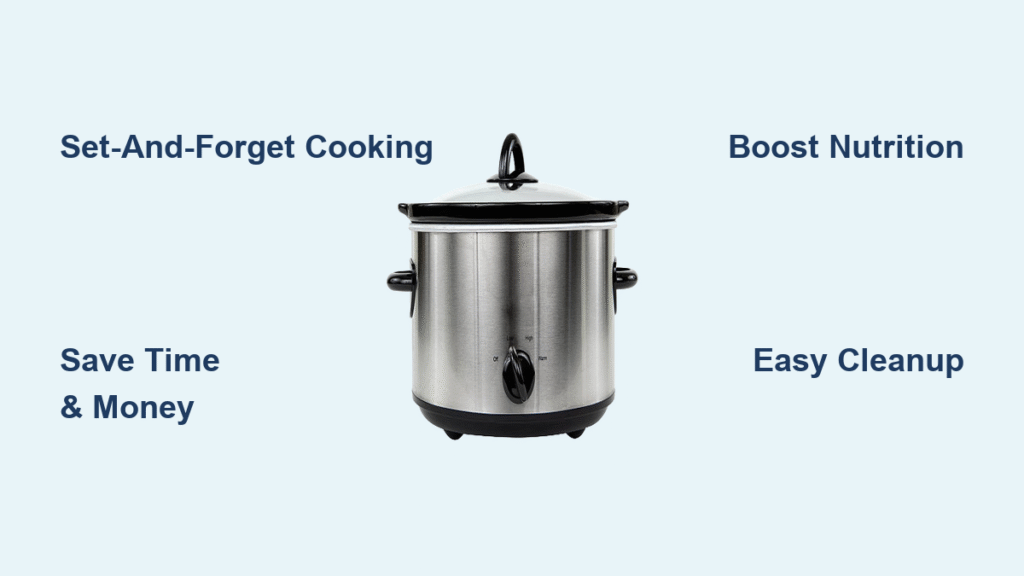
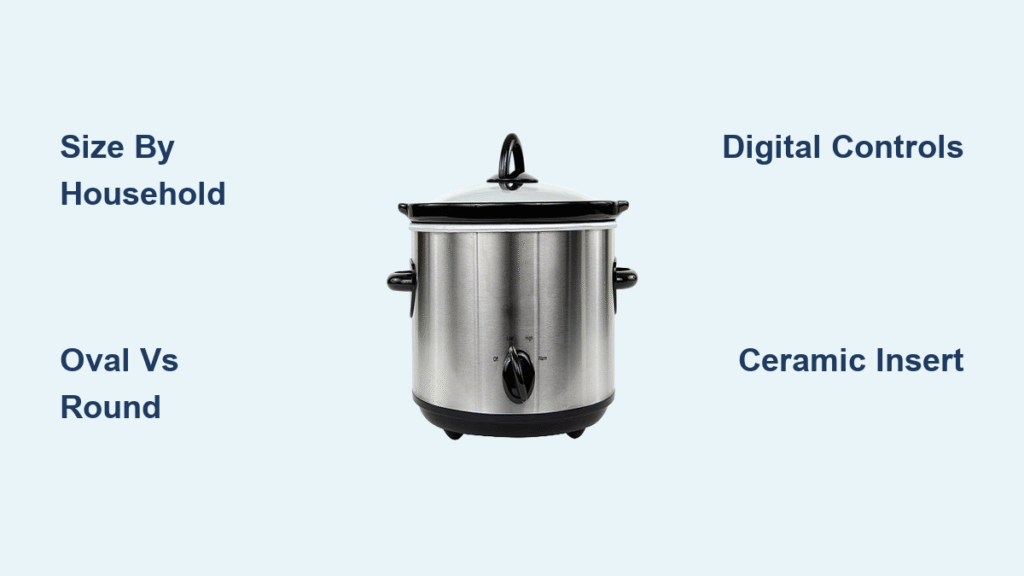
Nothing beats coming home to a house filled with the aroma of a perfectly cooked meal without spending hours in the kitchen. Yet choosing the right slow cooker can make or break your cooking experience—too small leads to overflow disasters, while the wrong shape turns your pot roast into a chopping nightmare. With dozens of models promising perfect results, knowing how to pick a slow cooker that matches your actual cooking habits is essential. This guide cuts through the marketing hype to reveal exactly what matters when selecting your perfect slow cooker, focusing on practical factors that impact daily use for years to come.
Size Selection Made Simple
Match Capacity to Your Lifestyle
Your household size determines the minimum capacity you’ll need for stress-free cooking. A 3-4 quart slow cooker serves 2-3 people perfectly for everyday meals, while large families need 7-8 quarts for batch cooking and leftovers. The golden rule is simple: 1 quart per person, rounded up. This prevents the common mistake of buying too small, which leads to overflow and uneven cooking.
Quick Size Reference:
– 1-2 quarts: Perfect for dips, sauces, and single servings
– 3-4 quarts: Ideal for couples and small families
– 5-6 quarts: The sweet spot for most households (4-6 people)
– 7-8 quarts: Essential for large families and meal prep enthusiasts
– 10+ quarts: Best for entertaining and serious batch cooking
Storage Reality Check
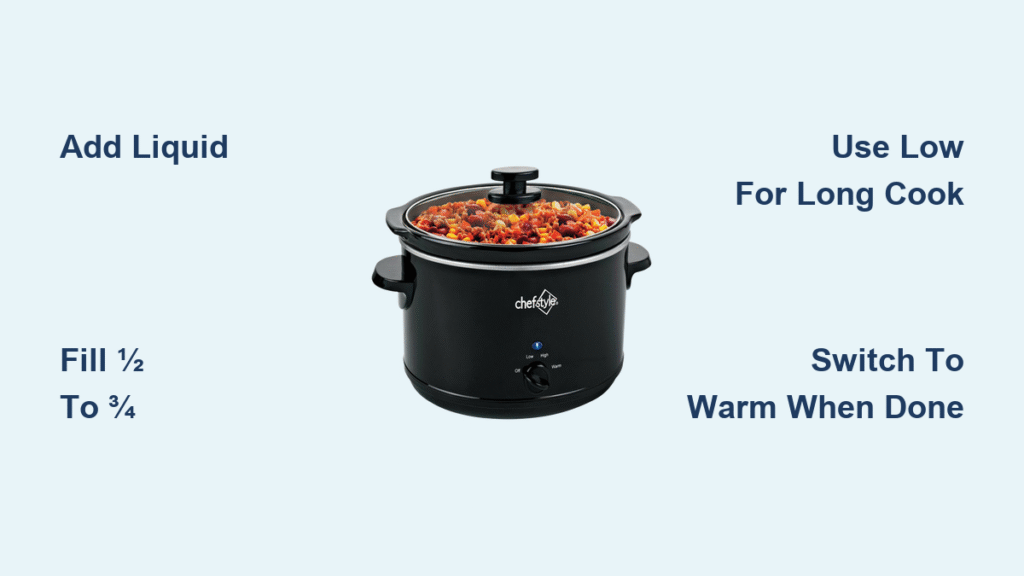
Before falling in love with an 8-quart oval model, measure your storage space. Round models stack easily in cabinets and typically measure 9-12 inches in diameter. Oval models, while versatile for roasts, stretch 15-18 inches wide and can dominate counter space. Consider weight too—empty slow cookers range from 4-25 pounds, which matters if you’ll move it frequently. Remember that ¾ full is the maximum safe fill level to prevent dangerous overflow during cooking.
Shape Impacts Cooking Results

Oval vs Round: Performance Differences
Oval slow cookers accommodate whole chickens up to 5-6 pounds and large roasts without cutting. The elongated shape also fits briskets and pork shoulders better, making them the go-to choice for meat lovers. However, round models distribute heat more evenly from the center, ideal for soups, stews, and dishes requiring consistent temperature throughout.
Shape Selection Guide:
– Choose oval if you cook roasts, whole chickens, or large cuts regularly
– Choose round for soups, stews, and space-conscious kitchens
– Consider rectangular only for multi-cookers with stovetop compatibility
Shape-Specific Cooking Tips
Oval models create slightly uneven heating patterns—place larger cuts toward the outer edges where heat concentrates. Round models work best when you fill them evenly around the center. Never force oversized ingredients into a slow cooker; this causes uneven cooking and potential safety hazards. If you frequently cook both roasts and soups, a 6-quart oval model offers the most versatility for most households.
Material Choices That Matter
Insert Materials: Real-World Impact
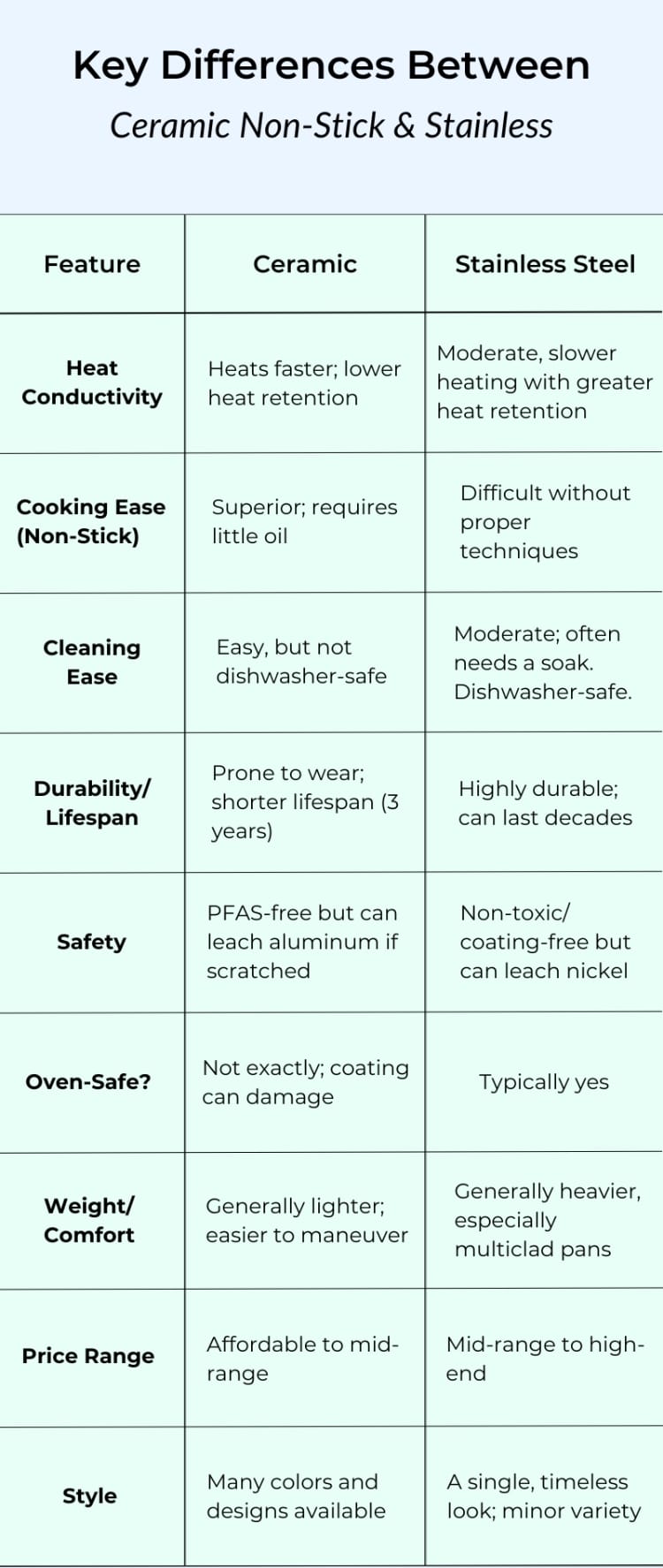
Ceramic inserts retain heat exceptionally well, keeping food warm for 2-3 hours after shutoff. They also provide the most even heat distribution but can crack if exposed to rapid temperature changes. Stainless steel inserts offer durability and stovetop compatibility for searing, though they may create hot spots in budget models.
Material Decision Matrix:
– Ceramic/Stoneware: Best heat retention, perfect for traditional slow cooking
– Stainless Steel: Durable, stovetop-safe, professional appearance
– Nonstick Ceramic: Easy cleanup, requires gentle utensils
– Aluminum: Lightweight, quick heating, potential for hot spots
Critical Material Considerations
Ceramic inserts aren’t stovetop-safe—never place them directly on burners. Metal inserts with nonstick coating require silicone or wooden utensils to prevent scratching. Glass lids allow you to monitor cooking without lifting, preserving heat and moisture. Always let ceramic inserts cool completely before washing to prevent thermal shock cracks that ruin the pot.
Control Systems for Your Schedule
Manual vs Digital: Lifestyle Fit
Manual controls with simple Low/High/Warm dials cost less and rarely malfunction. These work perfectly if you’re home to monitor cooking. Digital controls become essential for working professionals, offering programmable timers up to 24 hours and automatic keep-warm functions. Delay start features let you load ingredients in the morning and return to perfectly cooked meals.
Control Type Selection:
– Manual: Best for weekend cooking, traditional recipes, and budget buyers
– Digital: Essential for weekday meals, precise timing, and unattended cooking
– Smart/Wi-Fi: Useful for tech enthusiasts wanting remote monitoring
Must-Have Control Features
When learning how to pick a slow cooker, prioritize models with probe cooking that automatically shuts off at your target temperature—this prevents overcooking tough cuts like chuck roast. Delay start (2-12 hours) accommodates your schedule without risking food safety. Memory settings that retain programming during brief power outages provide peace of mind. For most users, a programmable 6-quart model with probe cooking delivers the best balance of features and value.
Budget Breakdown by Features
Price Tiers That Deliver Value
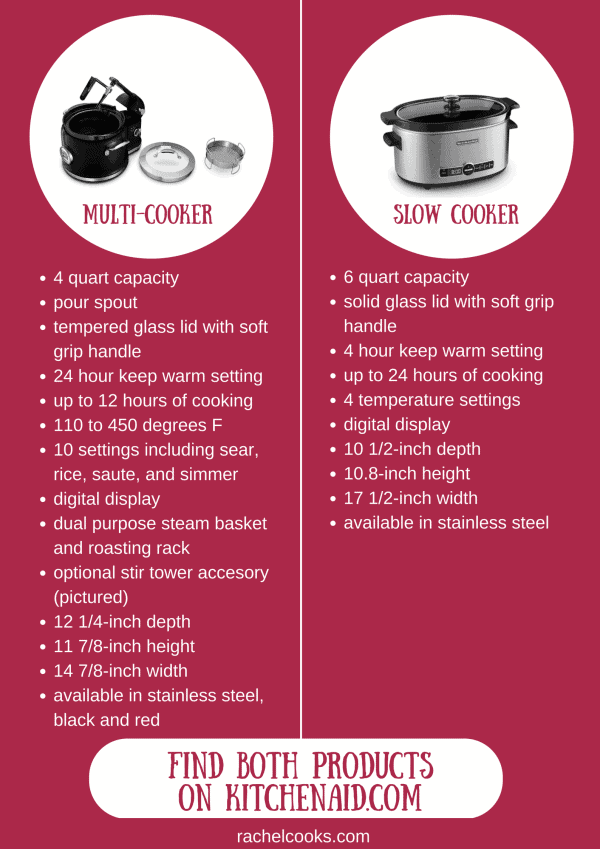
Budget slow cookers ($15-50) provide basic functionality with manual controls and ceramic inserts. These work perfectly for occasional use and small households. Mid-range models ($50-100) add digital controls and larger capacity, representing the best value for most families. Premium options ($100-250) include multi-function capabilities and precise temperature control for serious cooks.
Smart Money Choices:
– Budget winner: Hamilton Beach 6-quart programmable at $55
– Mid-range value: Crock-Pot 8-quart programmable at $90
– Premium pick: Ninja Foodi 8L with sear function at $149
Value-Adding Features Worth Considering
The sear function alone saves washing an extra pan when browning meat before slow cooking—this feature adds $30-80 to the price but significantly expands cooking possibilities. Locking lids prevent spills during transport to potlucks, while stay-cool handles allow safe serving directly from the insert. Overheat protection automatically shuts off the unit if temperatures exceed safe levels, preventing fires with minimal added cost.
Common Use Cases Solved
Food Types That Excel in Your Slow Cooker
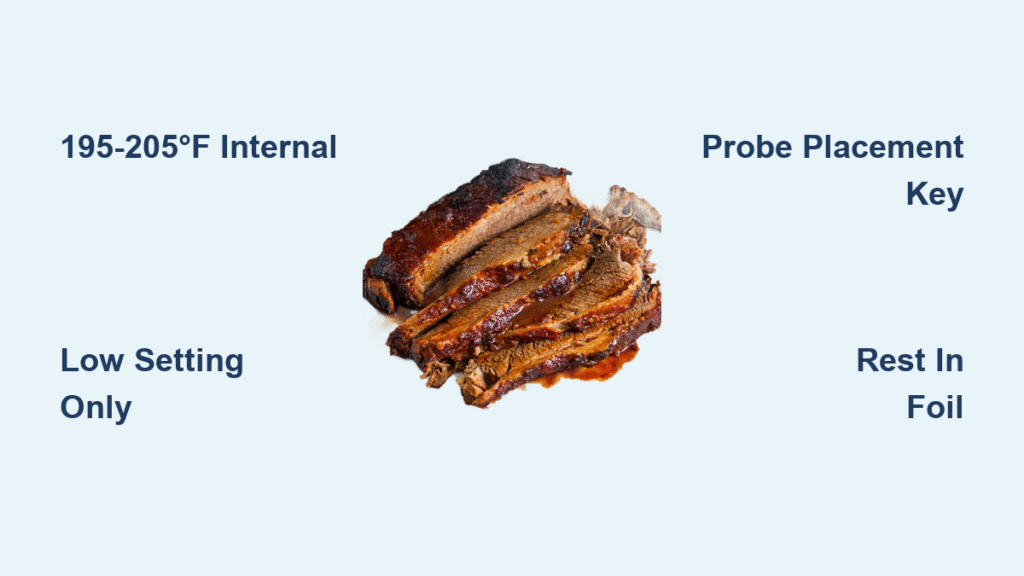
Slow cookers transform tough, inexpensive cuts into restaurant-quality meals. Chuck roasts, pork shoulders, and briskets become fork-tender after 6-8 hours. Root vegetables maintain shape while absorbing flavors perfectly. However, delicate fish, pasta, and leafy greens require careful timing or alternative cooking methods.
Perfect Slow Cooker Foods:
– Proteins: Chuck roast, pork shoulder, chicken thighs, dried beans
– Dishes: Chili, stews, pulled pork, oatmeal, yogurt
– Avoid: Delicate fish, pasta, dairy added too early, lean meats
Critical Food Safety Tips
Never put frozen meat directly into a slow cooker—thaw completely first to prevent dangerous bacterial growth. Keep food on warm setting no longer than 4 hours for safety. Refrigerate leftovers within 2 hours of cooking completion. When adapting recipes, reduce liquid by 1/3 since slow cookers lose less moisture than conventional methods. Stirring releases heat and extends cooking time—avoid it unless the recipe specifically requires it.
Final Selection Strategy
Decision Framework for How to Pick a Slow Cooker
Start with capacity based on household size, then prioritize features matching your lifestyle. Working professionals need programmable models with delay start. Large families require 7-8 quart capacity. Space-conscious buyers should choose round, compact designs. Budget buyers can find excellent manual models under $50, while multi-function enthusiasts should invest $150+ for maximum versatility.
Your perfect slow cooker balances capacity, features, and budget against your actual cooking habits. Focus on size and controls first—these impact daily use more than premium materials or exotic features. Remember, a simple 6-quart programmable model satisfies most households perfectly, proving that sometimes the basic choice delivers the best long-term value.
Pro tip: Buy 1-2 quarts larger than you think you need. Leftovers freeze beautifully, and you’ll appreciate the flexibility for entertaining. Always check if replacement parts like lids and sealing gaskets are available before purchasing—this extends your slow cooker’s lifespan significantly.