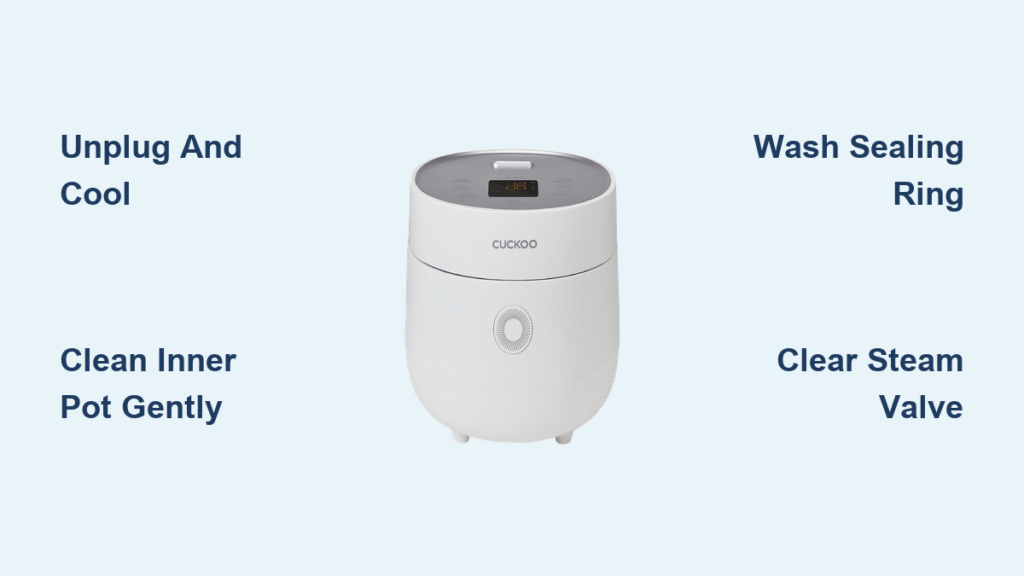
That stubborn rice crust clinging to your Cuckoo’s inner pot? The faint fish odor lingering after steaming salmon? These aren’t just annoyances—they’re signals your CR-0631, CR-0632, or CR-0633 needs immediate attention. When starch and moisture accumulate in hidden crevices, your once-perfect rice turns gummy, smells off, and cooks unevenly. Proper cleaning transforms your appliance from a bacterial breeding ground back to kitchen MVP status. This guide delivers the exact manufacturer-approved steps to safely deep-clean every component, ensuring your Cuckoo delivers flawless results batch after batch.
You’ll learn critical safety protocols most users skip, model-specific disassembly tricks for tricky parts like the steam valve, and a vinegar hack that banishes odors without harsh chemicals. Most importantly, you’ll avoid the #1 mistake that ruins non-stick coatings permanently. Let’s restore your rice cooker to like-new performance in under 20 minutes.
Unplug and Cool: Non-Negotiable Safety First Steps
Skipping this phase risks electrical shock or severe burns—Cuckoo’s heating plate retains heat far longer than you expect. Always unplug your rice cooker immediately after cooking and wait 45 minutes minimum before touching any component. Never test temperature with your palm; use the back of your hand near the base vents. This cooling period is non-negotiable across all CR-0631/CR-0632/CR-0633 models.
While waiting, clear your workspace and gather only safe tools: microfiber cloths, soft sponges (never abrasive), a soft-bristled brush, toothpick, and mild dish soap. Steel wool, bleach, or dishwasher pods will void your warranty by damaging seals and coatings. Keep children and pets away—steam vents can unexpectedly release hot moisture during disassembly.
Why Rushing Causes Permanent Damage
Attempting to clean a warm cooker warps the inner pot’s curvature, creating uneven heat distribution that burns rice. More critically, residual heat forces moisture into electrical components through microscopic gaps, causing short circuits months later. If you’re pressed for time, empty the inner pot and rinse it under cool water immediately after cooking—then complete the full deep clean when the base is cold.
Inner Pot Deep Clean: Protecting Non-Stick Coating

Remove the pot within 10 minutes of cooking while residue is soft. Fill your sink with warm water (not hot) and add 2 drops of mild dish soap—excessive suds degrade the coating over time. Soak for 5 minutes if rice is stuck; never let it harden overnight.
Gentle Scrubbing Technique for Stuck Grains
Use circular motions with a soft sponge, applying zero pressure. For stubborn spots, soak an additional 5 minutes rather than scraping. Critical warning: Steel wool or abrasive pads create microscopic scratches where bacteria hide, and rice will permanently stick to these damaged zones. Rinse under lukewarm water while rotating the pot—check the rim thoroughly, as soap residue here alters rice flavor. Dry immediately with a lint-free cloth; air-drying causes water spots that pit the coating.
Lid System Complete Care
Detachable Inner Lid Deep Clean
Press both side release tabs simultaneously and lift straight up—forcing it causes misalignment. Wash with warm soapy water using a soft sponge, focusing on the underside where starchy film builds up. Rinse under running water for 20 seconds minimum; trapped soap creates off-flavors in future batches. Never use a dishwasher—high heat warps the plastic housing.
Sealing Ring Mold Prevention
Pull the ring from its groove using the tab near the handle. Hand-wash with mild soap, then air-dry vertically on a clean towel for 3 hours (never use heat). A damp ring breeds mold within 24 hours, causing musty odors and leaks. Check for cracks monthly—if light shows through, replace it immediately to maintain steam pressure.
Steam Valve Blockage Removal

Unscrew the vent assembly counterclockwise (CR-0631/CR-0632) or pop out the cap (CR-0633). Dip a toothpick in vinegar, then gently clear each hole without forcing debris deeper. Rinse under warm water while blowing through the valve to confirm airflow. A single blocked hole causes pressure fluctuations that undercook rice.
Water Drainage Tray Maintenance
Slide out the tray from the rear panel—most users miss this hidden component. Empty standing water immediately after cooking to prevent bacterial growth. Scrub narrow channels with a soft brush dipped in vinegar solution, as mold hides in these dark spaces. Dry completely before reinsertion; residual moisture creates that “wet cardboard” smell in cooked rice. Reinsert at a slight upward angle to ensure proper drainage.
Exterior Surface Care
Wipe the base with a barely damp microfiber cloth—never spray cleaners directly onto the unit. Focus on control panel crevices where spills seep in. For dried-on splatters, make a paste of baking soda and water, apply for 3 minutes, then wipe. Never use ammonia-based cleaners; they cloud the display permanently. Never immerse the base—water ingress causes $150+ repairs.
Natural Odor Elimination Method

Fill the inner pot with equal parts white vinegar and water (or 2 sliced lemons in 2 cups water). Run a 15-minute “Steam” cycle without rice. Discard the solution, then run a second cycle with plain water to rinse internal tubing. For garlic/fish odors, repeat once. Never use bleach—it corrodes metal components and leaves toxic residues. This method neutralizes smells at the molecular level without damaging seals.
Common Cleaning Mistakes to Avoid
Dishwasher disaster: CR-0631/CR-0632/CR-0633 inner pots must never be dishwasher-safe—high heat and alkaline detergents strip non-stick coatings in 3-5 cycles. Abrasive shortcuts like scouring pads create permanent scratches where rice carbonizes. Over-soaking the sealing ring (beyond 10 minutes) causes silicone swelling that breaks the steam seal.
Critical error: Using compressed air on vents forces debris deeper into the heating mechanism. Instead, use a dry toothpick at a 45-degree angle. Never submerge the main body—even a tablespoon of water in the base can fry circuitry.
Quick Daily Maintenance Routine
Spend 90 seconds after each cook to prevent deep-clean emergencies:
1. Wipe the heating plate with a damp cloth (once cool)
2. Empty the drainage tray immediately
3. Remove inner pot and rinse under cool water
4. Dry the sealing ring groove with a microfiber cloth
This routine prevents the 80% of issues caused by starch buildup between deep cleans. For CR-0633 users with dual steam baskets, rinse baskets immediately after use—stacking them while wet causes rust spots.
Long-Term Performance Benefits
Consistent cleaning extends your Cuckoo’s lifespan from 4 to 8+ years. The non-stick coating remains effective for 500+ cycles instead of degrading at 150 cycles. You’ll notice perfectly separated grains within 2 weeks as mineral deposits clear from heating sensors. Most importantly, you avoid the $120 repair bill for “faulty thermostat” issues—which are actually just steam valve blockages.
Clean components also prevent cross-contamination; that curry odor won’t linger to ruin your next batch of jasmine rice. Your rice cooker becomes the reliable workhorse it was designed to be, not a source of kitchen frustration.
Mastering how to clean cuckoo rice cooker components properly is the difference between mediocre and exceptional results. By following these model-specific steps for your CR-0631, CR-0632, or CR-0633, you’ll ensure every grain cooks flawlessly while avoiding costly damage. Remember: that 15-minute weekly deep clean prevents hours of scrubbing later and keeps your appliance performing like new for years. Keep this guide taped inside your cabinet—it’s your secret weapon for consistently perfect rice. Now fire up your spotless Cuckoo and enjoy rice that tastes as fresh as it looks.