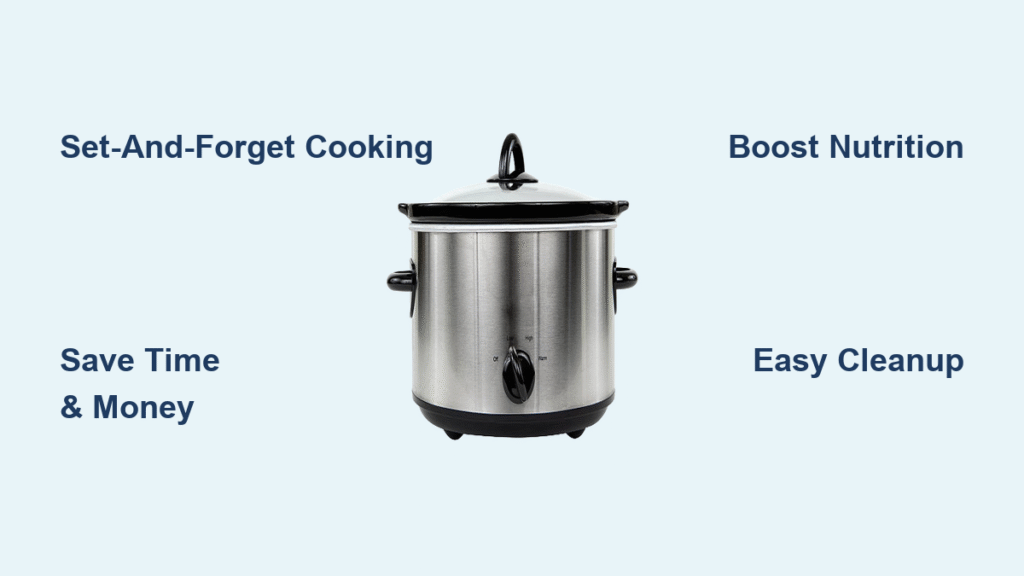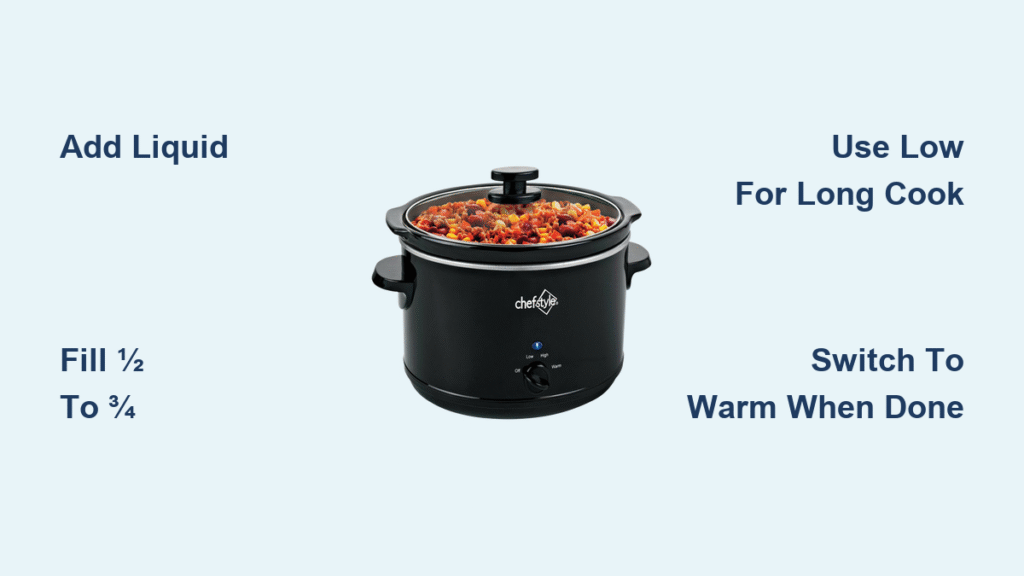
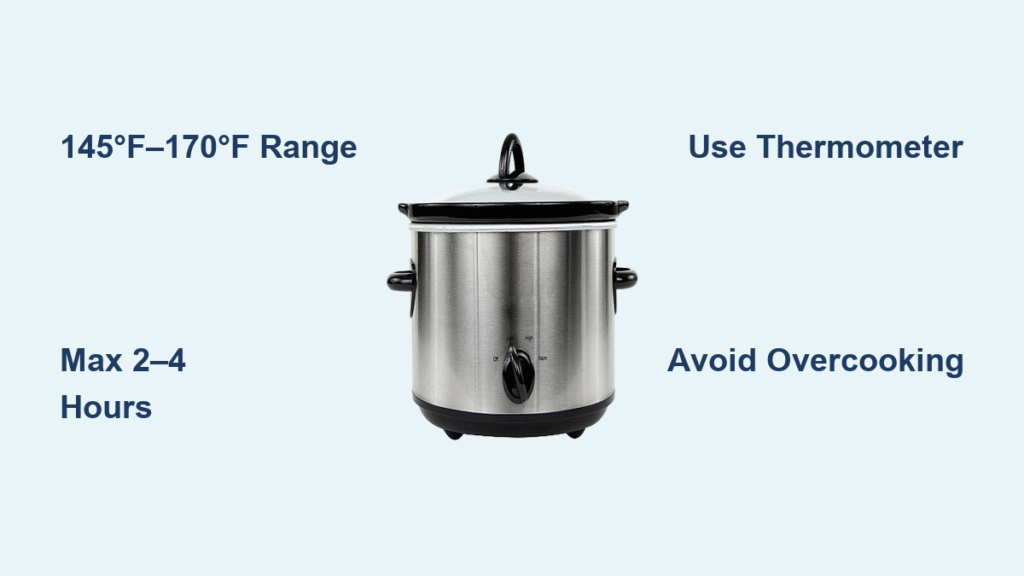
You’ve spent hours crafting a perfect pot roast in your slow cooker, but dinner plans suddenly shift. The “warm” setting seems like a lifesaver—but how hot does it actually get? If you’ve ever worried about food safety during those extra hours or noticed your stew turning mushy, you’re not alone. Understanding the precise temperature range of your slow cooker’s warm setting (typically 145°F to 170°F) is critical for preventing bacterial growth while preserving your meal’s texture and flavor. This feature isn’t just a convenience—it’s a precise food safety tool that demands smart usage to avoid the “danger zone” where bacteria multiply rapidly.
Leaving food unattended for extended periods risks both quality degradation and potential health hazards. Unlike the low or high settings designed for active cooking, warm serves one specific purpose: maintaining pre-cooked food at safe serving temperatures without further cooking. Yet many home cooks mistakenly treat it as an extension of the cooking process, leading to rubbery meats, disintegrated vegetables, or worse—compromised safety. By the end of this guide, you’ll know exactly how to leverage this setting safely, verify your specific model’s performance, and recognize when alternative warming methods are smarter choices.
Why Your Slow Cooker Warm Setting Stays Between 145°F–170°F
How Temperature Measurements Prevent Food Danger Zones
Your slow cooker’s warm setting maintains a precise 145°F to 170°F (63°C–77°C) range to keep food safely above the critical 140°F threshold established by the USDA. This narrow band exists for a vital reason: below 140°F, food enters the “danger zone” (40°F–140°F) where bacteria like E. coli and Salmonella multiply exponentially. While exact temperatures vary slightly by model—some budget units may dip to 140°F while premium programmable models hold steady at 165°F—the universal design principle remains avoiding this bacterial breeding ground. Never assume your unit hits the target; always verify with an instant-read thermometer, especially after opening the lid, since steam loss can cause temporary drops of 10–15°F.
Critical Differences From Low and High Cooking Settings
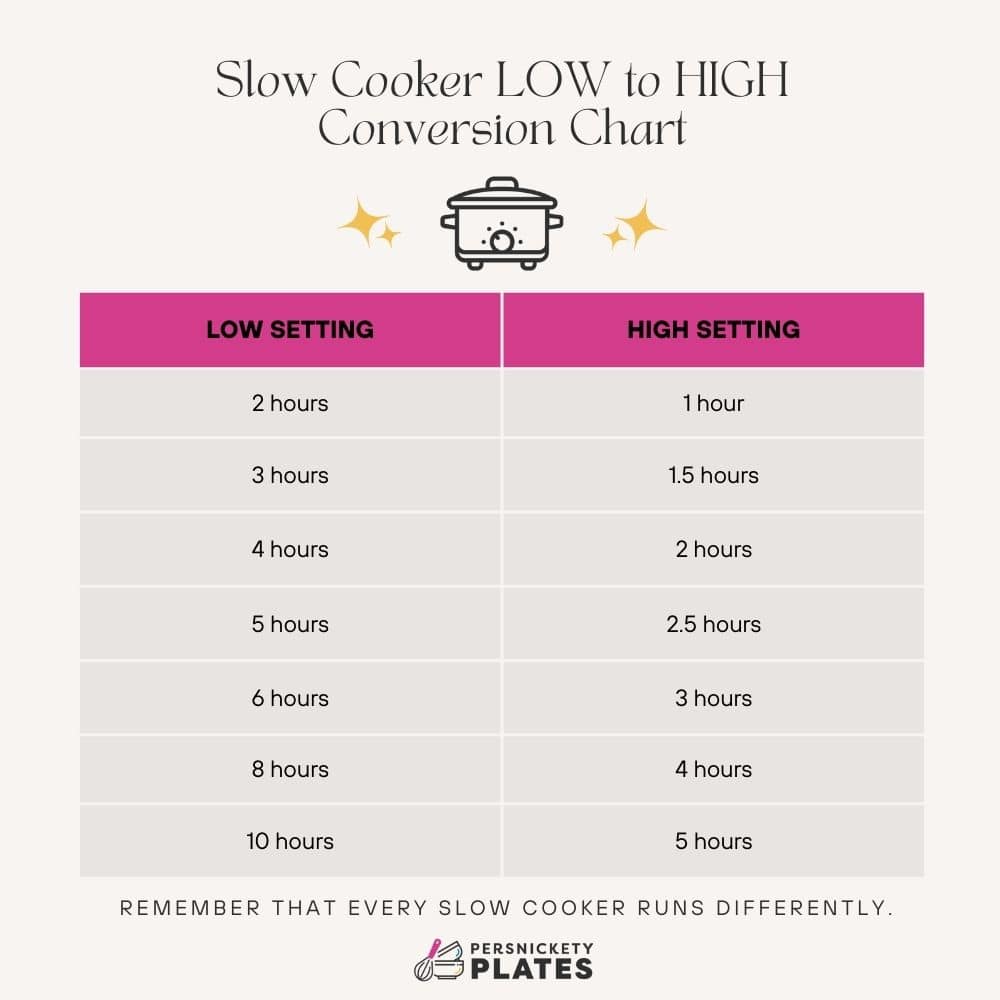
Confusing warm with low settings is a common food safety mistake with serious consequences. While the low setting (145°F–190°F) actively cooks food by holding temperatures ideal for breaking down tough connective tissues over 6–8 hours, and high (170°F–280°F) accelerates this process, warm operates in a completely different zone. Its upper limit of 170°F is intentionally capped to prevent continued cooking—meaning it cannot kill bacteria or cook raw ingredients. If you place cold leftovers directly on warm, they’ll linger dangerously in the 40°F–140°F zone for hours. Always fully cook food on low/high first, then switch to warm only for short-term holding.
Never Exceed These Warm Setting Safety Limits
The 2–4 Hour Rule for Bacterial Prevention
Food safety experts universally agree: limit warm setting use to 2–4 hours maximum. Beyond this window, temperature fluctuations become more likely as the heating element cycles, risking entry into the danger zone. The USDA emphasizes that even if your food starts above 140°F, repeated lid openings or power surges can cause dangerous cooling. Crucially, this timeframe begins after cooking completes—not when you switch settings. If your chili simmered for 8 hours on low, the 2–4 hour clock starts when you hit “warm.” Exceeding this duration doesn’t just risk bacterial growth; it also causes irreversible moisture loss that ruins texture.
Step-by-Step Temperature Monitoring Protocol

Skip this verification process at your peril. Before serving food held on warm, always insert an instant-read thermometer into the thickest part of the dish—not just the broth. Ideal readings sit between 145°F–170°F; if below 140°F, bacteria could have multiplied to dangerous levels. For critical events (like holiday meals), check every 60 minutes using this method:
1. Stir food thoroughly to eliminate cold spots
2. Insert thermometer away from metal components
3. Wait 10 seconds for an accurate reading
4. Discard food if it ever dips below 140°F for over 2 hours
If temperatures consistently run low (e.g., 135°F), reduce warming time to 1–2 hours or switch to an oven set to 200°F for better control.
How Extended Warming Ruins Texture and Flavor
Specific Foods That Degrade Within 90 Minutes
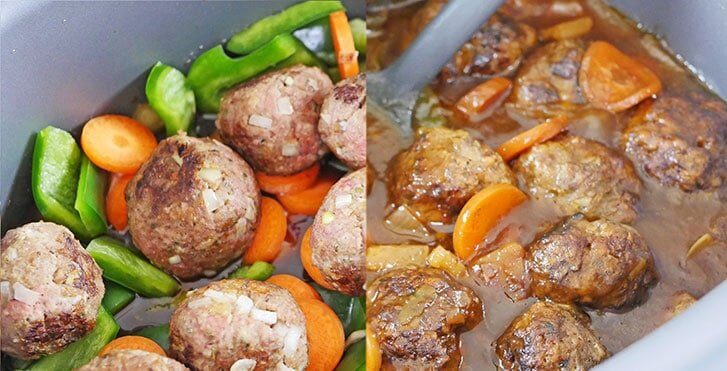
Prolonged warming transforms even perfectly cooked dishes into culinary disasters through predictable texture breakdowns. Pasta and rice absorb residual moisture until they turn gluey within 2 hours, while potatoes lose structural integrity, becoming waterlogged and disintegrating into your stew. Cooked vegetables suffer most dramatically: broccoli turns drab olive green, carrots turn to mush, and green beans develop a slimy film. Proteins like chicken breasts dry out as proteins continue to denature, even at 150°F. Delicate ingredients like seafood or fresh herbs should never be added until the final 30 minutes on warm.
Moisture Evaporation and Flavor Concentration Pitfalls
That “richer” taste you notice after 3 hours on warm? It’s often excessive saltiness or bitterness from moisture loss. As steam escapes through the lid’s vent (even when closed), liquids reduce by 10–15%, concentrating flavors unnaturally. Stirring every 30–60 minutes is non-negotiable—it redistributes heat and prevents surface drying while incorporating evaporated moisture back into the dish. For soups or sauces, add ½ cup of broth or water after 2 hours to counteract reduction. Never cover food with plastic wrap underneath the lid; trapped condensation creates sogginess while failing to prevent evaporation.
Proven Warm Setting Best Practices
Strategic Food Preparation for Holding
Set up for warming success before cooking ends. Slightly undercook ingredients destined for extended holding: remove pasta when 90% al dente (it’ll finish softening on warm), and pull root vegetables 15 minutes early. Reserve quick-cooking items like peas, zucchini, or fresh basil to stir in during the final hour on warm. For meat dishes, sear proteins thoroughly before slow cooking—this creates a protective crust that slows moisture loss during warming. If serving buffet-style, portion food into smaller containers; they maintain stable temperatures better than one large pot.
Lid Management Tactics to Maintain Safe Temperatures
Every lid lift causes an immediate 10–15°F temperature plunge that takes 20+ minutes to recover. Minimize openings to absolute essentials:
– Gather all serving utensils before opening
– Stir only when checking temperature (not out of curiosity)
– Wipe condensation from the lid before closing to prevent water droplets from diluting food
For events, assign one person to manage the slow cooker—unmonitored units often get checked too frequently. If you must add ingredients, do it during a single opening rather than multiple brief ones.
Verify Your Model’s Actual Warm Temperature
The 1-Hour Water Test for Accuracy
Don’t trust the dial—test your slow cooker’s warm setting with this foolproof method:
1. Fill the insert with 4 cups of cold water
2. Set to “warm” and close the lid
3. After 60 minutes, insert an instant-read thermometer
4. Record the temperature at the center (not edges)
If readings fall below 145°F, limit warming to 1–2 hours. If above 170°F (rare but possible), your unit may continue cooking food—reduce warming time to 90 minutes max. Repeat this test seasonally; performance can drift as heating elements age.
Brand-Specific Variations to Watch For
Crock-Pot’s programmable models often hold a steady 160°F±5°, while Hamilton Beach units may fluctuate between 145°F–165°F. Always consult your manual—some brands like Instant Pot specify “keep warm” operates at 149°F–167°F. Older models (pre-2015) lack precision thermistors, making thermometer checks essential. If your unit doesn’t maintain 145°F+, consider it unsafe for warming; transfer food to a chafing dish or 200°F oven instead.
When to Avoid the Warm Setting Entirely
Superior Alternatives for Extended Holding
Your slow cooker’s warm setting fails in three critical scenarios:
– Buffet service longer than 2 hours: Use chafing dishes with water pans (maintains 150°F+ with even heat)
– Transporting food: Insulated carriers keep meals safe for 2 hours without texture damage
– Delicate dishes: For custards or fish, a 200°F oven with covered dishes prevents curdling
For holiday meals, divide food into oven-safe dishes and use the oven’s “proof” setting (typically 170°F)—it offers more stable temperatures than most slow cookers.
Warning Signs Food Has Warmed Too Long
Stop using the warm setting immediately if you notice:
– Visible liquid reduction (more than 20% volume loss)
– Color changes in vegetables (green beans turning olive, carrots fading)
– Surface film on meats or sauces
If food hits 140°F, reheat to 165°F before serving—but know quality is already compromised. Discard any food left below 140°F for over 2 hours, even if it smells fine. Bacteria like Staphylococcus produce undetectable toxins that survive reheating.
Understanding your slow cooker’s warm setting temperature—145°F to 170°F—is the difference between safely holding a meal and risking foodborne illness. By strictly limiting use to 2–4 hours, verifying temperatures with a thermometer, and preparing dishes specifically for warming, you’ll maintain both safety and quality. Remember: this setting exists only to maintain already-cooked food, never to finish cooking or reheat cold leftovers. When in doubt, transfer food to a more stable warming method like a low-temperature oven. With these practices, you’ll confidently keep meals ready for serving without compromising the flavors you worked so hard to create.