
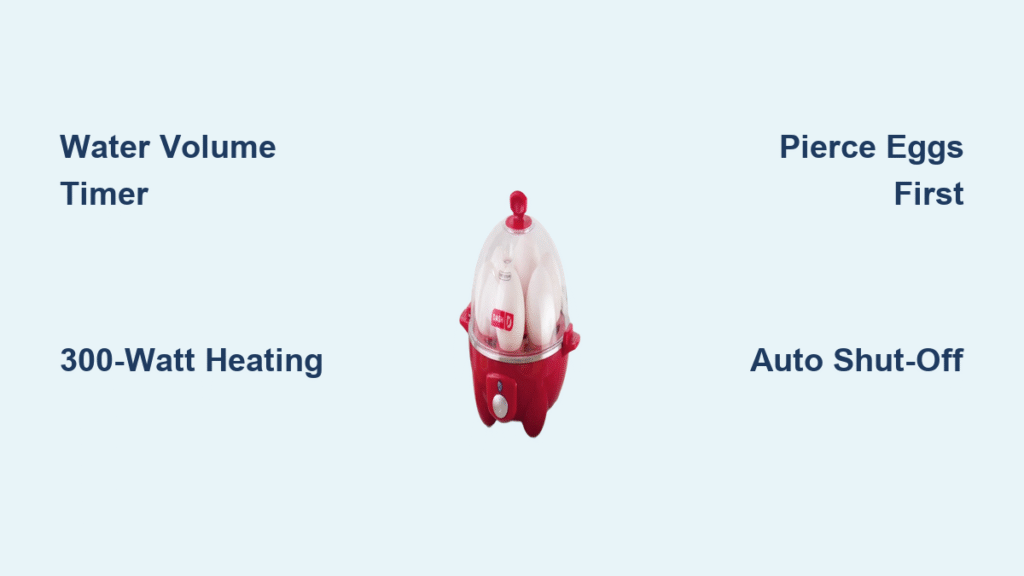
Ever stared at your Dash egg cooker wondering how it consistently delivers flawless soft-boiled eggs for avocado toast or hard-boiled eggs for meal prep without a digital timer? The secret lies in a brilliantly simple application of thermodynamics that transforms water into your most reliable kitchen timer. Unlike finicky stovetop methods that require constant monitoring, this countertop appliance leverages the fixed evaporation rate of water to eliminate guesswork entirely. Understanding how does the dash egg cooker work transforms you from a passive user into a precision egg-cooking expert who can troubleshoot issues and adapt recipes with confidence.
When you press that power button, you’re not just starting a cooking cycle—you’re initiating a carefully calibrated physics experiment. The Dash cooker’s genius is how it exploits water’s consistent boiling point (212°F at sea level) and evaporation rate to create foolproof timing. Whether you’re prepping deviled eggs for a party or crafting the perfect ramen topping, this knowledge ensures restaurant-quality results every time. Let’s dissect the engineering that makes this $20 kitchen hero outperform far more complex appliances.
Water Volume as Your Precision Timer
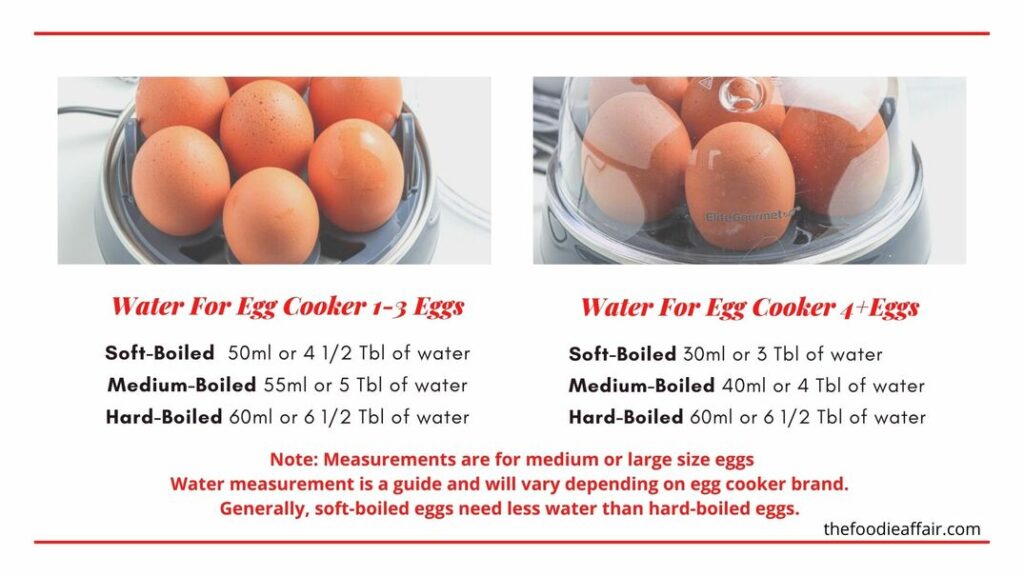
Your Dash cooker operates on a fundamental principle: the exact moment the last drop of water evaporates signals perfect egg doneness. Forget timers that ignore your altitude or stove’s inconsistent heat—the included measuring cup contains scientifically calibrated water volumes that evaporate in precise intervals. This isn’t arbitrary; it’s physics in action. At standard atmospheric pressure, 40 mL of water always takes 7-8 minutes to fully vaporize under the cooker’s 300-watt heating plate.
Here’s exactly how the measurements translate to results:
– Soft-boiled eggs (40 mL): Creates 7-8 minutes of steam for runny yolks with set whites
– Medium-boiled eggs (60 mL): Produces 9-10 minutes for jammy centers
– Hard-boiled eggs (80 mL): Delivers 12-13 minutes for fully set yolks
– Poached eggs/omelets (60 mL): Always uses medium setting regardless of quantity
Why Water Beats Digital Timers Every Time
Traditional boiling relies on variables that sabotage consistency:
– Stove heat fluctuations (gas flame variations or electric coil inconsistencies)
– Pot material differences (thin aluminum vs. heavy cast iron)
– Altitude effects (water boils at 203°F in Denver vs. 212°F at sea level)
– Egg starting temperature (fridge-cold vs. room temp)
The Dash system automatically compensates for all these. Water’s fixed boiling point means 40 mL evaporates in nearly identical time whether you’re in Miami or Mexico City—just add 5 mL per 1,000 feet of elevation. Refrigerated eggs take 90 seconds longer to cook than room-temperature ones, but since the cooker waits for complete water evaporation, results stay consistent.
The 300-Watt Heating Plate: Steam Engineered for Precision

Beneath your eggs sits a 75mm stainless steel disc generating 300 watts of focused heat. This isn’t just a hot plate—it’s a thermodynamic control system designed for rapid, even steam generation. Within 30 seconds of pressing start, you’ll see vigorous steam rising through the transparent lid, confirming the heating plate has reached critical temperature.
Teflon Coating: The Unsung Hero
That non-stick surface does far more than prevent sticking:
– Blocks mineral deposits from hard water that insulate heating surfaces
– Maintains thermal conductivity by preventing calcium carbonate buildup
– Enables one-swipe cleanup after cooking (no scrubbing required)
Without this coating, mineral scale would gradually insulate the plate, requiring more water for the same doneness—a problem solved by the monthly descaling routine using 50/50 vinegar-water solution.
The 239°F Auto-Shutoff Trigger
Here’s where physics takes over: The bimetal thermostat is calibrated to trip at 239°F (115°C) at the plate surface. Why this specific temperature? Water boils at 212°F, so as long as water remains, the plate stays near this temperature. The instant the last drop vaporizes, the plate temperature spikes past 239°F, causing the thermostat to snap open and cut power. You’ll hear a distinct click followed by a 60-second buzzer—your signal that cooking stopped exactly when the water vanished.
Piercing Pin Physics: Why That Tiny Spike Matters
Before cooking, you pierce each egg’s broad end with the tray’s built-in pin. This isn’t optional—it’s critical for two scientific reasons:
Preventing Explosive Pressure Buildup
As eggs heat, internal air expands 200x its original volume. Without the pin’s 0.5mm vent hole:
– Pressure builds until the shell cracks (usually at the weakest point)
– Steam escapes violently, causing yolk splatter
– Uneven cooking occurs from sudden temperature drops
Eliminating the Green Ring
That unappetizing green-gray ring around hard-boiled yolks? It’s iron sulfide formed when sulfur compounds react with yolk iron. The piercing pin vents hydrogen sulfide gas before it reaches the yolk, reducing discoloration by up to 70%. Always pierce the broad end—it contains the air cell for optimal pressure equalization.
Complete Cooking Cycle Breakdown
Understanding the full sequence helps you troubleshoot and optimize results:
1. Water Loading Precision
Pour exactly to the line on the measuring cup. A 5 mL overage adds 45-60 seconds of cooking time—enough to turn medium eggs hard. For high-altitude cooking, add 5 mL per 1,000 feet above sea level to compensate for lower boiling points.
2. Egg Preparation Science
Pierce each egg firmly but gently—too deep punctures the yolk membrane. For poached eggs, lightly coat non-stick cups with oil; steam will circulate around (not through) the cups for perfect runny centers in 6 minutes.
3. Cycle Initiation Safety
Newer models (2019+) require the lid to fully seat for the magnetic sensor to activate. The illuminated LED ring confirms power flow—no light means check lid alignment or power connection.
4. Steam Generation Timeline
- 0-30 sec: Heating plate reaches 212°F
- 30-90 sec: Vigorous steam production begins
- Remaining time: Consistent steam until water depletion
5. Automatic Completion Physics
When the reservoir runs dry, plate temperature surges past 239°F in under 15 seconds. The thermostat clicks open, stopping cooking instantly—no residual heat overcooking. Plunge hard-boiled eggs into ice water immediately to halt carryover cooking.
Poaching Tray Steam Dynamics
Poaching operates differently than boiling—eggs cook via indirect conductive heating:
– Steam rises beneath the tray but doesn’t touch eggs
– Heat transfers through the non-stick cup’s base (180°F surface temp)
– Gentle 6-minute cycle sets whites while keeping yolks liquid
Pro Tip: For restaurant-style poached eggs, add 1 tsp vinegar to the 60 mL water reservoir. The acetic acid helps egg whites coagulate faster around the yolk.
Omelet Bowl Steam Circulation Design
The shallow bowl (180mm diameter) maximizes steam contact through clever engineering:
– Inverted placement creates a steam chamber beneath the bowl
– Central divider ensures even heat distribution for two portions
– 3-minute steam cycle sets eggs without browning (max 185°F internal temp)
Bonus Hack: Flip the bowl upright to steam vegetables—add 80 mL water and cook asparagus for 8 minutes while your omelet finishes.
Troubleshooting Physics-Based Fixes
Why Eggs Turn Out Wrong (and How to Fix It)
- Undercooked eggs: Water evaporated too fast (add 5 mL next time)
- Overcooked/green yolks: Water lasted too long (reduce 5 mL; plunge in ice bath)
- Shell cracks: Piercing pin wasn’t fully inserted (reapply firm pressure)
- Unit won’t start: Lid misaligned—listen for magnetic click when closing
Thermostat Stuck? The $8 Fix
If buzzing continues after water depletion, oxidized thermostat contacts are likely stuck closed. Unplug, let cool, then gently tap the base near the power cord. Still buzzing? Replace the thermostat (cost: $8 online)—it’s a 10-minute DIY job with a screwdriver.
Energy Efficiency: Physics Saves Power Too
Your Dash cooker’s thermodynamic design minimizes waste:
– 0.04 kWh per dozen hard-boiled eggs (vs. 0.25 kWh stovetop)
– 84% less energy than traditional boiling methods
– Cost per batch: Just 0.6¢ at $0.15/kWh (about 1/100th of a lightbulb’s hourly cost)
This efficiency comes from heating only the precise water volume needed—not a full pot of water that loses heat to the air.
Model Differences Decoded

While color options (aqua, red, yellow) are cosmetic, capacity matters:
| Model | Max Eggs | Poaching Cups | Omelet Bowls | Key Difference |
|——-|———-|—————|————–|—————-|
| Standard | 6 | 2 | 1 | Single-tier tray |
| Deluxe | 12 | 7 | 2 | Double-decker design |
Crucially, all models share identical heating plates and thermostats—the Deluxe simply has a larger reservoir and dual trays. Your water measurements stay the same regardless of model.
Master Your Machine: Pro Techniques
- Always pierce eggs—it prevents 90% of shell cracks
- Use room-temp eggs for most consistent timing (chilled eggs add 90 sec)
- Descale monthly with vinegar solution if you have hard water
- Never skip the cool-down—5 minutes prevents warping from thermal shock
- Store with lid ajar to prevent moisture buildup in the steam vent
How does the dash egg cooker work? It transforms basic physics into culinary precision by letting water’s evaporation rate control timing. By understanding these mechanics—water volume as timer, steam pressure management, and thermostat physics—you’ll achieve perfect eggs on demand while extending your appliance’s lifespan. Whether you’re cooking two poached eggs for breakfast or a dozen hard-boiled for salads, this knowledge turns a simple gadget into your most reliable kitchen tool. The next time that buzzer sounds, you’ll know exactly why your eggs are flawless.


