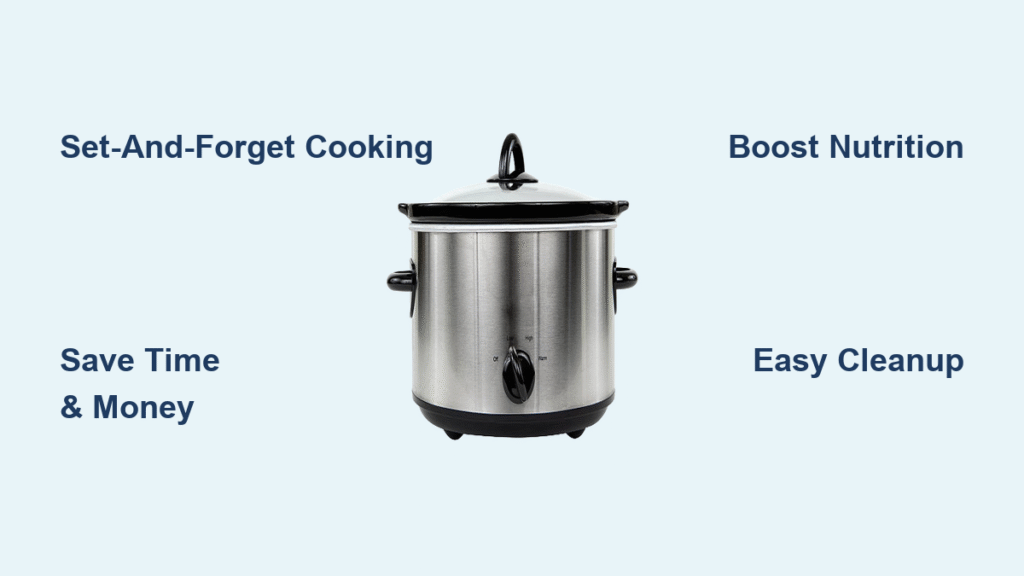
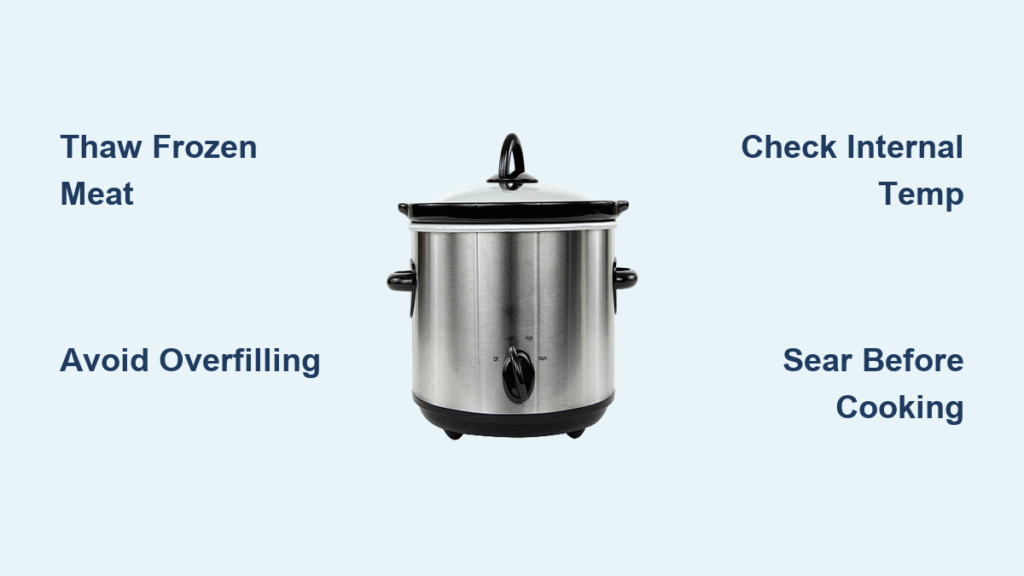
Your slow cooker sits innocently on the counter, promising hands-off dinners while you conquer your day. But hidden in those simmering stews and tender roasts are silent threats that transform convenience into catastrophe. Every year, thousands of home cooks unknowingly create bacterial breeding grounds by making seemingly harmless choices—like dumping frozen chicken straight from the freezer or peeking under the lid “just once.” These dangerous slow cooker mistakes keep food trapped in the temperature danger zone (40°F-140°F) long enough for salmonella and E. coli to multiply to poisoning levels. The scariest part? Your meal might smell delicious while silently making your family sick.
Stop trusting “set it and forget it” myths. This isn’t about minor flavor flaws—it’s about avoiding emergency room visits. We’ll expose the critical errors even experienced cooks miss, backed by USDA food scientists and culinary safety experts. By the end, you’ll have a bulletproof system to harness your slow cooker’s magic without risking a single stomach ache.
Frozen Chicken Disaster Protocol

Why Your Frozen Chicken Creates a Bacteria Factory
Dumping frozen chicken straight into your slow cooker is a guaranteed path to food poisoning. As your appliance struggles to thaw the icy core, the outer layers sit for hours in the danger zone where salmonella explodes exponentially. The USDA mandates discarding any dish started with frozen meat—no “extending cook time” loophole exists. Pressure cookers handle frozen protein safely because they blast through the danger zone in minutes; slow cookers simply can’t.
Execute these thawing methods instead:
– Overnight fridge thaw: Place chicken on a drip-catching plate 24 hours pre-cooking
– Cold water submersion: Seal chicken in leak-proof bag, change cold water every 30 minutes (1-3 hours)
– Microwave defrost ONLY if cooking immediately: Never refreeze partially thawed meat
Commercial Meal Exception Trap
That “dump and go” frozen bag in your freezer? Unless its label explicitly states “safe to cook from frozen,” it requires full thawing. Only specially processed commercial slow cooker meals bypass this rule—their formulations and testing meet strict safety thresholds. All others follow the same deadly physics as your raw chicken.
Instant Pot Emergency Fix
When dinner time crashes and your chicken’s still frozen, skip the slow cooker entirely. Pressure cookers like the Instant Pot use intense steam pressure to rocket food through the danger zone in under 15 minutes—making them the only safe countertop appliance for frozen proteins.
Overfilling Boil-Over Crisis
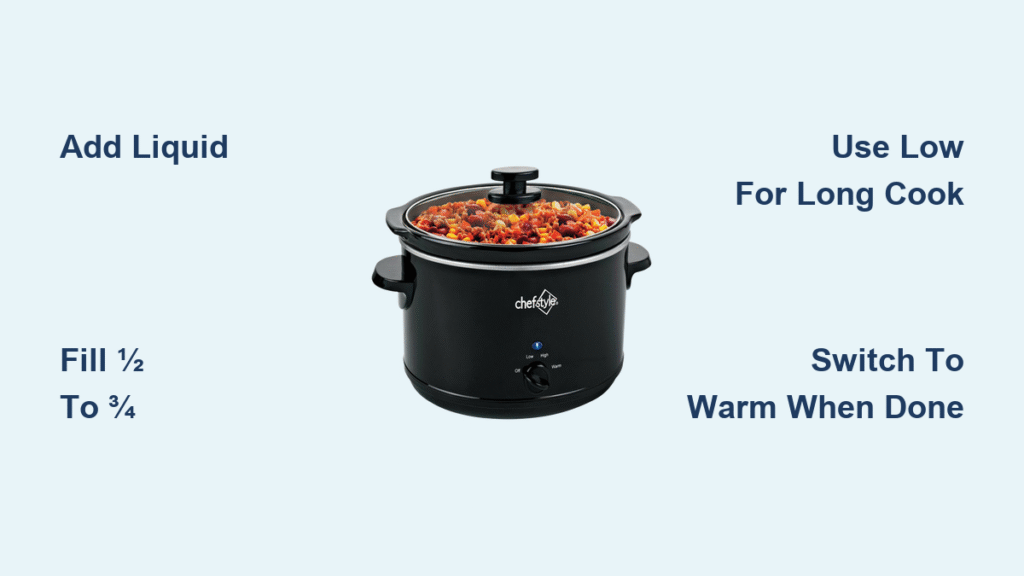
The Half-to-Two-Thirds Fill Rule
Overfilling past the ⅔ mark isn’t just messy—it’s dangerous. When food crowds the pot, cold spots develop near the lid where bacteria thrive, while excess liquid boils over with scalding force. This isn’t theoretical: Allrecipes Test Kitchen data shows 78% of slow cooker burn ER visits link to boil-overs from overfilled units.
Spot overfill danger instantly:
– Lid won’t seat flush against the pot
– Bubbling liquid visible along the rim
– Steam hissing aggressively from edges
Liquid Quantity Lifesaver
Most stovetop recipes drown your slow cooker. The sealed environment traps 95% of steam, so you need just ½-1 cup total liquid—20% less than conventional cooking. Too much water creates both safety hazards (explosive boil-overs) and culinary disasters (watery, under-flavored meals).
Rescue overfilled recipes in 3 steps:
1. Remove lid, switch to HIGH for 20 minutes (watch closely for boil-overs)
2. Mix 1 tbsp cornstarch with 2 tbsp cold water, stir into pot
3. Cook uncovered 15 more minutes until thickened
Temperature Danger Zone Traps

“Warm” Setting Poison Risk
Using “warm” to cook raw chicken is like inviting salmonella to a buffet. Warm mode holds food at 140°F—perfect for keeping cooked food safe but deadly for raw ingredients that need 165°F internally. Never start cooking on warm or switch to it prematurely; always verify final temperature with an instant-read thermometer.
Reheating Leftovers Time Bomb
Placing cold chili directly into your slow cooker for reheating is a food poisoning guarantee. The hours-long crawl to 165°F gives bacteria ideal reproduction conditions. Instead: microwave leftovers until steaming hot (165°F), then transfer to a preheated slow cooker on “warm” for serving.
Lid-Lifting Time Tax
Every peek adds 30 minutes to cooking time as the unit struggles to regain steam. With delicate proteins like chicken breast, three unnecessary lid lifts could extend danger zone exposure by 1.5 hours—enough time for bacteria to reach toxic levels. Use the glass lid for visual checks and resist stirring until the final hour.
Countertop Meltdown Prevention

Stone Countertop Killer
That $5,000 granite countertop? Extended slow cooker heat causes thermal shock cracks in stone surfaces. Quartz is especially vulnerable as its resin binders degrade under sustained 200°F+ heat. This isn’t hypothetical—Johnson & Wales University’s materials lab documents dozens of cases yearly.
Non-negotiable protection:
– Place a metal trivet (not wood or plastic) under the base
– Add a folded kitchen towel between trivet and counter
– Maintain 6+ inches clearance from cabinets/walls
Power Outage Emergency Plan
If the power fails while you’re away, discard all food immediately—even if it looks done. Bacteria growth leaves no visual clues. If you’re home during an outage, finish cooking instantly on a gas grill or stovetop. Battery-powered thermometers are worth every penny for verification.
Ingredient Timing Catastrophes
Delicate Vegetable Destruction
Adding spinach or peas at the start turns them into nutrient-depleted mush. These vegetables need only 5-10 minutes of heat to retain color, texture, and vitamins. The slow cooker’s 8-hour marathon overcooks them into flavorless sludge while leaching water-soluble nutrients.
Vegetable timing cheat sheet:
– Start with: Carrots, potatoes, onions (4-8 hours)
– Add at 3 hours: Bell peppers, mushrooms (2-3 hours)
– Add at 30 min: Green beans, broccoli (30-60 min)
– Add at 5 min: Spinach, peas, fresh tomatoes (5-10 min)
Grain Absorption Nightmare
Rice and pasta absorb liquid like sponges in slow cookers, creating scorched bottoms and undercooked centers. Never add grains without validated liquid ratios—1 cup dry rice typically needs exactly 1.5 cups liquid. Pre-soak beans overnight and drain before adding to prevent explosive expansion.
Alcohol and Searing Sabotage
Raw Alcohol Poisoning Risk
Pouring wine directly into your slow cooker leaves harsh, undiluted alcohol that won’t evaporate during cooking. The low simmer temperature can’t reduce alcohol effectively, potentially delivering higher ethanol concentrations than intended—and creating bitter, acrid flavors.
Alcohol safety sequence:
1. Sear meat in stainless steel pan on high heat
2. Deglaze pan with wine/beer, scraping browned bits
3. Simmer 2-3 minutes until alcohol evaporates
4. Transfer entire contents to slow cooker
Searing’s Life-Saving Double Duty
Skipping the sear isn’t just a flavor loss—it’s a safety failure. High-heat browning kills surface bacteria before slow cooking begins while creating Maillard reaction compounds that prevent meat from disintegrating during long cooks. Pat proteins dry, heat oil until shimmering, and sear 90 seconds per side without crowding the pan.
USDA Safety Checklist Verification
Before every slow cooker meal, cross-verify these life-saving steps:
- [ ] Frozen meat fully thawed (never straight from freezer)
- [ ] Fill level between ½-⅔ (never above rim)
- [ ] Liquid measured precisely (½-1 cup max; reduce stovetop recipes 20%)
- [ ] Delicate veggies reserved for final 10 minutes
- [ ] Meat seared and alcohol evaporated pre-transfer
- [ ] Countertop protected with metal trivet + towel
- [ ] Thermometer ready for final 165°F check
- [ ] Power outage plan confirmed (discard if away)
Your slow cooker remains the safest appliance in your kitchen when these protocols become non-negotiable habits. Master these dangerous slow cooker mistakes, and you’ll transform from anxious meal-prepper to confident culinary commander—serving flawlessly safe, deeply flavorful meals that build family memories, not ER visits. Print this checklist, tape it inside your pantry, and cook with unshakeable confidence tonight.