
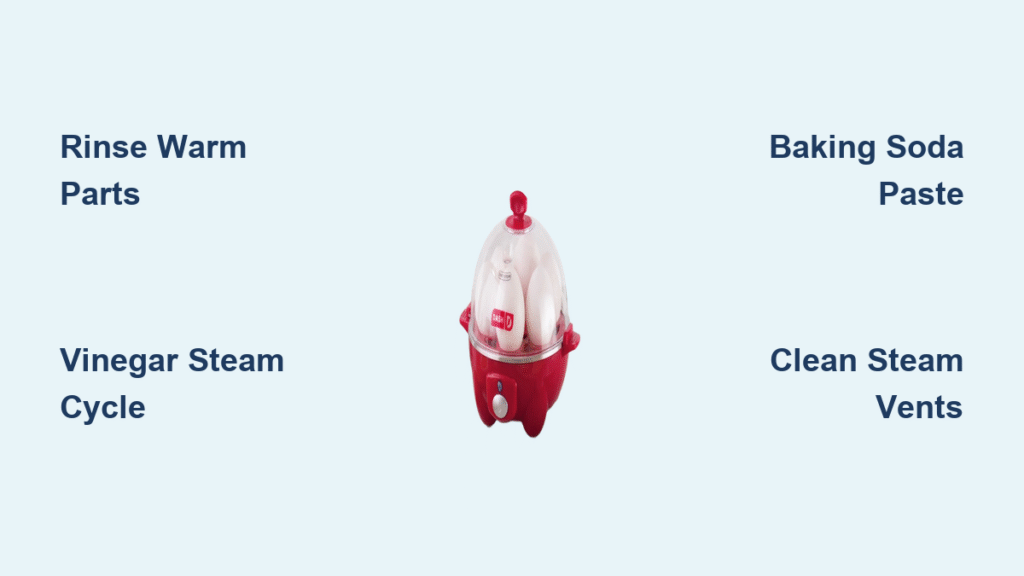
Your Dash egg cooker delivered perfect eggs yesterday, but today it’s leaving stubborn residue and that unpleasant boiled-egg smell won’t go away. You’re not alone—thousands of Dash egg cooker owners face the same frustration when mineral deposits build up and dried egg overflows create a maintenance nightmare. Learning how to clean Dash egg cooker properly solves these problems quickly and prevents them from ruining your breakfast routine.
Most users don’t realize that neglecting regular cleaning affects both hygiene and cooking performance. Hard water deposits actually insulate the heating element, causing inconsistent results and longer cooking times. The good news is that a thorough cleaning takes just 15 minutes and extends your appliance’s lifespan significantly. By following this complete guide on how to clean Dash egg cooker, you’ll restore it to like-new condition and enjoy perfect eggs every time.
Remove Daily Egg Residue Before It Hardens
Cleaning your Dash egg cooker immediately after use prevents the most common maintenance headaches. Wait for the appliance to cool completely—about 10 minutes after the buzzer sounds—before attempting any cleaning. This cooling period prevents burns and allows condensation to settle, making residue easier to remove.
Rinse Components While Slightly Warm
Take out the egg tray, poaching tray, and measuring cup while they’re still slightly warm but not hot to the touch. Rinse these parts under warm running water to prevent egg residue from hardening into a stubborn crust. Use your fingers or a soft sponge to gently remove any visible bits of egg white or yolk before they set. For particularly stubborn spots, soak the components in warm, soapy water for 5 minutes before scrubbing.
Wipe the Heating Plate Properly
Wipe the heating plate with a damp microfiber cloth while it’s still slightly warm (not hot). This crucial step loosens mineral deposits before they crystallize into permanent buildup. Never use abrasive scrubbers, steel wool, or harsh chemicals—they’ll damage the non-stick coating permanently and void your warranty. Focus on the circular heating element area where water evaporates and leaves mineral deposits.
Eliminate Mineral Buildup With Vinegar Cleaning Cycle
Hard water leaves white, crusty deposits that appear as chalky rings around the heating plate or white flakes in the water reservoir. These deposits insulate the heating element, causing inconsistent cooking results and longer preparation times. The vinegar cleaning cycle removes this buildup safely and effectively.
Run Vinegar Steam Treatment
Fill the measuring cup to the “Max” line with equal parts white vinegar and water. Pour this solution into the reservoir and run a complete cooking cycle without eggs. The steam generated during this cycle loosens mineral deposits naturally through gentle heat and acidity. After the cycle completes, let the vinegar solution sit in the reservoir for 30 minutes to maximize its cleaning power before proceeding.
Finish With Thorough Rinsing
After the vinegar soak, use a soft-bristled toothbrush to gently scrub the heating plate where mineral deposits accumulate. The deposits should flake away easily without requiring excessive pressure. Rinse all components thoroughly with clean water, then run one more cycle with plain water to eliminate any residual vinegar taste or smell that could affect your next batch of eggs.
Banish Persistent Egg Odors for Good

That sulfur smell lingers because egg proteins bond to plastic components at a molecular level. Standard washing won’t remove these odors completely because they’ve penetrated the porous plastic surfaces of your Dash egg cooker trays and lid.
Neutralize Odors With Baking Soda Paste
Mix 2 tablespoons of baking soda with warm water to create a thick paste. Apply this paste to all removable plastic components, especially the egg tray and poaching tray where odors concentrate. Let the paste sit for 15 minutes—the alkaline baking soda neutralizes acidic egg proteins responsible for unpleasant smells. Gently scrub with a soft sponge, then rinse thoroughly with clean water to remove all traces of the paste.
Add Fresh Scent With Citrus
For stubborn odors that persist after baking soda treatment, cut a lemon in half and rub the cut side over all plastic components. The citric acid breaks down odor-causing compounds while leaving a fresh, clean scent. Pay special attention to the underside of the lid where steam condenses and traps odors. Rinse well and air-dry components completely before reassembly to prevent any moisture-related issues.
Clean Hidden Problem Areas Most Owners Miss

The lid’s steam vent and water reservoir edges trap residue that standard cleaning misses. These neglected areas become breeding grounds for bacteria and create unpleasant smells over time, directly affecting your cooking results.
Clear Clogged Steam Vents
Use a cotton swab dipped in vinegar to clean the steam vent holes on the underside of the lid. Insert the swab gently and twist to remove built-up residue without damaging the vents. Check that all holes are completely clear—blocked vents cause pressure issues that lead to inconsistent cooking results and potential overflow during operation.
Remove Reservoir Seam Buildup
The seam between the water reservoir and base collects spills and debris that eventually harden into a sticky mess. Wrap a damp paper towel around a butter knife and carefully run it along this groove to dislodge hidden buildup. You’ll be surprised at the amount of gunk that accumulates in this overlooked area, which can affect both performance and hygiene.
Avoid Costly Cleaning Mistakes That Damage Your Appliance
Most damage to Dash egg cookers occurs during cleaning, not regular use. These common errors can void your warranty and permanently ruin your appliance’s performance if you don’t know what to avoid.
Never Submerge the Base Unit
The heating base contains electrical components that water will destroy permanently. Clean the base only with a slightly damp cloth, avoiding any openings or the control area completely. Never run the base under water or place it in the sink—moisture infiltration causes irreparable damage that requires complete replacement.
Skip the Dishwasher Completely
Dishwasher detergents are too harsh for the plastic components of your Dash egg cooker and can warp trays over time. Hand washing preserves the non-stick coating and extends component life significantly. The high heat cycles in dishwashers also damage temperature-sensitive parts, leading to premature failure of your appliance.
Restore Cloudy Plastic Components to Like-New Condition

Plastic trays become cloudy and yellowed over time from repeated exposure to heat and egg proteins. This isn’t just cosmetic—cloudy plastic actually harbors more bacteria and stains more easily, creating a hygiene concern beyond appearance.
Brighten Yellowed Trays With Peroxide
Mix equal parts 3% hydrogen peroxide and water in a container large enough to submerge your plastic components. Soak yellowed trays for 30 minutes, then rinse thoroughly with clean water. This method safely restores clarity without harsh chemicals that could damage the plastic. Avoid using this treatment on colored parts as it may cause fading.
Protect Plastic With Mineral Oil Barrier
After cleaning and drying, apply a tiny amount of food-grade mineral oil to a soft cloth and lightly buff all plastic components. This fills microscopic scratches that trap stains and creates a protective barrier against future staining. Wipe away any excess oil before reassembling your cooker to prevent oily residue on your next batch of eggs.
Prevent Future Buildup With Smart Maintenance Habits
Prevention beats deep cleaning every time. Establish these simple habits to keep your Dash egg cooker performing like new with minimal maintenance effort.
Implement Weekly Descaling Routine
In hard water areas, run the vinegar steam cycle weekly regardless of visible buildup. This regular maintenance prevents mineral accumulation that gradually affects heating efficiency and cooking times. Set a recurring calendar reminder to ensure you never miss this crucial step that extends your appliance’s lifespan.
Store Properly After Each Use
Store the cooker with the lid slightly ajar after ensuring all components are completely dry. This prevents mold growth and allows any residual moisture to evaporate naturally. Keep the measuring cup and trays nested together inside the cooker base to prevent loss and maintain organization for your next use.
A clean Dash egg cooker delivers consistent, delicious eggs every time while extending the appliance’s lifespan significantly. By incorporating these specific cleaning steps into your routine, you’ll prevent the common issues that plague most users and enjoy perfect results with minimal effort. Set a monthly calendar reminder for deep cleaning, and your Dash egg cooker will serve you perfectly for years to come—proving that knowing how to clean Dash egg cooker properly is the secret to hassle-free breakfasts. Remember, just 15 minutes of maintenance now saves you from replacing your appliance prematurely, making these cleaning techniques an essential part of your kitchen routine.


