
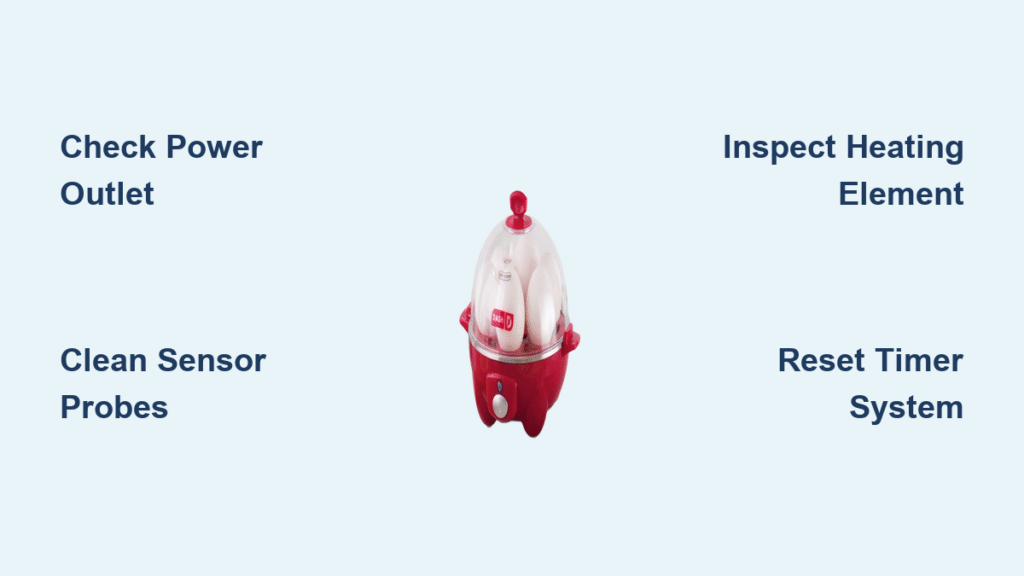
Your Dash egg cooker suddenly stopped working mid-week, leaving you with cold eggs and a cold breakfast. Whether it’s refusing to power on, beeping incessantly, or simply not cooking your eggs properly, these compact kitchen workhorses can develop frustrating issues. The good news? Most Dash egg cooker problems have straightforward solutions that don’t require an engineering degree or expensive repairs.
This guide walks you through exactly why your Dash egg cooker isn’t working and how to get it back to perfectly cooked eggs in under 30 minutes.
Why Dash Egg Cooker Won’t Turn On
No Power Signs When Plugged In
When your Dash egg cooker shows zero signs of life—no lights, no sounds, no heat—the culprit is typically power-related. Start with the basics: test your outlet with another appliance. If the outlet works, inspect your power cord for cuts, frays, or damage near the plug. Kitchen GFCI outlets can trip silently, cutting power to your cooker without visible indication.
Quick Fix: Try a different outlet on a separate circuit. If your cooker springs to life, reset the tripped GFCI outlet near your sink or dishwasher area before returning to your original outlet.
Intermittent Power Issues
Flickering LED indicators or sporadic shutoffs indicate loose connections. Unplug the unit and clean the power prongs with electrical contact cleaner. Check where the cord enters the base—this high-stress point often develops internal breaks that aren’t visible externally.
Pro Tip: Wiggle the cord gently while plugged in. If power cuts in and out, the cord needs replacement. Dash offers OEM replacement cords for $8.99-$12.99—far cheaper than buying a new unit.
Fix Water Level Sensor Problems
Immediate Beeping at Start
Your Dash egg cooker beeping right after you press start almost always means the water level sensor can’t detect sufficient water. Remove the lid and egg tray, then check the small metal probes inside the water reservoir. Mineral buildup creates an insulating layer that tricks the sensor into thinking there’s no water.
Solution: Clean sensor probes with white vinegar on a cotton swab. For stubborn deposits, run a vinegar-water solution through a complete cycle without eggs first.
Water Leaking During Operation
Water pooling under your cooker creates both mess and malfunction. Check the silicone seal around the heating element—it hardens and cracks over time. Also ensure you’re filling to the exact measurement lines; overfilling forces water past seals.
Quick Test: Run a water-only cycle on your counter. Any leaks become immediately visible as steam or puddling. If you spot leaks, replace the $9.99-$14.99 seal kit before attempting further cooking.
Repair Heating Element Failures

Water Stays Cold Throughout Cycle
When water won’t heat, the heating element has likely failed. After unplugging and cooling completely, remove the base plate (usually 4-6 screws). Look for discoloration, warping, or visible damage on the metal heating disc.
Diagnostic Test: Use a multimeter set to ohms. Touch probes to the heating element terminals—normal readings range 10-50 ohms. Infinite resistance indicates a dead element requiring replacement.
Extended Cooking Times
Partial heating performance means your element works but produces insufficient heat. This stems from mineral buildup creating an insulating layer. The fix involves descaling—fill the reservoir with equal parts white vinegar and water, then run 2-3 complete cycles without eggs.
Maintenance Note: Monthly descaling prevents this issue entirely in hard water areas. Using distilled water extends your element’s life by 3-4 years.
Timer and Control Malfunctions
Timer Not Advancing
Mechanical timers can stick due to dried lubrication or debris. Access the timer mechanism (varies by model) and clean gears with electrical contact cleaner. Apply a tiny drop of clock oil to moving parts.
Warning Sign: If you hear the timer motor running but the dial never moves, the gear mechanism is stripped and needs replacement. Dash offers timer assemblies for $14.99-$22.99.
Digital Display Issues
Dash Deluxe models with digital displays can fail in humid environments. Try a factory reset: unplug for 30 minutes, then hold all buttons while plugging back in. If garbled characters persist, the control board likely needs professional replacement.
Model-Specific Fix Guide
Dash Rapid Series (2018+)
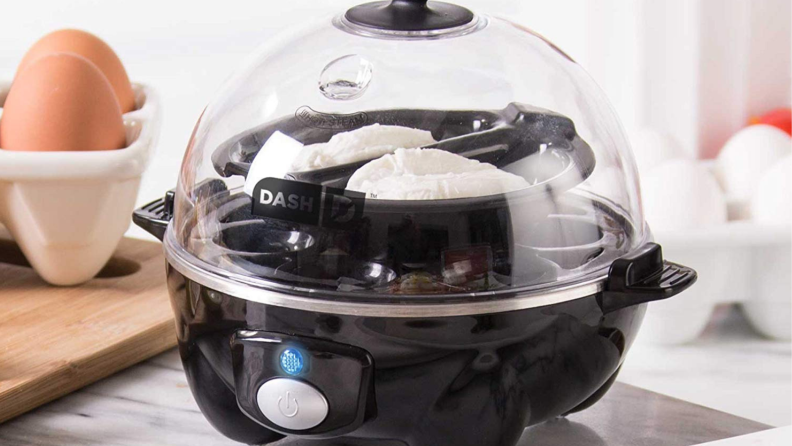
These models suffer from sensor probe corrosion. Dash offers an upgrade kit free under warranty—contact customer service with your serial number to get the improved corrosion-resistant probes.
Dash Deluxe Models
The larger heating element cycles more aggressively, leading to premature gasket failure after 2+ years. Replacement gaskets cost $9-14 and restore full function. Check for steam escaping from the sides—that’s your first sign of gasket failure.
Dash Mini Units
Overheating kills these compact units. Ensure 6 inches clearance on all sides and never use extension cords—the short factory cord is intentional for safety. Mini units require precise fill levels; use only the included measuring cup to avoid sensor errors.
When to Replace vs. Repair
Repair Immediately
- Unit under 2 years old
- Simple failures: cord, switch, sensor
- Repair cost under $15
- You have basic DIY skills
Replace Instead
- Unit over 4 years old
- Multiple system failures
- Heating element plus control board issues
- Repair exceeds $20
Current Reality Check: New Dash Rapid cookers cost $19.99-24.99—factor this into your repair decision. If your cooker is more than 4 years old with multiple issues, replacement is often more economical than repair.
Prevent Future Failures
Daily Habits
- Empty water reservoir after each use
- Wipe heating element with soft cloth while warm
- Check for unusual sounds or smells before starting
- Use only the included measuring cup for water
Pro Tip: Register your Dash egg cooker within 30 days of purchase to extend warranty coverage and receive recall notifications. Most users skip this free protection.
Monthly Maintenance
- Complete descaling cycle with vinegar solution
- Clean all removable parts in dishwasher
- Inspect seals and power cord for damage
- Test all functions even if not in use
Hard water areas require monthly descaling to prevent the mineral buildup that causes 70% of Dash egg cooker failures. Distilled water users can extend this to quarterly maintenance.
Quick Performance Test
After any repair, verify proper function:
1. Use 6 room-temperature large eggs
2. Fill to hard-boiled line with distilled water
3. Verify 16-minute cycle completion
4. Check yolk temperature reaches 170°F
Critical Check: Run 3 consecutive batches to confirm timing consistency. Normal variation is ±30 seconds—any more indicates ongoing issues needing further attention.
Your Dash egg cooker should now deliver perfectly cooked eggs reliably. Most issues stem from power problems, mineral buildup, or sensor failures—all fixable with basic tools and patience. Keep this guide handy for future troubleshooting, and remember: consistent maintenance prevents 90% of egg cooker failures. For persistent issues beyond these solutions, contact Dash customer service with your model number—they often provide free replacement parts for units under warranty.


