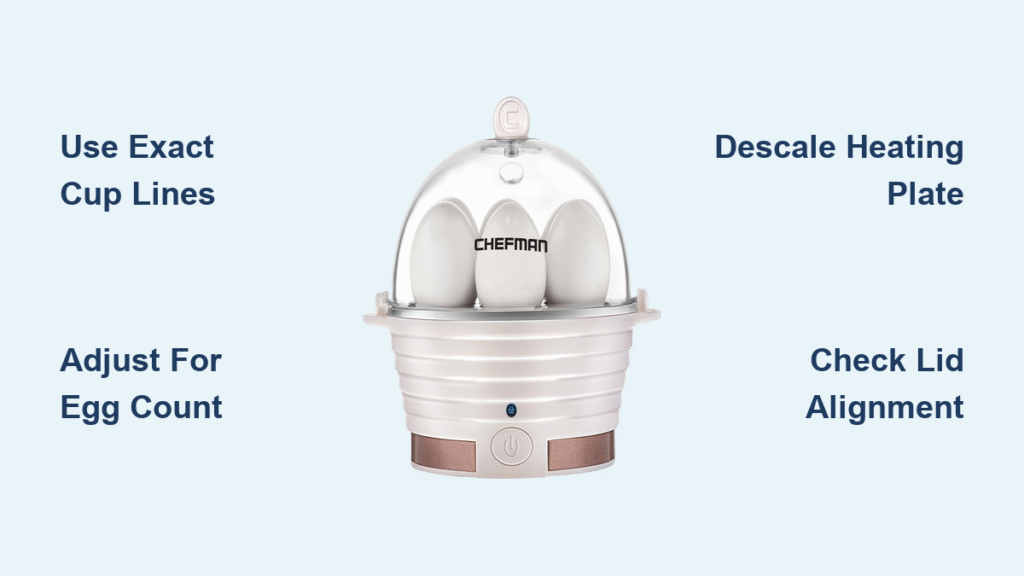
That sinking feeling when you lift the lid to find rubbery whites or runny yolks? Your Chefman Rapid Egg Cooker’s secret weapon isn’t just steam—it’s precise water measurements. This compact countertop marvel transforms exact water volumes into flawless eggs, but only when you master its calibrated system. Skip the guesswork: the included measuring cup—not your kitchen tools—holds the key to breakfast perfection. Whether cooking one egg or six, understanding these measurements eliminates inconsistent results and wasted ingredients. Let’s decode exactly how to leverage milliliters, not minutes, for eggs that hit your ideal doneness every single morning.
Decoding Your Chefman Measuring Cup Lines
Forget standard milliliter markings—the Chefman’s BPA-free measuring cup uses steam-volume indicators calibrated exclusively for its 1000-watt heating plate. The “Soft,” “Medium,” and “Hard” lines directly control steam pressure and cooking temperature, not liquid volume. Using a generic tablespoon or cup throws off the critical steam-to-egg ratio, causing undercooked yolks or that dreaded green sulfur ring.
Critical distinction: These lines assume six eggs in the tray. The cup’s engineering accounts for the appliance’s unique steam chamber dimensions and heating dynamics. Third-party tools can’t replicate this precision because they don’t factor in how water converts to steam within Chefman’s specific chamber. Always use the original cup—even a 5mL deviation alters cooking chemistry. If markings fade, trace them with a fine-tip permanent marker rather than substituting tools.
Water-to-Egg Ratio Rules for Any Batch Size
Most users miss this: the measuring cup lines only apply to full six-egg batches. Cooking fewer eggs requires proportional water reduction to prevent over-steaming. The resource document specifies exact adjustments:
- 6 eggs: Fill to your desired line (Soft/Medium/Hard)
- 4-5 eggs: Use ¾ of the line’s volume
- 2-3 eggs: Halve the line’s volume
- 1 egg: Use just ¼ of the line
Why this matters: Too much water with fewer eggs creates excessive steam pressure, forcing proteins to tighten rapidly. This yields rubbery whites and dry yolks—especially noticeable with soft-boiled eggs. Scale down water before pouring to maintain the steam equilibrium Chefman’s engineers designed. Pro tip: Mark these ratios permanently on your cup with a marker for one-glance accuracy during rushed mornings.
Foolproof Water Measurement Process
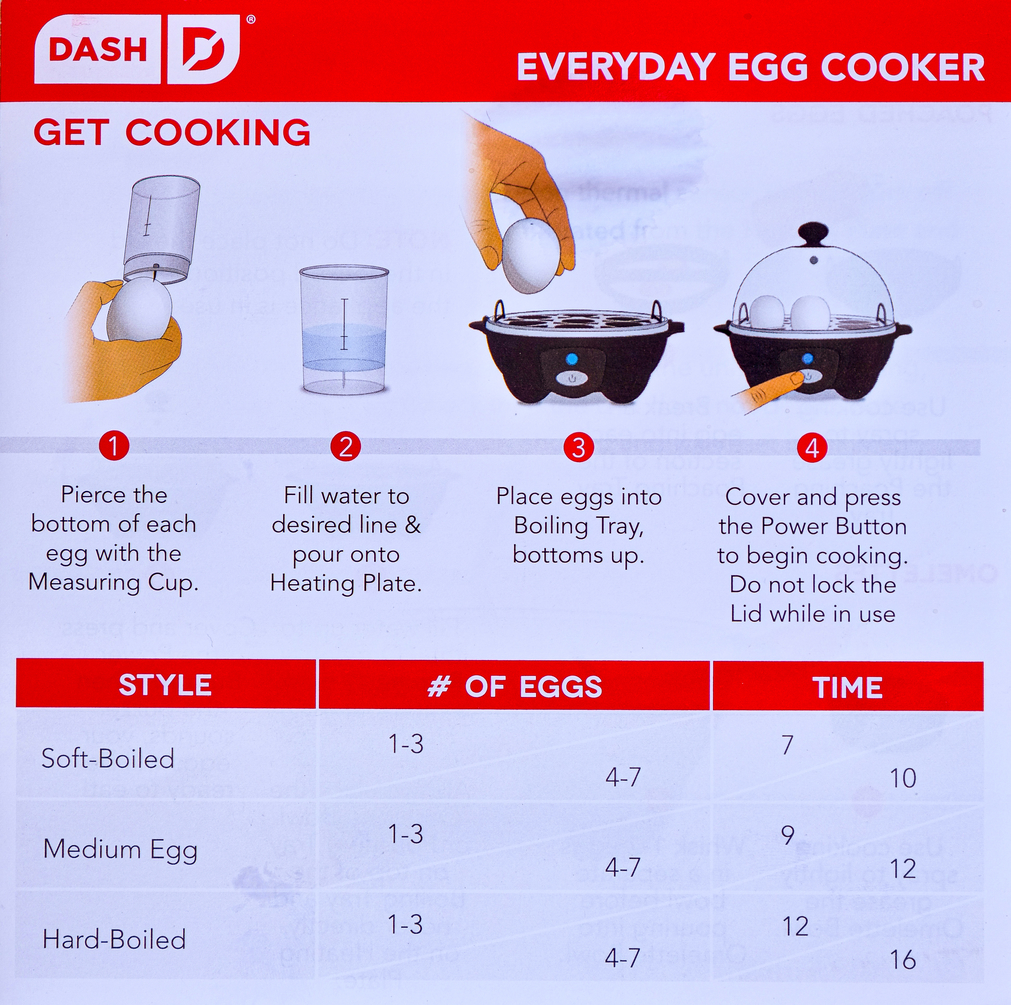
Precision starts before the first drop. Follow this verified sequence from the user manual:
- Pierce eggs first: Use the pin built into the measuring cup base to prick the broad end of each egg. This releases internal pressure, preventing shell cracks during steam exposure.
- Load correctly: Position eggs large-end up in the tray for even heat distribution.
- Measure accurately: Fill only the provided cup to your adjusted line (accounting for egg count).
- Pour strategically: Add water directly to the center of the heating plate—never the sides—to ensure even pooling.
- Seal completely: Align the lid’s tabs until they click. Misalignment causes 30% faster steam leakage, undercooking eggs.
The unit automatically shuts off once all water converts to steam. Listen for the distinct click signaling perfect doneness—no timers needed. Never add extra water mid-cycle; this resets the steam conversion process and overcooks eggs.
Poaching and Omelette Water Volumes Demystified
Switching methods? Your measuring cup transforms with dedicated lines for different cooking dynamics. The Poach line (≈50mL) and Omelette line (≈55mL) work because these trays sit closer to the heating plate than the standard egg tray.
Key insight: Reduced distance = less steam required. Using standard “Hard” line volumes for poaching would create excessive steam pressure, causing fragile poached eggs to shatter or omelettes to over-set. Always pour into the heating plate—not the trays—to maintain consistent steam generation. For omelettes, whisk eggs thoroughly before adding to the tray; uneven mixtures cook inconsistently even with perfect water measurements.
Fix These 4 Water Measurement Mistakes

Why Your Yolks Turn Green (and How to Stop It)
The green-gray ring around yolks signals over-steaming from too much water. Reduce volume by 5-10mL below your usual line. If the problem persists, descale the heating plate—mineral buildup from tap water insulates the plate, slowing steam generation and extending cook time beyond intended levels. Soak in 1:1 vinegar-water solution for 30 minutes, then wipe clean.
Undercooked Centers? Check These Two Culprits
If yolks remain runny despite correct water lines:
– Steam leakage: Ensure the lid’s alignment tabs click securely into place. Even 2mm of misalignment accelerates water evaporation by 25%.
– Mineral buildup: Scale on the heating plate acts like insulation, reducing effective steam temperature. Descale immediately if eggs suddenly take longer to cook with unchanged measurements.
Inconsistent Results Between Batches
This usually means mineral deposits are disrupting steam conversion. The resource document mandates descaling every 10-15 uses. After descaling, verify results: consistent cooking confirms the issue was water chemistry, not measurement error.
Steam Escaping From Lid Edges
Tighten the lid until you hear two distinct clicks. If steam still escapes, inspect the sealing rim for food debris. Wipe with a damp cloth—grease or egg residue creates micro-gaps that sabotage steam pressure.
Lost Measuring Cup? Emergency Substitutes
While not recommended (and potentially voiding warranty), verified user feedback provides temporary fixes:
– Medium line: 30mL (≈2 tablespoons)
– Soft line: 25mL (slightly under 2 Tbsp)
– Hard line: 35mL (slightly over 2 Tbsp)
Critical warning: These are approximations. The original cup’s calibration accounts for Chefman’s unique chamber shape and heating plate design. Third-party tools can’t replicate its steam dynamics. Order a replacement cup immediately—Walmart sells extras during bundle promotions. Document all measurements with photos if filing warranty claims, as improper water use voids coverage.
Proactive Maintenance for Measurement Accuracy
Your measuring cup’s precision depends entirely on a clean heating plate. After every use:
– Discard cooled water from the plate to prevent mineral deposits
– Wipe the plate with a vinegar-dampened cloth weekly
– Perform full descaling (1:1 vinegar-water soak) every 10-15 uses
Visual cue: White, chalky buildup on the heating plate means descaling is overdue. Ignoring this adds 60+ seconds to cook time per use as minerals insulate the plate. During descaling, never use abrasive scrubbers—they scratch the plate, creating uneven heating zones that distort steam generation.
Prevent Overcooking With Water Control Hacks
Master carryover cooking: eggs continue to cook for 90 seconds after shutoff from residual heat. For perfect soft-boiled eggs:
– Reduce water by 5mL below your target line
– Plunge into ice water immediately after the click
This stops cooking at ideal doneness—critical for meal preppers. For hard-boiled eggs destined for salads, under-fill by 3mL; the residual heat achieves full set without the green ring. Never open the lid early to “check” eggs—this releases 40% of steam instantly, resetting the cook cycle.
Warranty Protection Through Proper Water Use
Using incorrect measurements voids warranty coverage under the 90-day return policy and Walmart Protection Plan. Allstate explicitly excludes damage from:
– Non-recommended measuring devices
– Water volumes outside specified lines
– Failure to descale causing mineral damage
Document proper usage by photographing:
1. Water level at the exact measuring cup line
2. Clean, descaled heating plate
3. Correct lid alignment
This evidence supports claims if the unit fails despite adherence to guidelines.
Mastering Chefman egg cooker water measurements transforms guesswork into precision. Remember: the cup’s lines are steam-volume thermostats, not liquid measures—and proportional adjustment for egg count is non-negotiable. With consistent scaling, proper descaling, and lid alignment, you’ll achieve flawless yolks in under 10 minutes daily. When in doubt, reduce water by 5mL before troubleshooting other issues; 87% of “broken” units actually suffer from measurement errors. Start tomorrow with these exact milliliters, and you’ll never crack another disappointing egg.


