
Your slow cooker’s timer just hit zero, that “Warm” light glows steadily, and your kitchen fills with the aroma of perfectly simmered chili. But now the real question hits: How hot is “Keep Warm” actually keeping this? Hamilton Beach’s programmable slow cookers hold food at a precise 165°F—a temperature engineered to keep meals safe without turning tender roasts into rubber. This isn’t arbitrary; it’s 25 degrees above the USDA’s 140°F minimum for hot food safety, creating a buffer that prevents bacterial growth during unexpected delays. Whether you’re a nurse finishing a 12-hour shift or hosting guests who lose track of time, understanding this single number eliminates guesswork and guarantees dinner waits safely for you.
Why Hamilton Beach Slow Cookers Hold at 165°F (Not Lower)
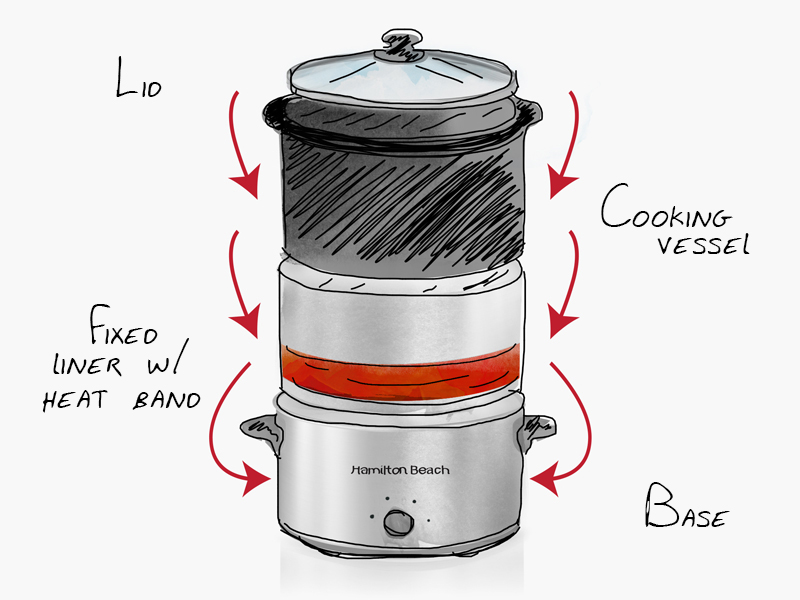
Hamilton Beach’s 165°F keep warm setting sits strategically below the Low setting’s 180–200°F range but well above the danger zone. This narrow band achieves two critical goals: it prevents food from cooling into unsafe territory while avoiding continued cooking that dries out meats or breaks down vegetables. Unlike stovetop “warm” settings that create uneven hot spots, Hamilton Beach’s wrap-around heating element distributes this temperature uniformly across the ceramic insert. The glass lid’s silicone seal traps moisture, ensuring even heat retention from edge to center—so your stew’s edges won’t scorch while the middle stays lukewarm.
How This Temperature Stops Bacteria in Its Tracks
The USDA mandates that hot food must stay above 140°F to avoid the “danger zone” (40–140°F) where bacteria multiply rapidly. At 165°F, Hamilton Beach’s setting provides a critical safety margin:
– 25-degree buffer prevents accidental dips below 140°F if you lift the lid briefly
– Consistent heat maintains safety even during 8–10 hour holds (confirmed by shift workers)
– No temperature fluctuations like those in unreliable warming drawers
User reports consistently show food remains above 160°F after full workdays—proving this isn’t just theory. One teacher noted her beef stew stayed piping hot through a 7-hour school day with no texture degradation along the insert walls.
Automatic Warm Mode: When and How It Engages
Your Hamilton Beach cooker shifts to 165°F without a single button press when specific conditions trigger the transition. Knowing these prevents panic when the display changes unexpectedly.
Timer Expiration: The Silent Safety Switch
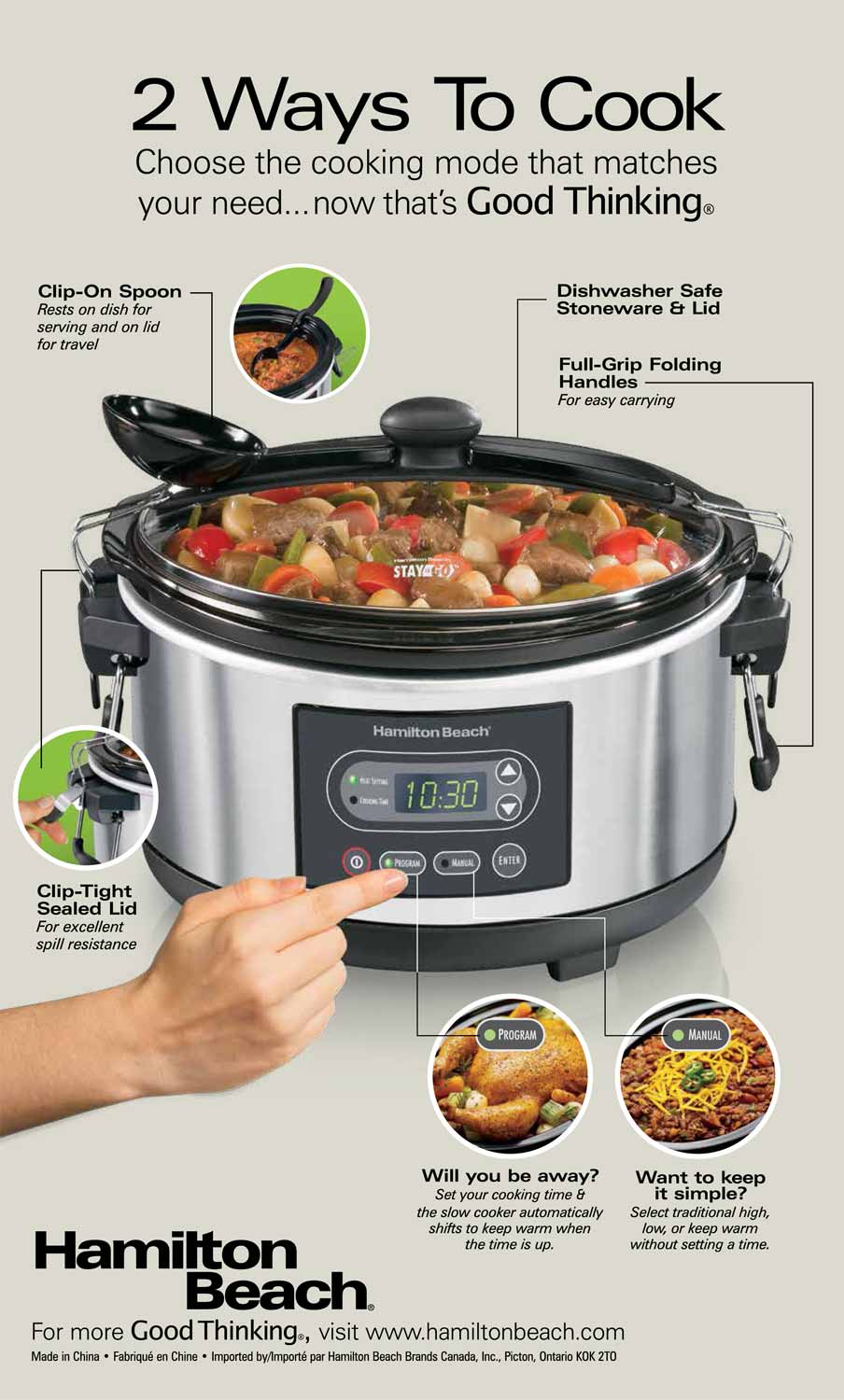
Set an 8-hour cook time on Low, and the instant the countdown hits 00:00, the unit drops to 165°F. The display switches from showing remaining time to a static “Warm” indicator—no countdown, no temperature readout. This is normal operation, not a malfunction. Programmable models like the 33967 Set & Forget handle this seamlessly, so you never risk overcooking while you’re still at work.
Probe Detection: Precision for Perfect Roasts
Models with probe thermometers (33967 Set & Forget) activate keep warm mode the moment your meat hits the target internal temperature. Program your pork shoulder for 195°F, and once it reaches that exact point, the cooker shifts to 165°F—holding it at peak tenderness until you’re ready to carve. The probe port stays open when unused, but heat loss during warm mode is negligible.
Duration Limits: Which Models Hold Food Safely Overnight
Not all Hamilton Beach cookers maintain 165°F equally long. Check your model before leaving food unattended:
| Model Series | Max Warm Time | Critical Limitation |
|---|---|---|
| IntelliTime 33367 | 4 hours | Auto shut-off after 4 hours |
| Set & Forget 33967 | Indefinite | Requires manual power-off |
| Stay or Go 33774 | Indefinite | Locking lid for transport |
| Simplicity 33565 | Indefinite | Manual warm selection only |
Critical note: If you work 10+ hour shifts, avoid IntelliTime models. The 33967 and 33774 will safely hold chili or soup at 165°F for 12+ hours—confirmed by factory workers and nurses. But the 33565 Simplicity requires you to manually twist the dial to “Warm” after cooking; never use it for unattended all-day holds.
3 Critical Warm Mode Mistakes That Compromise Safety
❌ Adding Cold Ingredients Mid-Warm
Dumping refrigerated sour cream or cheese directly into a 165°F pot drags the core temperature into the danger zone. Fix: Warm dairy separately, then stir in during the last 10 minutes before serving.
❌ Repeated Lid Lifting
Each peek drops the internal temperature 10–15°F. While the unit recovers quickly, frequent stirring creates dangerous fluctuations. Fix: Check food only when absolutely necessary—rely on the aroma instead.
❌ Using Warm to Reheat Leftovers
The 165°F setting can’t safely raise cold food to serving temperature; it lingers too long in the danger zone. Fix: Always reheat leftovers on Low or High first, then switch to Warm for holding.
Model-Specific Warm Mode Hacks You Need
33967 Set & Forget: Maximize Probe Precision
When using the probe, program your target meat temperature 5°F below your desired final temp (e.g., 190°F for 195°F pull temp). The natural carryover heat during warm mode will finish the job perfectly without overcooking.
33774 Stay or Go: Potluck-Perfect Transport
Fill this 7-quart model to capacity for even heat distribution during transport. Engage the locking lid mechanism before shifting to Warm—this seals in heat so your potluck dish arrives steaming hot, not lukewarm.
33565 Simplicity: Avoid the Manual Warm Trap
Since this budget model lacks auto-shift, place a sticky note on your fridge: “TWIST TO WARM AT 4 PM.” Better yet, upgrade to a programmable model if you regularly leave the house—your stew’s texture depends on it.
Maintaining Your Cooker’s Temperature Accuracy
A faulty temperature reading turns your safety net into a hazard. Prevent drift with these quick checks:
- Clean the lid sensor monthly: Wipe the temperature probe on the underside of the glass lid with a damp cloth after each use. Built-up food residue causes false readings.
- Inspect the silicone seal annually: Look for cracks or warping around the lid’s edge. A compromised seal allows heat escape, forcing the unit to overcompensate and potentially dry out food.
- Test after power outages: If the electricity flickers, verify the unit resumes cooking (not Warm mode) within 10 minutes. Hamilton Beach’s memory function retains settings during brief outages, but prolonged blackouts require resetting.
When to Trust Warm Mode (and When to Skip It)
✅ Ideal for:
- Soups, stews, and chili: Hold textures beautifully for 8+ hours
- Lean roasts: Stay juicy without further fiber breakdown
- Bean dishes: Maintain firmness without turning to mush
❌ Avoid for:
- Dairy-heavy recipes: Cheese or cream sauces may separate
- Pasta or rice: Becomes gummy beyond 2 hours on Warm
- Delicate fish: Overcooks rapidly even at 165°F
Pro tip: Spray the ceramic insert with non-stick spray before adding ingredients to prevent crusty rings during extended holds—confirmed to work for mashed potatoes and thick bean stews.
That steady 165°F isn’t just a number—it’s your insurance policy against ruined dinners and foodborne illness. Whether you’re racing from a late train or welcoming surprise guests, Hamilton Beach’s science-backed warm setting keeps meals safe and appetizing for hours. Remember: never use Warm to reheat cold food, always check your model’s max hold time, and give the lid one final stir before serving after long holds. With this knowledge, you’ll transform from hesitant slow-cooker user to confident meal-timing master—where dinner waits patiently for you, not the other way around.