You’re prepping a hearty beef stew for Sunday dinner when you notice wisps of steam escaping from your slow cooker lid. Panic sets in—should steam escape from a slow cooker? Is this the start of a kitchen disaster or perfectly normal operation? This exact moment confuses millions of home cooks, from beginners nervously trying their first pot roast to seasoned chefs troubleshooting unevenly cooked meals. The truth is, controlled steam release is essential for safe, effective slow cooking, but excessive billowing clouds signal serious problems that can ruin dinner or even create safety hazards. Understanding the difference between healthy steam patterns and warning signs saves your meal, your appliance, and your peace of mind.
Steam isn’t just a byproduct—it’s your slow cooker’s communication system. When gentle wisps escape through the lid vent or slight gaps, they prove the appliance maintains the precise temperature range (185°F–200°F) needed to transform tough cuts into fork-tender perfection while keeping food safely above the 140°F bacterial danger zone. Ignore these signals, and you risk everything from dried-out chili to potential pressure buildup. By the end of this guide, you’ll confidently interpret your slow cooker’s steam language, troubleshoot issues in under 10 minutes, and ensure every meal cooks safely—even when you’re out running errands.
Why Gentle Steam Wisps Mean Your Slow Cooker Works Perfectly
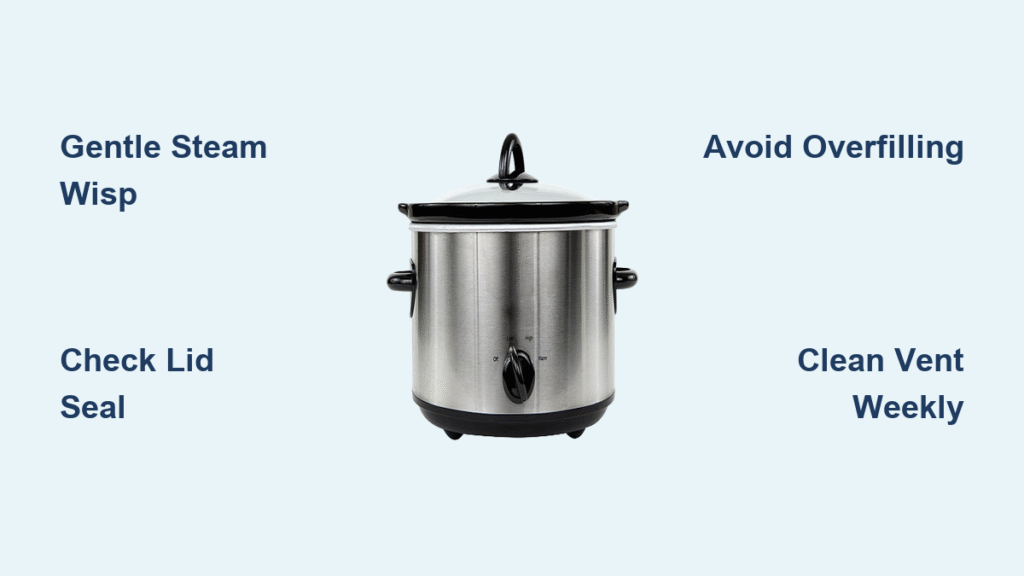
That faint steam escaping during cooking isn’t a flaw—it’s engineered safety in action. Your slow cooker’s lid vent and microscopic gaps exist specifically to release small amounts of steam, preventing dangerous pressure accumulation while maintaining the humid environment crucial for tender results. Think of it like a pressure-release valve on a teakettle, but far more subtle. When you see thin, steady wisps rising from the vent after the first hour, it confirms internal temperatures are climbing correctly. Simultaneously, condensation forming on the lid interior acts as your visual thermometer—droplets mean the appliance has reached 140°F, the critical threshold where harmful bacteria begin to die off.
How to Confirm Healthy Steam Patterns
Don’t guess whether your steam levels are normal. Verify with these visual indicators:
– Ideal steam flow: A single visible wisp every 5–10 seconds (like breath on a cold day)
– Lid condensation: Light moisture beads covering 30–50% of the underside
– Sound cues: Occasional soft bubbling, never violent boiling or hissing
– Lid stability: Firmly seated without bouncing or vibrating
⚠️ Critical mistake to avoid: Never seal the vent with tape or foil. This turns your slow cooker into an unregulated pressure cooker, risking lid blowouts and severe burns. The vent must stay open during all cooking phases.
Spotting Dangerous Excessive Steam: 4 Red Flags

When your slow cooker resembles a miniature locomotive billowing thick clouds, immediate action prevents ruined meals or appliance failure. Excessive steam escape typically stems from three critical issues: a cracked ceramic insert, warped lid seal, or failing heating element. Left unchecked, these problems cause rapid moisture loss, leading to dry, overcooked food and potential electrical hazards. Worst case? Uncontrolled pressure buildup could cause the lid to dislodge during cooking—a serious burn risk.
Instant Diagnostic Test for Steam Overload
Run this 2-minute check when steam seems excessive:
1. Pause cooking and unplug the unit (safety first!)
2. Inspect the lid seal: Run your finger along the rim where lid meets ceramic pot. Feel for cracks, warping, or food debris.
3. Check the vent: Shine a flashlight through it. If blocked by sauce splatter, clear gently with a toothpick.
4. Examine fill level: If contents exceed ¾ full, carefully transfer 1–2 cups to a bowl.
If steam persists after these checks, your heating element likely needs replacement. Proceed to the definitive water test below before continuing use.
The 8-Hour Water Test: Verify Safety in 4 Steps
Suspect your slow cooker isn’t reaching safe temperatures due to steam issues? This foolproof test confirms functionality using only water and a food thermometer—no guesswork required. It’s the industry standard recommended by appliance manufacturers and food safety agencies.
How to Perform the Test Correctly
- Fill with tepid water: Use room-temperature water (not hot or cold) to fill the ceramic pot to the ½ mark. Why? Starting temperature affects results.
- Cook 8 hours on LOW: Place lid securely (vent open!) and run uninterrupted. Do not lift the lid.
- Measure final temperature: Immediately insert a calibrated food thermometer into the center. Wait 30 seconds for accuracy.
- Interpret results:
– ✅ Safe (185°F+): Appliance works correctly—steam issues likely due to overfilling or frequent lid lifting
– ❌ Unsafe (<185°F): Heating element failure—replace unit immediately
This test catches problems invisible to steam observation alone. For example, a unit showing normal steam might still run too cool if the thermostat is faulty, creating a bacterial breeding ground.
Prevent Steam Disasters: 3 Non-Negotiable Rules
Most steam-related slow cooker failures stem from simple, avoidable mistakes. Follow these rules religiously to protect your appliance and ensure food safety:
Rule 1: Master the Fill Level Sweet Spot
Overfilling is the #1 cause of excessive steam and messy boil-overs. Always keep contents between ½ and ¾ full. Why? Steam needs space to circulate and condense back into liquid. At ¾ capacity, steam gently returns to the pot, basting food continuously. Fill beyond this, and pressure forces liquid out through the vent—diluting flavors and creating scalding hazards. For soups or sauces, leave extra headspace (¼ empty) since liquids expand more.
Rule 2: Become a Lid Discipline Champion
Every time you lift the lid, temperature plummets 10–15°F and precious steam escapes—equivalent to losing 20 minutes of cooking time. Worse, cold air hitting hot ceramic can cause thermal shock cracks. Train yourself to resist peeking. If you must check (e.g., adding ingredients to soup), do it within the first hour when temperature recovery is fastest, and limit lifts to 15 seconds max.
Rule 3: Vent Maintenance is Non-Negotiable
Food particles clogging the lid vent transform normal steam release into erratic gushing. Clean vents weekly by:
– Running warm water through the opening
– Gently scrubbing with a soft toothbrush
– Drying completely before storage
Pro tip: Place a folded paper towel over the vent during storage to catch dust.
Energy Savings Hidden in Steam Control

Your steam management directly impacts electricity bills. When steam escapes properly, the heating element cycles efficiently—maintaining temperature with minimal power. But excessive steam forces constant reheating, spiking energy use by up to 30%. Consider these real-world comparisons for an 8-hour beef roast:
| Cooking Method | Energy Used | Cost (at $0.15/kWh) |
|---|---|---|
| Slow Cooker (proper steam control) | 0.8 kWh | $0.12 |
| Electric Oven | 3.0 kWh | $0.45 |
| Gas Stovetop Simmer | 0.53 therm | $0.32 |
That’s 63% less cost versus an oven. But if steam escapes uncontrollably due to a damaged seal, energy use jumps to 1.1 kWh—erasing nearly half your savings. Proper steam control isn’t just about food quality; it’s a direct path to lower bills.
Steam Diagnosis Cheat Sheet: Read Your Cooker’s Signals
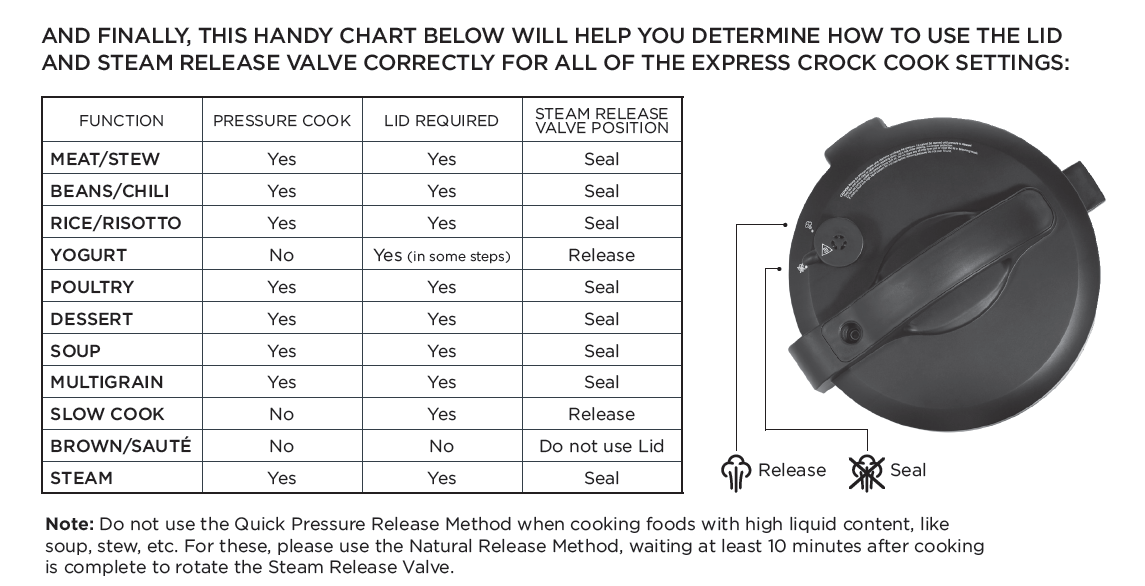
Stop second-guessing. Use this quick-reference guide to interpret steam behavior at a glance:
| Steam Pattern | What It Means | Immediate Action |
|---|---|---|
| Thin, steady wisps | Optimal operation | None—continue cooking |
| Thick, continuous clouds | Overfilling or seal failure | Reduce fill level; check lid integrity |
| No visible steam | Blocked vent or low temp | Clean vent; run water test |
| Steam with sputtering | Contents boiling over | Reduce liquid; skim fat from meat |
Pro Maintenance Move
Monthly, perform the “steam symmetry test”: After 2 hours of cooking, rotate the pot 180°. If steam patterns change drastically (e.g., heavy on one side), your heating element is uneven—time for replacement.
When Steam Signals Appliance Death: Replacement Triggers
Not all steam issues are fixable. Replace your slow cooker immediately if you observe:
– Steam combined with burning smells (indicates electrical short)
– Lid bouncing violently during cooking (severe pressure imbalance)
– Water test fails twice (confirmed heating element failure)
– Cracks in ceramic insert (causes erratic steam and contamination risk)
⚠️ Critical safety note: Never use slow cookers with frayed cords or cloth wiring—they lack modern grounding and pose fire risks. Modern units with plastic cords and auto-shutoff are vastly safer.
Final Steam Safety Checklist Before Every Cook
Before walking away from your slow cooker, run this 20-second verification:
1. Vent is fully open and unobstructed
2. Lid sits flush with no gaps or warping
3. Fill level between ½–¾ full
4. Counter space is dry and clear of walls/cabinets
5. Cord isn’t pinched or near heat sources
Remember: Gentle steam wisps equal success—your appliance is working exactly as designed. Billowing steam demands immediate action. By mastering these steam signals, you transform uncertainty into confidence, ensuring every slow-cooked meal is both safe and spectacular. Trust the wisps, verify with thermometers, and never ignore the language of steam. Your perfectly tender pulled pork—and your safety—depend on it.