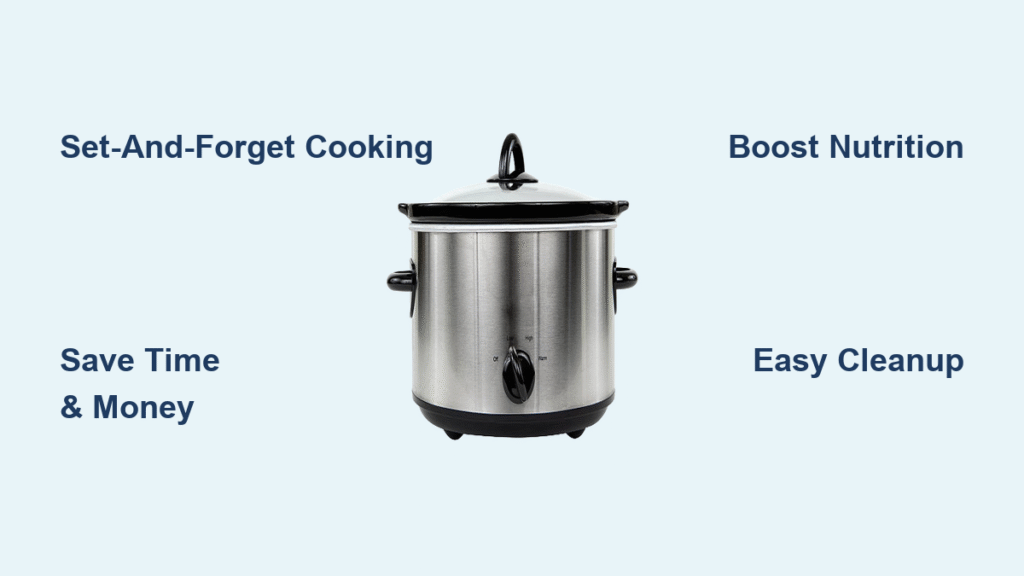
You’ve got a brand new Crock Pot sitting on your counter, and you’re staring at it wondering where to start. Maybe you’ve heard horror stories about mushy vegetables or meat that turns to shoe leather. Or perhaps you’re just overwhelmed by the sheer volume of recipes online claiming to be “foolproof.” The truth is, mastering your slow cooker is simpler than you think—it just requires understanding a few key principles that most instruction manuals gloss over.
This guide will transform you from a Crock Pot novice to a confident slow cooking pro in under 15 minutes. You’ll learn exactly how to use the settings, avoid the most common disasters, and create consistently delicious meals with minimal effort. Let’s get your Crock Pot working for you, not against you.
Crock Pot vs Slow Cooker Key Differences
A Crock Pot is simply a brand name that’s become synonymous with slow cooking—like calling all tissues Kleenex. Both Crock Pots and other slow cooker brands (Hamilton Beach, Kitchen Aid, All Clad) use the same fundamental cooking method: moist heat braising in a sealed ceramic vessel. Your cooking results will be identical regardless of brand—focus on the features, not the name.
The heating mechanism matters more than the brand name. Most Crock Pots heat from both the bottom and sides, creating even heat distribution. Some metal slow cookers only heat from the bottom, which can create hot spots. This difference affects cooking consistency more than any branding ever will. When shopping for your next unit, prioritize even heating over brand recognition.
Why Brand Confusion Creates Cooking Mistakes
Many beginners make the critical error of thinking Crock Pot recipes won’t work in other brands. This misconception leads to unnecessary frustration when recipes fail. The real issue is usually incorrect fill levels or temperature settings, not the appliance brand. Understanding that all slow cookers operate on the same principles eliminates this confusion and expands your recipe options exponentially.
Fill Levels That Actually Work
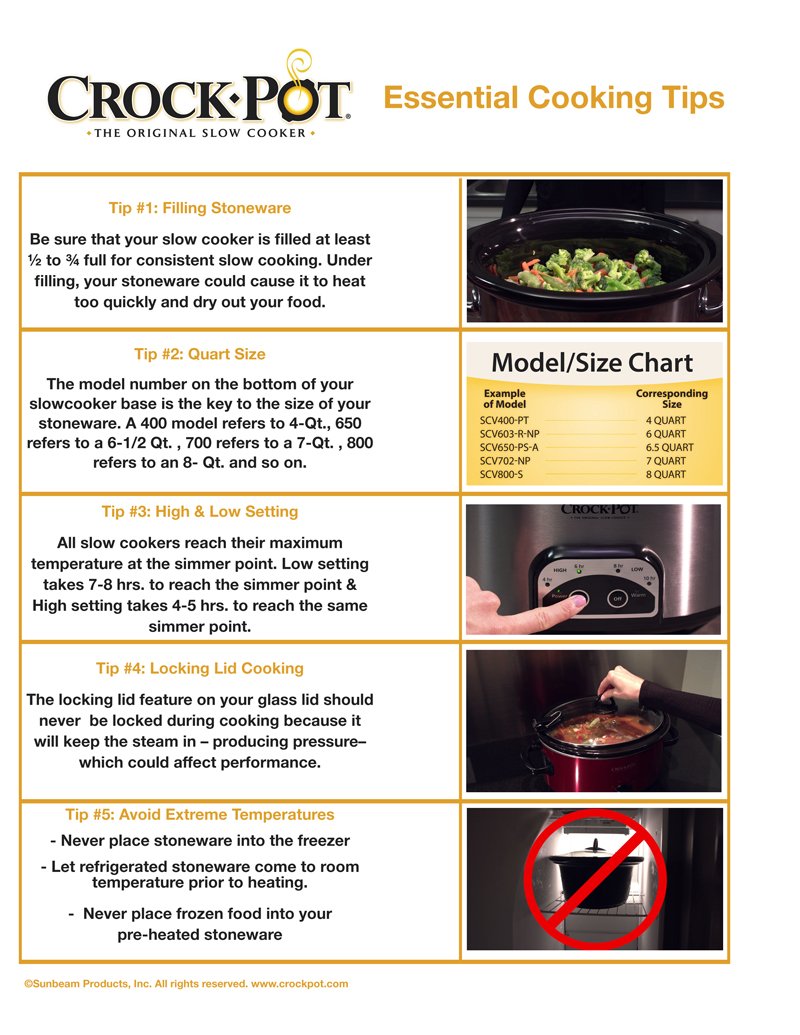
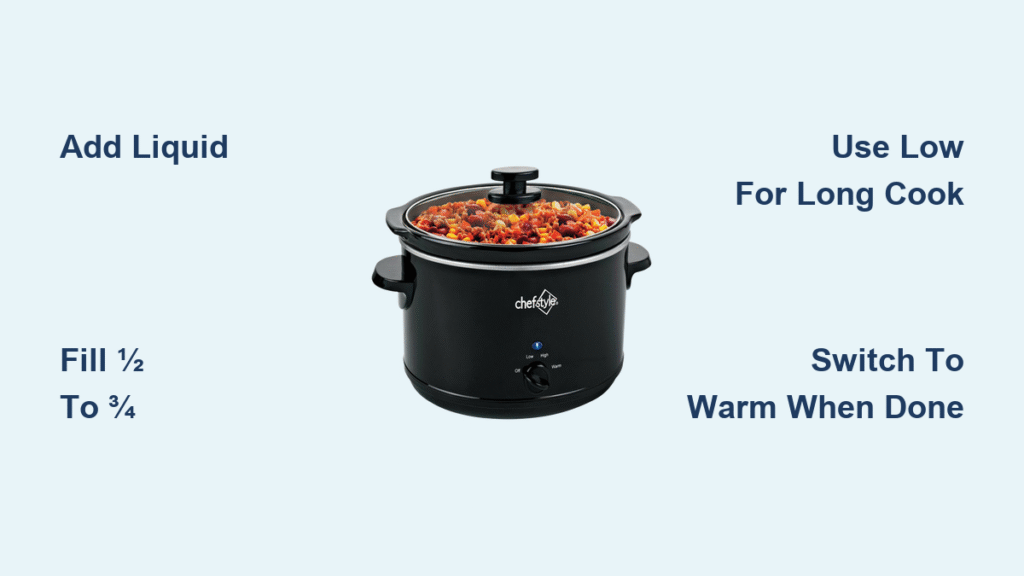
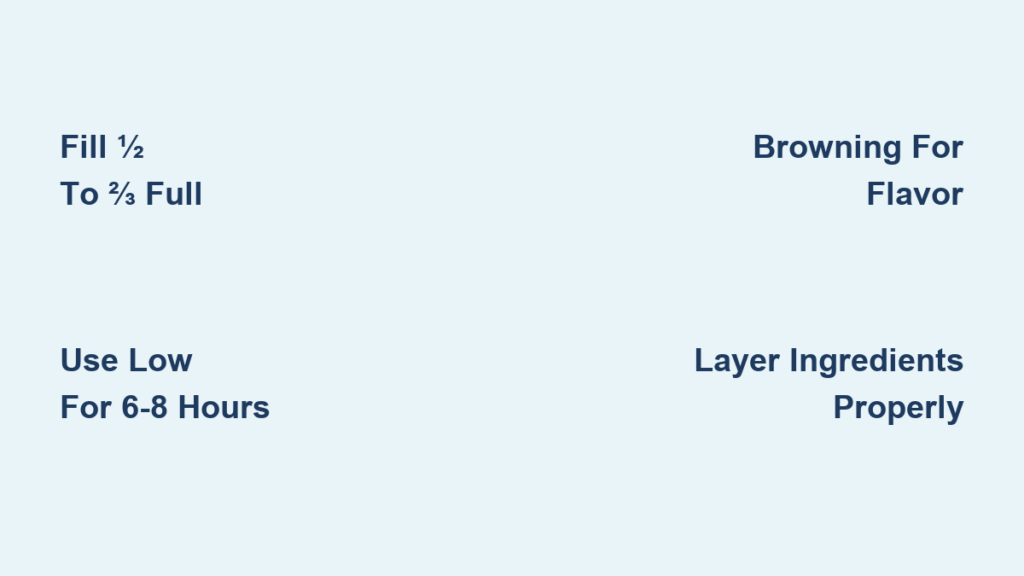
Your Crock Pot needs the right amount of food to function properly. Fill between ½ and ⅔ full for optimal results. Overfill beyond ¾, and your food won’t reach safe temperatures. Underfill below ½, and everything cooks too fast, risking burnt edges. Think of it like this: your Crock Pot needs thermal mass to maintain steady heat.
Consequences of Improper Fill Levels
Overfilling: When you pack your slow cooker beyond the ⅔ mark, ingredients crowd each other, preventing proper heat circulation. This creates cold spots where food doesn’t reach safe temperatures, increasing foodborne illness risk. For soups and stews, ingredients release moisture as they cook, potentially causing overflow when overfilled.
Underfilling: With too little food, the heating elements work overtime, creating hot spots that burn food along the edges. The temperature fluctuates more dramatically when you lift the lid, extending overall cooking time. If you’re cooking for one or two, consider using a smaller 3-4 quart model instead of forcing a large cooker to work with minimal contents.
Low vs High Temperature Settings
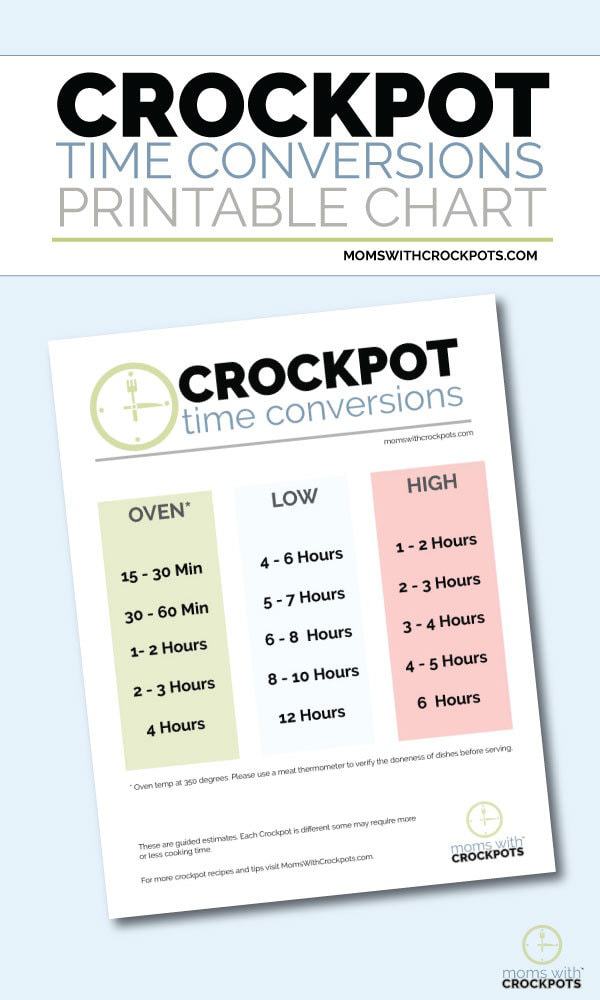
Low (200°F) is your go-to setting for all-day cooking. This temperature breaks down tough connective tissue in meats and develops deep flavors. Plan for 6-8 hours of cooking time. High (300°F) cuts cooking time in half—3-4 hours instead of 6-8. Use when you’re short on time, but expect slightly less developed flavors. Some recipes work better on high, particularly those with pre-cooked ingredients.
When to Choose Each Setting
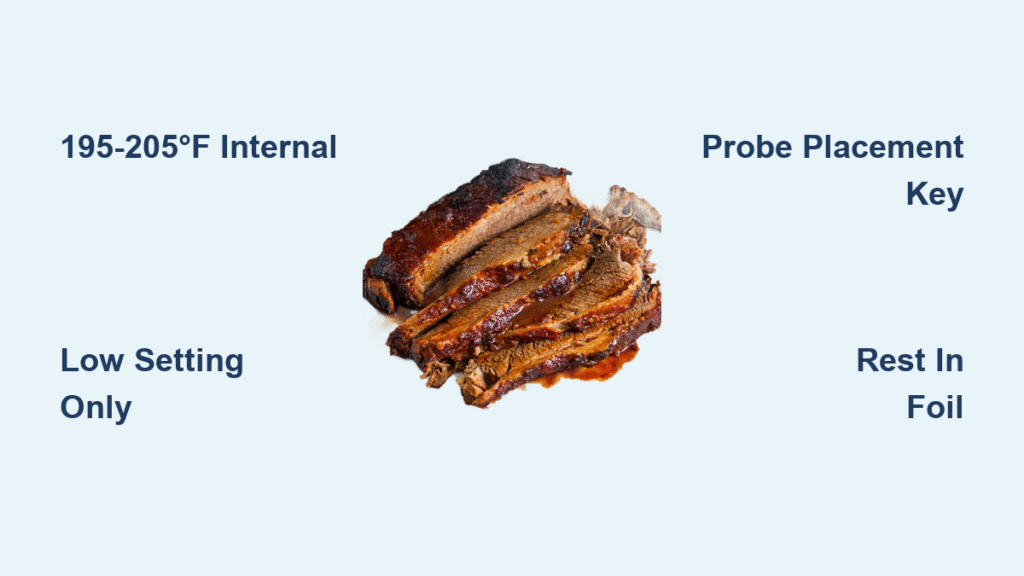
Always use low setting when: Cooking tough cuts of meat like chuck roast, pork shoulder, or beef brisket. These benefit from extended low-temperature cooking to transform collagen into gelatin. Also use low for recipes requiring 8+ hours of cooking time or when you’ll be away from home all day.
Choose high setting when: Cooking with pre-cooked ingredients, making dips or sauces, or preparing meals with delicate proteins like fish. High works well for weekday dinners when you have 4-6 hours available but not 8+. Remember: high doesn’t “cook faster” in terms of chemical reactions—it just reaches the target temperature sooner.
Ingredient Layering Secrets
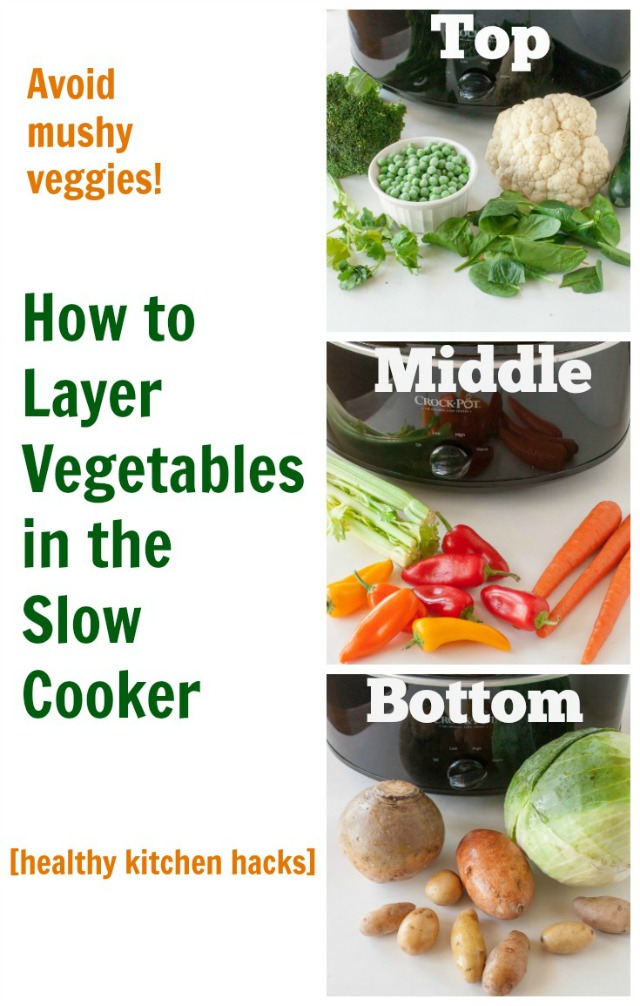
Root vegetables go on the bottom—carrots, potatoes, onions, turnips. These dense foods need the most heat and longest cooking time. Cut them into uniform 1-inch pieces for even cooking. Meat sits on top of vegetables, not touching the ceramic directly. This prevents burning and allows the meat juices to season the vegetables below.
Strategic Placement for Perfect Results
Bottom layer: Hard vegetables and aromatics that need longest cooking time. Onions release moisture that creates steam, while root vegetables absorb flavors from above.
Middle layer: Proteins like chicken thighs, pork shoulder, or beef chuck. Trim excess fat to avoid greasy results, but leave enough for flavor and moisture.
Top layer: Quick-cooking vegetables like spinach, peas, or cabbage. Add these during the last 30 minutes to prevent disintegration. Delicate ingredients like fresh herbs or dairy should be added after cooking completes.
Browning: Optional but Game-Changing
Ground beef requires browning—skip this step and you’ll end up with greasy, gray meat. Brown in a skillet, drain fat, then transfer to your Crock Pot. Other meats: Browning adds depth but isn’t mandatory. For busy mornings, skip it. When you have 10 extra minutes, brown beef chunks or chicken thighs for richer flavor.
The Science Behind Browning
When you brown meat before slow cooking, you’re creating Maillard reactions—the chemical process that develops complex flavors and appealing brown color. This step transforms simple ingredients into restaurant-quality meals with minimal extra effort. The caramelized bits left in the pan (fond) contain concentrated flavor; deglaze with a splash of broth or wine before adding to your slow cooker.
Size Selection for Your Needs
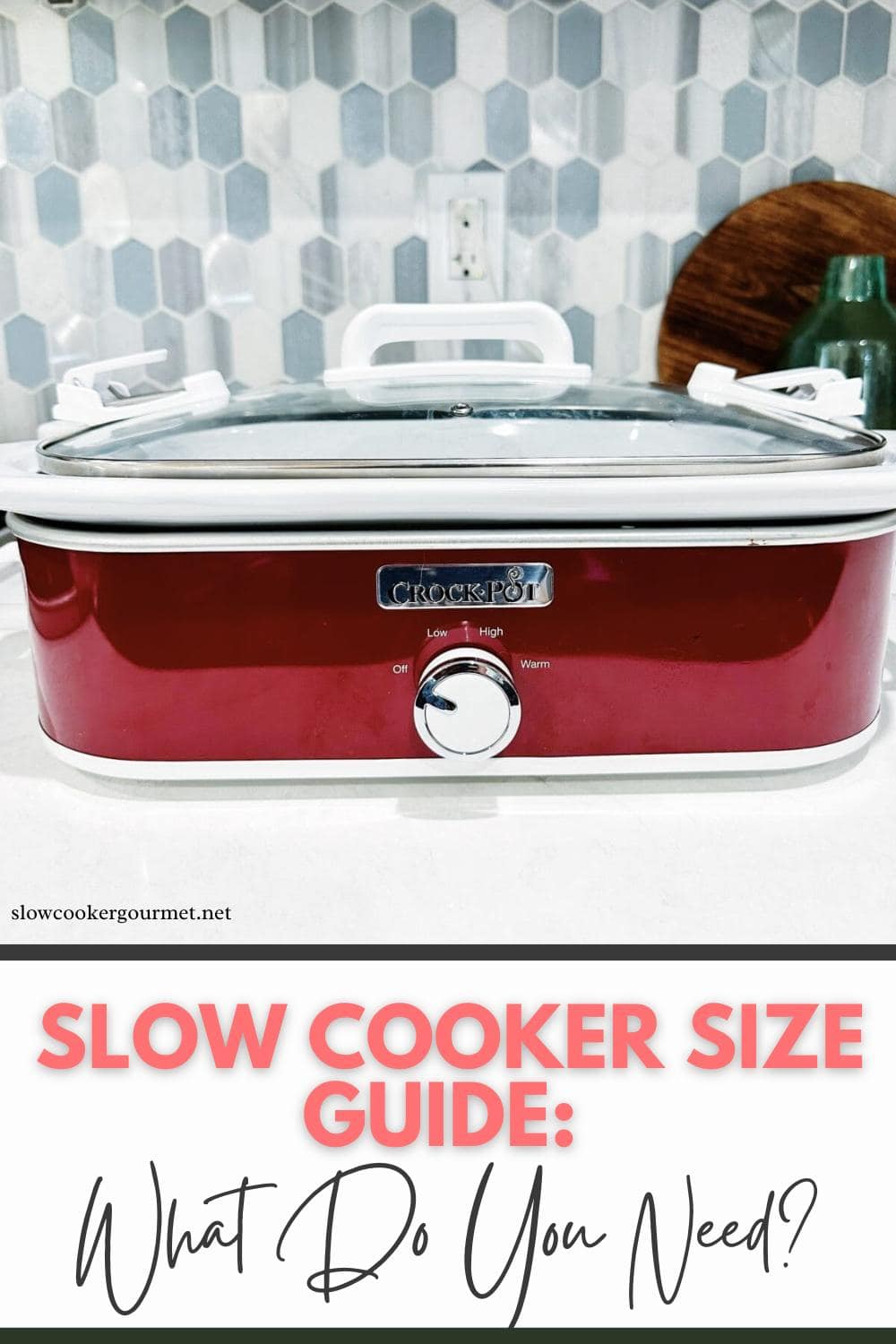
3-quart models are perfect for dips, small side dishes, or meals for 1-2 people. Think queso dip or small batches of oatmeal. 4-5 quart is the sweet spot for most families. Handles 3-4 chicken breasts plus vegetables, or a 3-pound roast with room for potatoes. 6-7 quart is essential for batch cooking, large families, or entertaining. Fits a whole chicken or doubles most recipes with ease.
Pro Move for Maximum Flexibility
Own both a 4-quart and 7-quart model. Use the smaller one for sides and sauces while the big cooker handles your main dish. This setup allows you to prepare complete meals simultaneously without flavor transfer. The 4-quart size also fits better in standard refrigerators for overnight marinating or storing leftovers.
Safety Rules You Must Follow
Never lock the lid during cooking—those locks are transport-only features. Locking during cooking creates pressure buildup and potential explosions. Keep away from edges: Place your Crock Pot on a heat-safe surface with 6 inches of clearance on all sides. The exterior gets hot, especially on older models. Thaw frozen ingredients: Never put frozen meat directly in your slow cooker. It sits in the temperature danger zone too long, risking foodborne illness.
Critical Temperature Danger Zones
Your slow cooker must bring food through the temperature danger zone (40°F-140°F) within 2 hours to prevent bacterial growth. This is why proper fill levels matter—underfilled cookers may take too long to reach safe temperatures. Always use a food thermometer to verify internal temperatures: poultry (165°F), ground meats (160°F), and beef/pork/veal/lamb (145°F with 3-minute rest time).
Cleaning Hacks That Save Hours
Slow cooker liners are BPA-free plastic bags that make cleanup effortless. Perfect for messy dishes like chili or cheese dips—simply lift and toss. Stuck-on mess solution: Fill the ceramic insert with hot water and ¼ cup baking soda. Let soak overnight, then wipe clean—no scrubbing required.
Dishwasher vs Hand Washing
Most ceramic inserts and glass lids are dishwasher safe, but check your manual first. Hand-washing extends the life of nonstick coatings and prevents thermal shock that can crack ceramic. Never immerse the base unit (with heating elements) in water—wipe with a damp cloth only. For stubborn stains, create a paste of baking soda and water, apply to stains, let sit for 30 minutes, then wipe clean.
5-Ingredient Recipes for Beginners
Mississippi Pot Roast: Chuck roast + ranch packet + au jus packet + pepperoncini + butter. 8 hours on low—shred and serve. Garlic Parmesan Chicken: Chicken breasts + cream cheese + garlic + parmesan + Italian seasoning. 6 hours on low, shred and toss with pasta. Salsa Chicken: Chicken breasts + salsa + taco seasoning + black beans + corn. 4 hours on high—perfect for tacos or burrito bowls.
Foolproof First Meal Strategy
Start with the Salsa Chicken recipe—it’s nearly impossible to mess up. The acidity from the salsa tenderizes the chicken while the slow cooking makes it incredibly moist. After cooking, shred the chicken directly in the slow cooker with two forks. This simple meal works for tacos, burrito bowls, salads, or sandwiches throughout the week.
Troubleshooting Common Failures
Food cooking too fast: You under-filled the pot or used high when low was needed. Transfer to a smaller Crock Pot or add more ingredients. Tough meat: Needs more time. Tough cuts like chuck roast can take 10+ hours on low. If it’s been 8 hours and still tough, keep cooking. Mushy vegetables: Added too early or used wrong type.
Greasy Results Fix
If your slow cooker meal turns out greasy, you likely skipped browning ground meats or didn’t trim excess fat from meats. For immediate correction, skim fat from the top before serving using a spoon. Better yet, refrigerate the dish overnight—the fat will solidify on top and lift off easily. Next time, take the extra 5 minutes to brown and drain ground beef before adding to your slow cooker.
Final Success Checklist
Before you walk away, verify:
– [ ] Crock Pot is plugged in and turned on
– [ ] Fill level between ½ and ⅔ full
– [ ] Lid sealed properly
– [ ] Correct temperature setting selected
– [ ] Cook time programmed (if applicable)
Master these fundamentals, and your Crock Pot becomes your secret weapon for effortless, delicious meals. Start with simple 5-ingredient recipes, then experiment as you gain confidence. The beauty of slow cooking is that it’s forgiving—most mistakes just need more time or a simple adjustment. With these proven techniques, you’ll consistently create tender meats, perfectly cooked vegetables, and complex flavors with minimal hands-on time. Your Crock Pot isn’t just another appliance—it’s your ticket to stress-free home cooking that delivers restaurant-quality results every time.