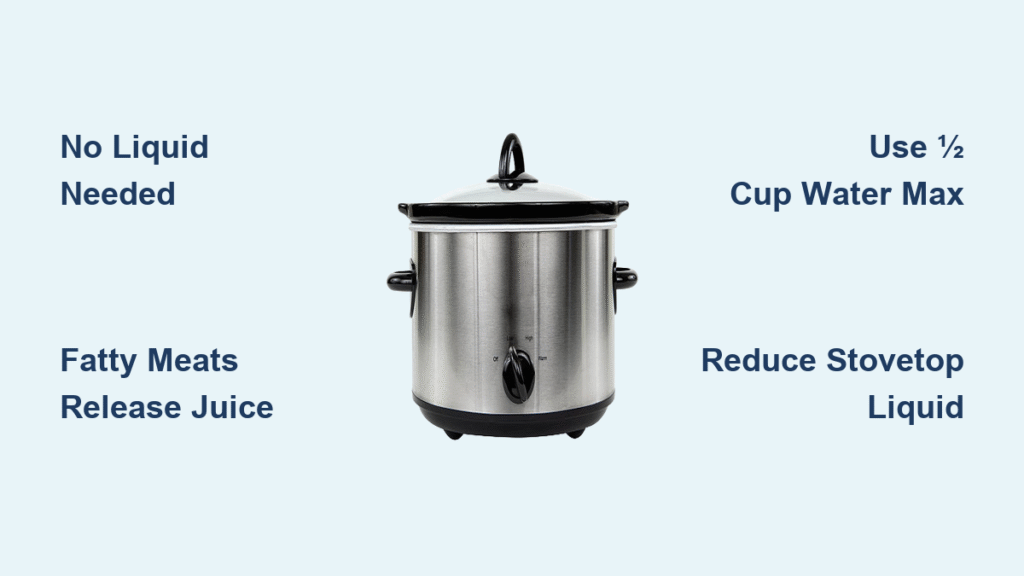
You’ve pulled out your slow cooker for a comforting meal, but a critical question stops you cold: Does a slow cooker need liquid? Conflicting recipes only deepen the confusion—one demands cups of broth, while another insists “no water needed.” This uncertainty leads to soggy stews, dry roasts, or even safety scares. The truth? Your slow cooker often requires startlingly little added liquid—sometimes none at all—and understanding why transforms your results from hit-or-miss to consistently perfect.
The liquid myth persists because slow cookers resemble pots, but their sealed environment operates differently. Unlike stovetop cooking where evaporation occurs, your slow cooker traps every drop of moisture released by ingredients. As America’s Test Kitchen confirms, excessive liquid actually dilutes flavors and dries out meats through osmosis. Whether you’re cooking a Butterball turkey breast or a hearty bean chili, the answer hinges entirely on your ingredients’ natural moisture content—not arbitrary rules.
By the end of this guide, you’ll master liquid requirements for any recipe, avoid common safety pitfalls, and confidently cook even the driest-looking ingredients without drowning them in water. Let’s dismantle the confusion once and for all.
When Your Slow Cooker Absolutely Needs Liquid

Soups Stews and Broths Require Full Liquid Bases
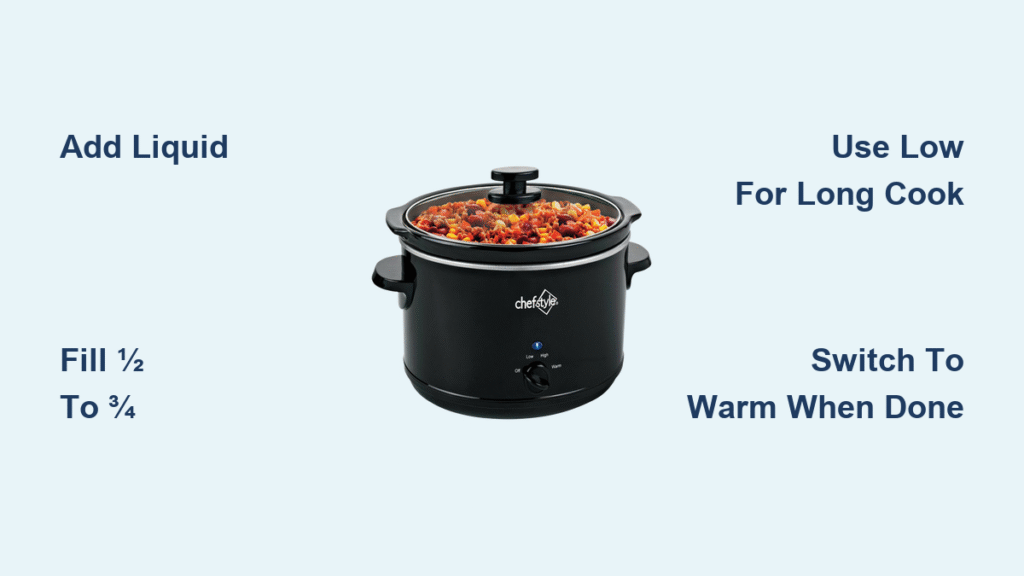
For liquid-centric dishes like beef stew or chicken soup, water or broth isn’t optional—it’s the foundation. Fill your slow cooker between half and two-thirds full to ensure ingredients stay submerged and cook evenly. Unlike roasts where natural juices suffice, these recipes rely on liquid as the primary heat conductor. Underfilling creates uneven cooking, while overfilling risks dangerous overflow. Crucially, reduce liquid by one-third compared to stovetop versions since the sealed lid prevents evaporation. For example, a soup needing 6 cups on the stove requires only 4 cups in your slow cooker.
Rice Beans and Grains Demand Precise Liquid Ratios
Dry staples like rice, lentils, or beans absorb moisture as they cook, making added liquid non-negotiable. Without sufficient water, they’ll stay hard and potentially unsafe to eat. These ingredients typically need liquid equal to 1.5x their dry volume—so 1 cup of rice requires 1.5 cups of water. Never skip this step, even with moisture-rich veggies in the pot. Beans especially need ample liquid to soften fully during the long cook time, or they’ll remain unpleasantly crunchy.
When You Can Skip Added Liquid Completely

Moisture-Rich Ingredients Release Enough Natural Juices
Foods like tomatoes, onions, mushrooms, and fatty meats (think pork shoulder or chicken thighs) release significant liquid as they cook. Their natural moisture creates steam that circulates heat safely—no extra water needed. For instance, a lamb roast with carrots and potatoes succeeds with zero added liquid because vegetables weep moisture during cooking, generating a self-basting environment. Even frozen ingredients contribute extra liquid as they thaw. If your recipe includes three or more high-moisture components, skip the water and trust the process.
Dry Cooking Methods Work for Self-Basting Proteins
Whole chickens, pulled pork, and baked potatoes thrive with minimal or no added liquid. The slow cooker’s sealed lid traps natural fats and juices, creating a humid microclimate that keeps food tender. Charmaine’s leg of lamb method proves this: she cooks it with root vegetables and zero water, finishing with a quick oven sear for crispness. The key? Fatty cuts release enough fat to prevent sticking, while the lid’s condensation continuously bastes the meat. Lean proteins like turkey breast still need ½ cup water, but fatty roasts don’t.
Safety Rules for Minimal Liquid Cooking
Heat Distribution Relies on Steam, Not Volume
Your slow cooker’s thermostat maintains temperature regardless of liquid amount. Just ½ cup of water generates enough steam to conduct heat safely through the pot. SF. explains that liquid’s primary role is distributing heat via steam—not submerging food. As long as some moisture source exists (added liquid or ingredient juices), food will reach safe internal temperatures. Never operate the cooker bone-dry, but rest assured: the sealed environment prevents evaporation, so minimal liquid suffices.
Prevent Dry Cooking Without Overfilling
The real danger isn’t too little liquid—it’s letting the cooker run dry. SAJ14SAJ emphasizes that as long as ingredients release moisture (like meat juices or vegetable water), burning won’t occur. Before starting, assess your ingredients:
– Add ½ cup liquid if cooking lean meats (chicken breast) or mostly dry ingredients
– Skip liquid if using fatty meats with veggies or frozen items
If unsure, add ¼ cup—it’s safer to have too little than too much. Always fill between one-third and two-thirds full; below one-third risks uneven heating, while overfilling causes messy spills.
Recipe Adaptation Made Foolproof

Convert Stovetop Recipes by Cutting Liquid by One-Third
Traditional recipes assume evaporation, but your slow cooker’s tight seal retains nearly all moisture. When adapting a casserole or braise, reduce liquid by 33%—a dish needing 3 cups on the stove requires just 2 cups in the slow cooker. For example, Gerry’s corned beef recipe uses only ½ cup water for a full brisket because the salt-cured meat releases ample juices. This adjustment prevents watery, flavorless results that plague novice slow cooks.
Follow Exact Fill Levels for Fail-Safe Results
- Minimum: One-third full (ensures heat circulation)
- Ideal: Half to two-thirds full (optimal for steam distribution)
- Maximum: Never exceed three-quarters full (prevents overflow)
For turkey breast roasts, ½ cup water creates perfect steam without diluting flavor. Chicken pieces with skin often need no liquid—their fat and juices provide ample moisture. When in doubt, measure: liquid should just cover meat and veggies, never pool above them.
Flavor Hacks for Better Minimal-Liquid Cooking
Boost Taste with Strategic Liquid Swaps
Water works when necessary, but smarter choices elevate dishes:
– Broth instead of water for richer depth in beef stews
– ¼ cup red wine to add complexity to short ribs (never exceed this—too much causes bitterness)
– Apple juice for subtle sweetness with pork chops
– Coconut milk for creamy curries (count as part of your liquid total)
These swaps add dimension without excess volume. Remember: more liquid doesn’t mean more flavor—it dilutes it.
Avoid These Zero-Liquid Pitfalls
Even experienced cooks make these mistakes:
– Overloading with lean meats (like ground turkey) without moisture-rich veggies
– Using frozen ingredients without accounting for extra meltwater
– Skipping the moisture assessment step before cooking
If your dish seems dry mid-cook, add liquid in ¼-cup increments—never pour in a full cup. Better yet, prevent issues by checking ingredient moisture first.
Real-World Success Scenarios
Butterball Turkey Breast with Just ½ Cup Water
For a perfect turkey breast roast, pour ½ cup water into the pot before adding the meat. As it cooks, the turkey releases natural juices that mingle with the water, creating a light broth that keeps meat moist. The sealed environment prevents evaporation, so the small amount of liquid suffices. Crucially, this avoids the waterlogged texture that plagues recipes using excessive water.
No-Liquid Lamb Roast That Shocks Beginners
Nicholas B Scott’s method proves minimal liquid works: place a leg of lamb with onions, carrots, and potatoes in the slow cooker—no water added. The vegetables release moisture during cooking, generating steam that tenderizes the lamb. After 6 hours, finish under the broiler for crispy skin. The result? Juicy, flavorful meat with natural pan juices concentrated, not diluted.
Your Pre-Cook Liquid Decision Checklist
Evaluate Ingredients Before Adding a Drop
Ask these questions:
– Are meats fatty? (Shoulder, ribs = yes; breast, loin = no)
– Do veggies have high water content? (Tomatoes, zucchini, mushrooms = yes)
– Are ingredients frozen? (Adds extra liquid as they thaw)
If two or more answers are “yes,” skip added liquid. For rice, beans, or lean meats, add ½ cup. When adapting recipes, always reduce liquid by one-third first.
Quick Reference Guide for Liquid Amounts
| Dish Type | Liquid Needed | Why |
|---|---|---|
| Beef stew | 3-4 cups | Liquid base essential for consistency |
| Chicken thighs + veggies | None | Skin and veggies release ample moisture |
| Rice and beans | 2 cups | Absorbs liquid to soften fully |
| Turkey breast roast | ½ cup | Prevents drying without diluting flavor |
Master Slow Cooking with Less Liquid
Start every meat dish with ½ cup liquid as your baseline—this satisfies safety needs without compromising flavor. Your first attempt serves as a test: if results are dry, add ¼ cup next time; if watery, reduce by ¼ cup. Track adjustments in a recipe journal for consistent success. Most importantly, never fear minimal liquid—the slow cooker’s genius lies in its ability to transform natural ingredient moisture into tender, flavorful meals.
When recipes specify exact amounts (like Gerry’s ½-cup corned beef method), trust that testing. For freestyle cooking, rely on your ingredient moisture assessment. The perfect slow-cooked meal isn’t drowned—it’s gently steamed in its own delicious juices. Now grab that slow cooker and cook with confidence: less liquid means more flavor, every time.