Ever pull back your slow cooker lid to find a dry, chewy brisket after eight hours of cooking? You’re not alone—most home cooks miss the critical temperature sweet spot that transforms tough connective tissue into melt-in-your-mouth perfection. The secret isn’t just time; it’s maintaining the precise brisket slow cooker temperature range that breaks down collagen without evaporating precious juices. This guide reveals the exact temperature thresholds you need for fork-tender results every time, whether you’re cooking a 3-pound flat or a full packer brisket.
Your slow cooker’s “low” setting creates a cooking environment between 190-200°F—significantly lower than the 225°F used in traditional smokers. This subtle difference dramatically impacts how collagen converts to gelatin. When you understand how to monitor and maintain this narrow temperature band, you’ll consistently produce brisket that slides off the fork with minimal effort. Forget vague instructions like “cook until tender”; we’re diving into the specific numbers, timing, and techniques that guarantee barbecue-worthy results from your countertop appliance.
Why Your Slow Cooker’s “Low” Setting Is Perfect for Brisket
Most brisket disasters happen because cooks treat slow cookers like set-and-forget appliances without understanding their actual temperature output. Your slow cooker’s “low” setting maintains 190-200°F—ideal for breaking down collagen over 8-10 hours without boiling the meat. At this temperature range, connective tissues gradually convert to gelatin while muscle fibers relax without squeezing out moisture.
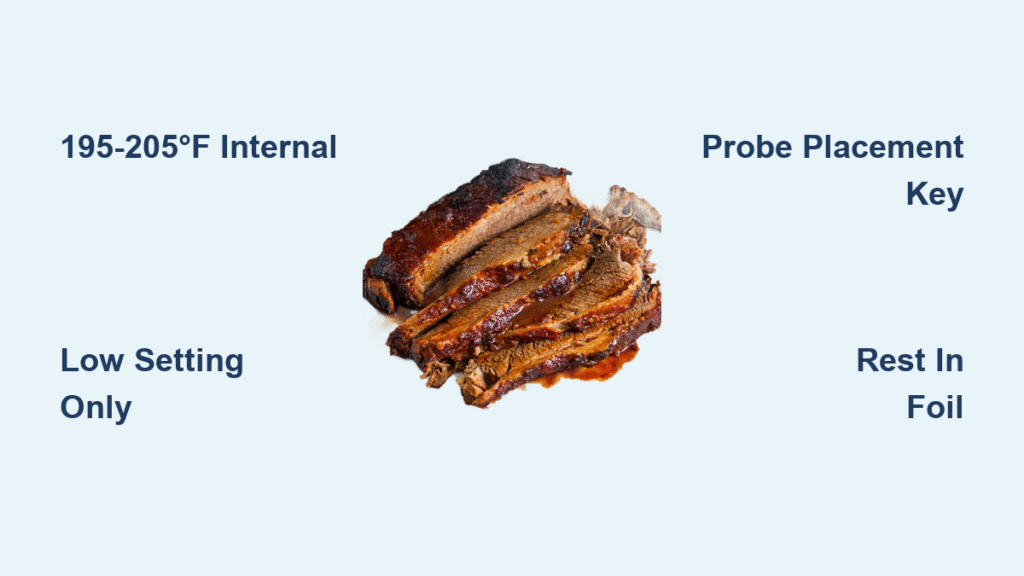
Critical distinction: These temperatures describe your cooker’s environment, not your brisket’s internal temperature. Your meat needs to reach 195-205°F internally for perfect tenderness—regardless of cooking method. The slow cooker’s gentle heat allows this transformation without the rapid moisture loss that occurs at higher temperatures.
How Temperature Changes Cooking Time
Every 18°F increase in cooking temperature roughly doubles your brisket’s cooking speed. This explains why switching from low (195°F) to high (300°F) reduces cooking time from 10 hours to just 5. But speed comes at a cost—collagen needs time to break down properly. Rushing with high heat creates either tough meat (if removed too soon) or stringy, dry results (if cooked long enough for tenderization).
Flat Cut vs Point Cut: Temperature Adjustments You Must Make
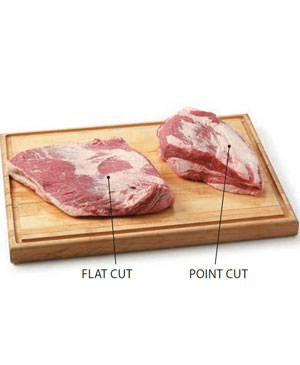
The flat cut’s uniform thickness responds differently to slow cooker temperatures than the marbled point section. Ignoring these differences guarantees inconsistent results in your brisket slow cooker temperature journey.
Flat Cut Temperature Protocol
For the leaner flat section (typically 3-5 pounds), target 195-200°F internal temperature. Insert your probe horizontally through the thickest part, avoiding edges. When properly cooked, your thermometer should slide through with minimal resistance—like cutting warm butter. Cook times average 8-10 hours on low, but always verify with temperature rather than the clock.
Point Cut Temperature Requirements
The fatty point cut needs slightly higher temperatures (200-205°F) to fully render its abundant marbling. Its irregular shape means probe placement is critical—avoid fat pockets that give false readings. Expect 10-12 hours cooking time as the extra fat slows heat penetration. Properly cooked point cut shows zero resistance when probed and pulls slightly away from the fat cap.
Low Setting vs High Setting: Why One Causes Dry Brisket
Your slow cooker’s heat setting dramatically impacts final texture. Understanding these differences prevents the all-too-common mistake of using high heat to “speed things up.”
Low Setting Advantages for Brisket
- Optimal collagen conversion: Sustained 190-200°F heat breaks down connective tissue without boiling
- Superior moisture retention: Minimal evaporation preserves natural juices
- Flavor development: Extended time allows seasonings to penetrate deeply
- Wider doneness window: Perfect texture lasts 2+ hours rather than minutes
High Setting Problems to Avoid
Cooking brisket on high (300-325°F) creates multiple issues:
– Rapid surface drying that can’t be reversed
– Uneven cooking where exterior overcooks before center reaches temperature
– Mushy or stringy texture from accelerated protein breakdown
– Narrow doneness window requiring constant monitoring
Never start brisket on high—the initial temperature shock causes muscle fibers to seize and expel moisture. Always begin on low, even if you plan to finish on high (which we don’t recommend).
Essential Temperature Tools: What You’re Missing
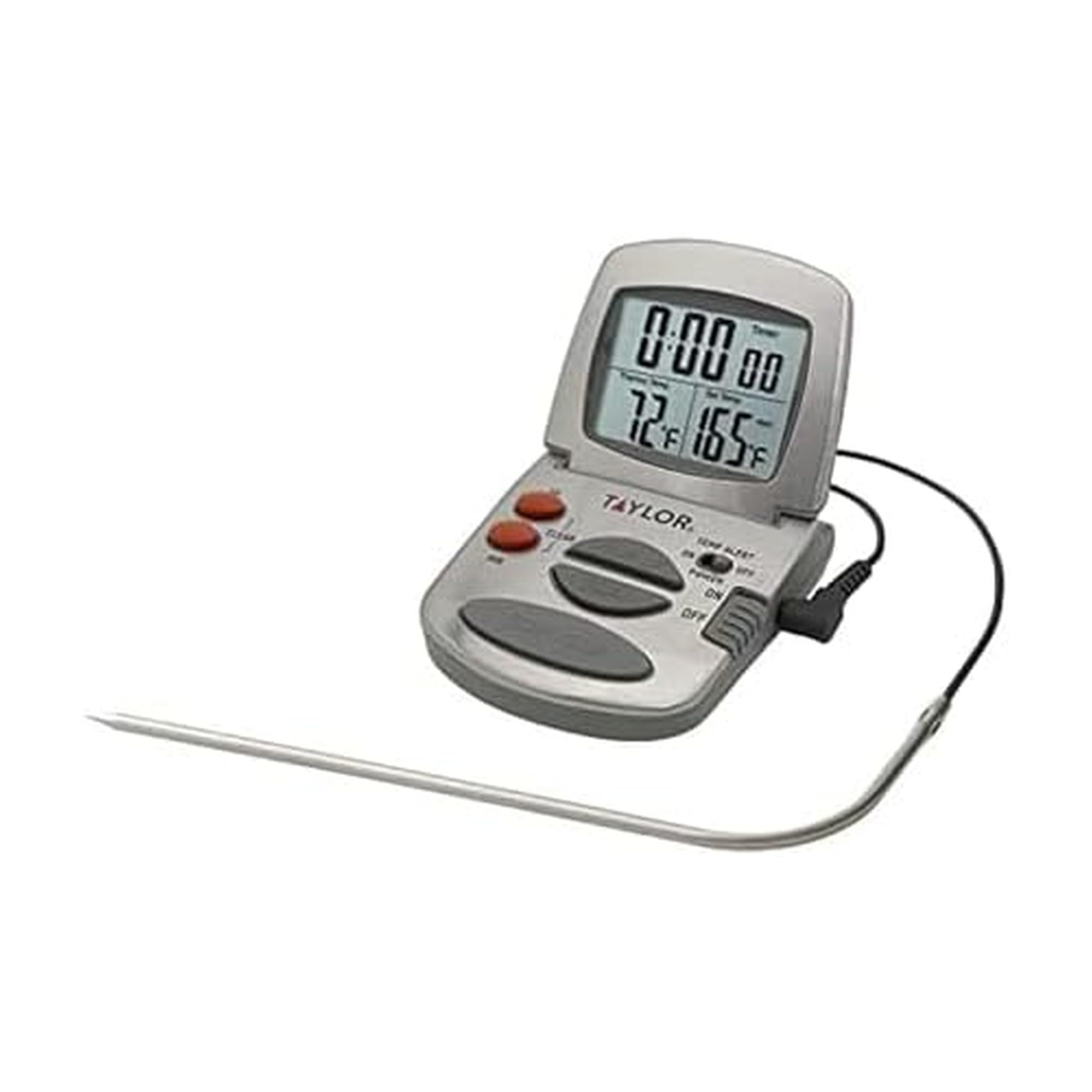
Your slow cooker’s built-in thermostat isn’t precise enough for brisket. Most models fluctuate 15-20°F from their stated temperature, creating cooking disasters.
Must-Have Temperature Equipment
- Instant-read digital thermometer: 2-3 second response for spot checks
- Wireless leave-in probe: Monitor without opening the lid
- Oven thermometer: Verify your slow cooker’s actual temperature
- Backup thermometer: Avoid disaster when primary fails
Proper Probe Placement Technique
- Insert horizontally through the thickest section
- Avoid fat pockets and connective tissue seams
- Position tip in the geometric center of the meat
- Check multiple spots for consistency
Critical warning: Opening your slow cooker drops the temperature 15-25°F and adds 30+ minutes to cooking time. Use leave-in probes religiously.
Fixing Overcooked Brisket: Temperature Damage Control
When your brisket slow cooker temperature climbs past 210°F, you’ve entered danger territory. Recognize these early warning signs:
– Internal temperature rising above 210°F
– Meat visibly pulling away from the fat cap
– Liquid level dropping rapidly
– Surface appearing dry or cracked
Recovery Steps for Overcooked Brisket
- Immediately remove from heat source
- Wrap tightly in double-layer foil
- Add ½ cup warm beef broth to the foil packet
- Rest for 60-90 minutes in a cooler
- Slice thicker than normal (¼ inch) against the grain
Reality check: Brisket exceeding 220°F cannot be fully restored. Consider chopping for sandwiches with extra barbecue sauce.
Solving Tough Brisket: Undercooked Temperature Fixes
Tough brisket means you haven’t reached the collagen breakdown threshold. Diagnose using these temperature indicators:
– Internal temperature below 190°F
– Probe meets significant resistance
– Chewy texture when tested
– Visible tight muscle fibers
Correction Process for Undercooked Brisket
- Return to slow cooker with ½ cup additional liquid
- Continue cooking on low, checking every 30 minutes
- Remove when probe slides through like warm butter
- Rest minimum 30 minutes before slicing
Important note: Brisket often stalls at 170-180°F for hours as moisture evaporates from the surface. This is normal—do not increase heat.
Liquid Level Secrets for Perfect Temperature Control
The amount of liquid directly impacts your brisket slow cooker temperature environment. Too much creates boiled meat; too little causes uneven cooking.
Ideal Liquid Ratios by Cut
- Flat cut: 1 cup liquid per 3-4 pounds meat
- Point cut: ¾ cup liquid (higher fat content provides moisture)
- Whole packer: 1½ cups liquid for 8-12 pound brisket
Temperature Impact of Liquid Temperature
Preheating your cooking liquid to 180°F before adding to the slow cooker jump-starts the temperature climb without shocking the meat. Cold liquid adds 1-2 hours to cooking time as the cooker works to heat the liquid first.
Resting Temperature: The Final Critical Step
Resting isn’t optional—it’s when brisket finishes cooking and redistributes juices. Manage this phase carefully:
Ideal Resting Protocol
- Target temperature drop: 195°F down to 150-160°F
- Rest time: 30-60 minutes for flats, 1-2 hours for whole briskets
- Method: Double-foil wrap in preheated cooler
- Slicing temperature: 140-150°F for cleanest cuts
Pro tip: Brisket continues cooking 5-10°F during rest. Remove from cooker at 190°F if planning extended rest.
Top Temperature Mistakes Ruining Your Brisket
Avoid these common brisket slow cooker temperature errors:
- Starting cold: Meat directly from refrigerator
- Lid lifting: Each peek drops temperature 15-25°F
- Wrong probe placement: False readings cause overcooking
- Ignoring the stall: Panic-increasing heat ruins texture
Prevention Strategies That Work
- Rest meat at room temperature 30-60 minutes before cooking
- Use wireless probes to avoid lid opening
- Verify readings from multiple angles
- Build in 2-3 hour buffer for the 170-180°F stall period
Advanced Temperature Techniques for Competition Results
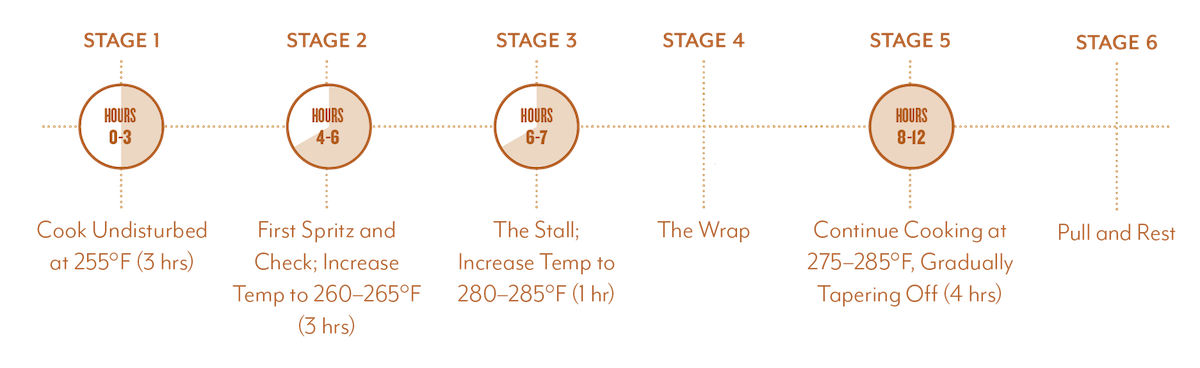
Once you’ve mastered basics, try these pro methods:
Two-Stage Cooking Method
- Cook to 170°F internal (6-7 hours)
- Double-wrap in foil with ¼ cup liquid
- Continue to 195°F (2-3 hours)
- Rest wrapped for 60+ minutes
Strategic Temperature Monitoring
Check at these critical points:
– Hour 4: Verify 160°F plateau
– Hour 6: Confirm 170°F for wrapping
– Hour 8: Target 190°F for final push
– Hour 9-10: Monitor every 30 minutes
Expert insight: Focus on texture indicators over absolute temperatures. Perfect brisket slides through with butter-like resistance regardless of the exact number on your thermometer.
Perfect brisket emerges from understanding and controlling temperature at every stage. Remember: low and steady beats hot and fast every time. Your target window is narrow (195-205°F internal), but the path requires patience and precision with your brisket slow cooker temperature settings. Master these principles, and you’ll consistently produce results that rival professional barbecue joints—all from your countertop appliance. Start with a small flat cut to practice these techniques before tackling larger briskets.