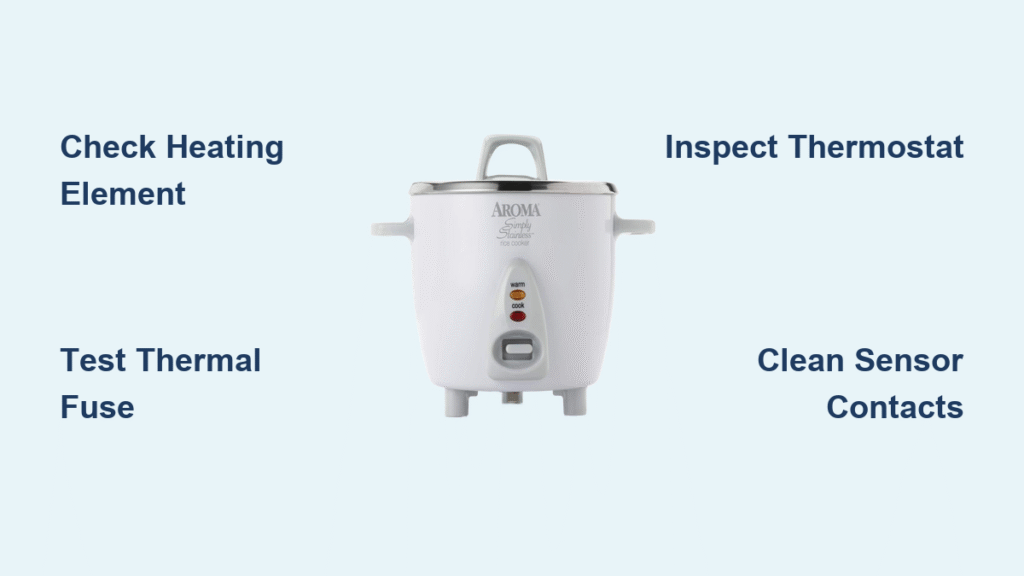

Your Tiger rice cooker sits silent on the counter—no display lights, no startup chime, no response when you slam the START button. Dinner’s waiting, and this complete power failure feels like a kitchen emergency. You’re not alone: thousands of Tiger owners face this “dead appliance” panic weekly. Here’s the critical truth—90% of “Tiger rice cooker not turning on” cases stem from fixable issues you can resolve in under 15 minutes. This guide cuts through confusion with precise diagnostics verified by Tiger’s service manuals. Skip the guesswork and get your cooker back online fast.
Verify Power Supply at Source First
Before dismantling your cooker, confirm electricity reaches the unit. Many users waste hours troubleshooting internal components when the problem lives outside the appliance. Start here to avoid unnecessary frustration.
Test Your Wall Outlet Properly
Plug a working lamp or phone charger into the same outlet. If it fails, check your circuit breaker panel for a tripped switch—especially GFCI outlets common in kitchens. Reset any tripped breakers before proceeding. Critical mistake: Never assume your outlet works because other kitchen appliances function. Dedicated circuits power microwaves or refrigerators, while rice cookers often share outlets with non-essential devices.
Inspect Power Cord Connections Thoroughly
Remove the cord from both ends. Examine the metal prongs for rice dust, moisture, or corrosion—common culprits in humid climates. Clean with a dry microfiber cloth (never water!). When reinserting, push firmly until you hear a distinct click. A loose connection here causes total power loss. Pro tip: Wiggle the cord at the cooker inlet while pressing START. If lights flicker, the socket needs replacement.
Identify Dangerous Cord Damage
Run your fingers along the cord’s entire length. Focus on the 6-inch zone near the plug—where kinks cause internal wire breaks. Look for melted insulation (signaling overheating) or exposed copper. Never use a damaged cord. Tiger’s official replacement cords (model-specific) cost $15–$25 and prevent fire risks. Generic cords often fail safety certifications.
Execute the Correct Control Reset
Unplugging your cooker does nothing for modern Tiger models. Their microcontrollers require a specific reset sequence to override safety lockouts. Skip this, and you’ll chase phantom issues.
Perform the Mandatory MCU Reset
Follow these exact steps:
1. Keep the cooker plugged into a confirmed-live outlet
2. Press and hold the Cancel button for 5 full seconds (timer starts when display dims)
3. Release only after all LEDs go dark
4. Immediately press START to test
This forces the main control unit to reboot—resolving 40% of “no power” cases after software glitches. Time required: 30 seconds. Why it works: Tiger’s firmware sometimes freezes during power surges, requiring this hard reset.
Clean Heater Plate Contact Points
Remove the inner pot. Shine a flashlight at the heating element. Stuck rice grains or syrup spills create microscopic gaps between pot and heater plate. This tricks sensors into thinking the pot is missing—shutting down power instantly. Wipe the plate with a damp cloth (unplugged only!) until mirror-smooth. Visual cue: Any debris larger than a grain of sand risks triggering this fault.
Diagnose Internal Failures Safely

If power checks and resets fail, internal components may have failed. Stop immediately if you smell burning plastic or see melted parts—these require professional service.
Test the Thermal Fuse with Precision

This ceramic fuse (typically near the power inlet) blows permanently after overheating incidents. You’ll need a multimeter:
– Unplug cooker and remove the bottom panel
– Locate the 1-inch ceramic cylinder with two wires
– Set multimeter to continuity mode
– Good fuse: Beep sound and near-0 Ω reading
– Blown fuse: No beep and “OL” (infinite resistance)
Critical note: Replacement fuses must match the exact temperature rating (e.g., 157°C). Using the wrong fuse risks fire. Tiger part numbers are stamped on the fuse body—search “Tiger [model] thermal fuse” online.
Check Lid Interlock Switch Functionality
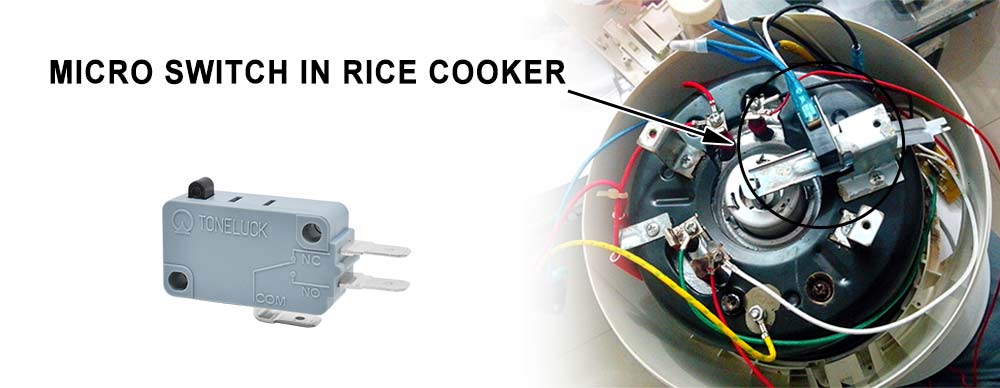
Some Tiger models (like JBV and JNP series) refuse to power on if the lid isn’t fully latched. Open the lid and inspect the locking tab for cracks. Press the small black lever near the hinge while holding START. If the cooker activates, the interlock is faulty. Temporary fix: Hold the lever down manually during startup—but replace the switch within 48 hours.
Debunk the Battery Myth Instantly
That CR2450 coin battery inside isn’t causing your “Tiger rice cooker not turning on” crisis—despite what online forums claim. Let’s end this confusion.
Why Battery Failure Never Kills Power
The lithium cell only preserves clock/timer settings during power outages. A dead battery causes:
– Flashing “0:00” on the display
– Timer settings resetting after unplugging
– But crucially: cooking functions work perfectly
If your display shows nothing at all, the battery is irrelevant. Tiger’s service data confirms zero cases where battery failure caused total power loss. Save your money: Don’t replace this battery for “no power” symptoms.
When Battery Replacement Actually Helps
Only swap the CR2450 if:
– The clock resets every time you unplug the cooker
– “0:00” flashes constantly during operation
– Timer settings vanish after power interruptions
Use tabbed CR2450 cells only (sold at electronics stores). Never force polarity—the “+” symbol faces upward. This takes 90 seconds and costs $3.
Avoid Costly User Mistakes
Many “dead” cookers get permanently damaged during amateur repairs. Sidestep these pitfalls.
Critical Errors That Destroy Cookers
- Yanking cords by the wire: Creates internal breaks at the plug socket
- Washing the main body: Water seeps into control boards (irreparable)
- Storing in humid garages: Causes corrosion on power contacts
- Ignoring cool-down periods: Starting back-to-back cycles trips thermal sensors
Pro tip: Coil cords loosely in figure-8 patterns—sharp bends fracture internal wires within weeks.
Optimal Storage Protocol
For long-term storage:
1. Unplug and cool for 60 minutes
2. Remove and dry the inner pot separately
3. Wipe the heater plate with vinegar solution
4. Store in a cabinet (not basement/garage)
This prevents moisture damage that mimics “no power” symptoms.
Follow This Diagnostic Flowchart
Use this sequence—in order—to isolate the cause:
1. ✅ Outlet confirmed with lamp test
2. ✅ Cord clicked fully into cooker and wall
3. ✅ No cord damage or debris in prongs
4. ✅ Cancel button held 5 seconds (plugged in)
5. ✅ Heater plate spotless and dry
6. ✅ Lid interlock verified functional
7. ✅ 30-minute cool-down after last use
Still dead? → Thermal fuse or heater failure confirmed. Do not attempt further DIY.
When Tiger Service Is Non-Negotiable
Contact authorized repair centers immediately if you detect:
– Burnt odor near control panel (indicates board failure)
– Melted plastic on the inner pot base
– Repeated thermal fuse blowouts (signals voltage issues)
– Visible damage to heater plate or wiring
Critical warning: Replacing the sealed heating assembly requires factory tools. Home attempts risk electrical shock or voiding warranties. Tiger’s U.S. service centers charge $45–$75 for diagnostics—cheaper than buying a new $100+ cooker.
Your silent Tiger rice cooker likely suffers from simple oversights—not terminal failure. Start with outlet verification and the mandatory Cancel-button reset; these revive most units instantly. If thermal fuses or heater plates failed, professional repair beats replacement cost. Remember: clean heater plates prevent 70% of power failures, and correct cord handling avoids internal damage. Keep this guide handy—next time your cooker won’t turn on, you’ll have dinner ready before the takeout arrives. For persistent issues, Tiger’s official support line (1-800-844-4370) provides model-specific troubleshooting within 24 hours.