
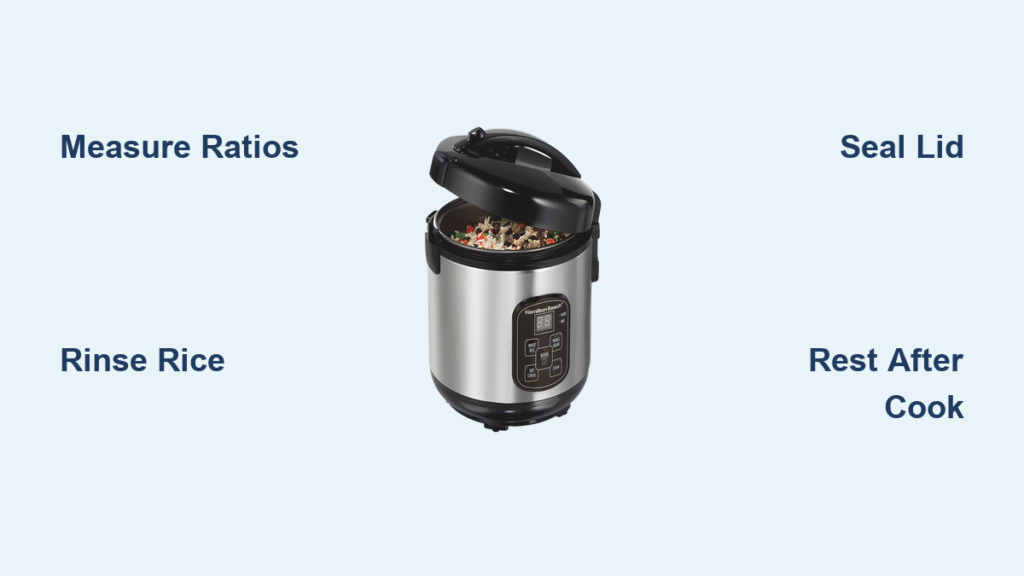
Your Hamilton rice cooker sits on the counter, ready to transform raw grains into fluffy perfection. Yet without proper technique, even this reliable appliance can produce soggy mush or crunchy disappointment. Mastering your Hamilton rice cooker unlocks consistent results every time—whether you’re preparing a quick weeknight side or meal-prepping for the week ahead.
This guide walks you through every step of using your Hamilton rice cooker, from the first rinse to the final steam. You’ll discover exact water ratios for every rice type, troubleshooting tricks for common failures, and pro techniques that turn this simple appliance into your kitchen’s most dependable tool. By the end, you’ll know exactly how to use Hamilton rice cooker to create restaurant-quality results with minimal effort.
Measure Rice and Water Ratios for Perfect Results

White Rice: Achieve Fluffy Grains with 1:1.5 Ratio
For every cup of white rice, add exactly 1.5 cups of water to your Hamilton rice cooker. This precise ratio produces tender, separate grains without excess moisture. Whether you’re using jasmine, basmati, or standard long-grain white rice, this proportion delivers consistently excellent results. Use the measuring cup that came with your cooker for accuracy—standard kitchen cups vary in size and can throw off your ratios.
Brown Rice: Overcome Tough Bran with 1:2 Ratio
Brown rice demands more water due to its protective bran layer that resists moisture absorption. Measure 2 cups of water for each cup of brown rice to ensure the tough outer coating softens completely during the extended cooking cycle. Don’t skip this extra water—under-hydrated brown rice remains crunchy and unpleasant to eat. The Hamilton rice cooker automatically adjusts cooking time based on temperature, so you don’t need to monitor it.
Scaling Quantities Without Compromising Quality
The Hamilton Beach 37518 accommodates 1-3 servings comfortably but requires careful scaling. Never exceed the maximum fill line marked inside the inner pot—overfilling causes messy boil-overs and uneven cooking. For smaller portions, maintain the exact ratios—simply reduce both rice and water proportionally. A half-cup of rice needs three-quarters cup of water for white varieties. The cooker’s small size makes it perfect for singles or couples who want fresh rice without leftovers.
Rinse Rice for Better Texture Every Time
Cold Water Rinse Method: Remove Excess Starch
Place measured rice in a fine-mesh strainer under cold running water before adding it to your Hamilton rice cooker. Gently swirl grains with your fingers as water flows through—the motion releases surface starch that causes sticky, gummy results. This simple step transforms your rice from mediocre to restaurant-quality with minimal effort. Continue for 30-60 seconds per cup for optimal results.
Visual Rinse Check: Know When to Stop
Continue rinsing until the draining water runs mostly clear—typically 2-3 rinses. The water will initially appear cloudy white from released starch; keep rinsing until only slight cloudiness remains. This visual cue ensures you’ve removed enough starch without wasting water. Skipping this step often leads to clumpy rice that sticks together instead of forming distinct, fluffy grains.
Drain Thoroughly to Maintain Precise Ratios
After the final rinse, let rice drain for 30-60 seconds in the strainer. Excess rinse water can dilute your carefully measured cooking ratios, leading to watery results. Shake the strainer gently to remove trapped droplets. Proper drainage ensures your water-to-rice measurements remain accurate, which is especially critical in the small capacity of the Hamilton Beach 37518 model.
Load Your Hamilton Rice Cooker Correctly
Pot Placement Essentials for Even Heating
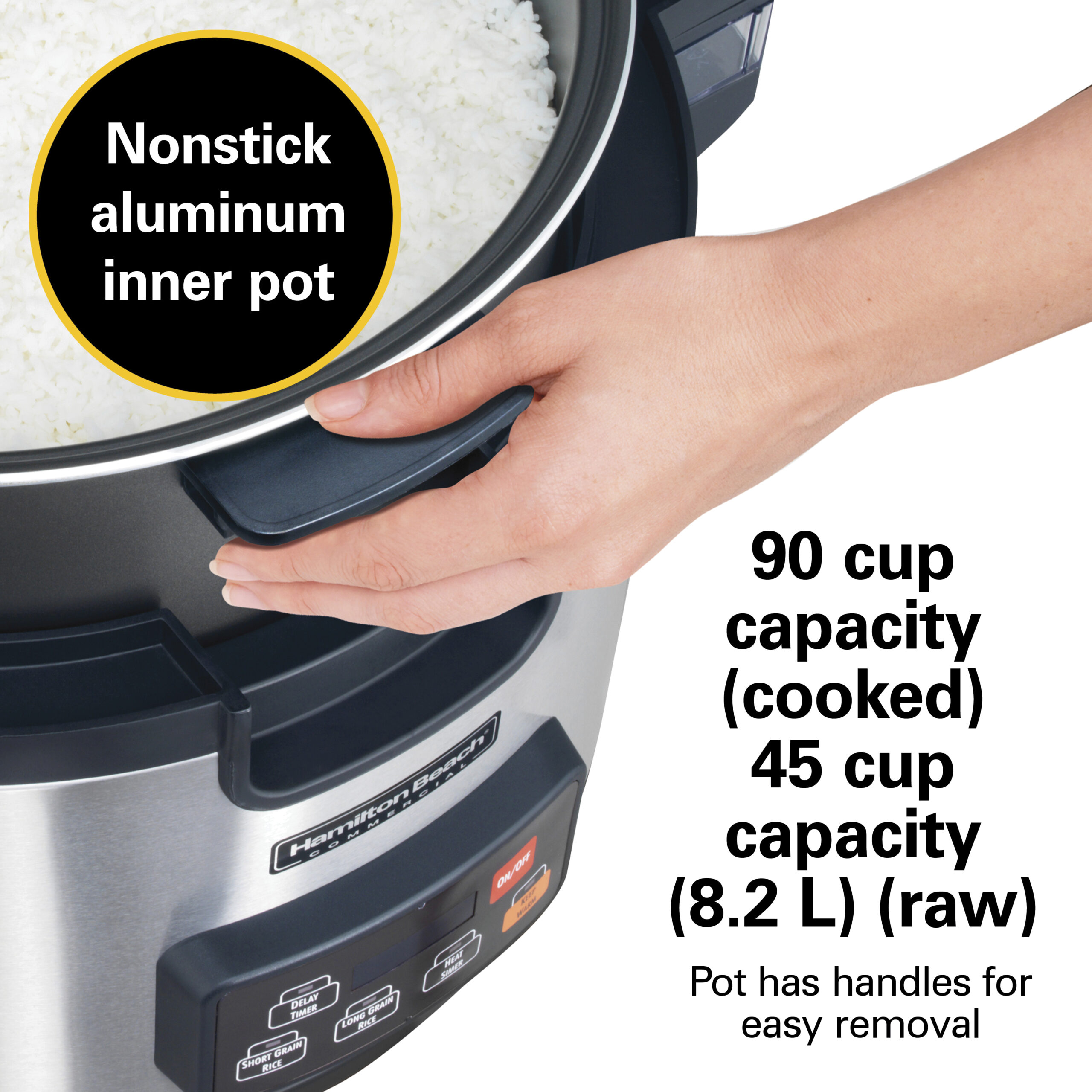
Insert the inner cooking pot into the base, ensuring it sits level and fully seated. A slightly tilted pot causes uneven heating and poor results—your Hamilton rice cooker depends on perfect contact between the pot and heating element. The pot should drop in smoothly without resistance; if it feels stuck, remove and reposition it. Check that the pot’s bottom is clean and dry for optimal heat transfer.
Add Water Last to Preserve Measured Quantities
Transfer rinsed rice to the inner pot first, then add the corresponding water. Adding water first can displace rice and alter your precise measurements—water pushes grains to the sides, effectively reducing your rice quantity. Level the rice gently with the back of a spoon—no need to pack or compress the grains. This technique ensures your carefully measured ratios remain intact.
Lid Lock Check: Seal in Essential Steam
Close the lid firmly until you hear the distinctive click. An improperly sealed lid allows steam to escape, resulting in undercooked rice. Run your finger around the lid’s edge to confirm no gaps exist—steam leakage is the most common cause of cooking failures. The lid should feel secure and show no movement when gently pressed. This airtight seal creates the pressurized environment your Hamilton rice cooker needs to function properly.
Start Cooking Process with One-Button Simplicity
Single Button Operation: Hamilton’s Foolproof Design
Plug the cooker into a stable outlet and press the white cook button. The cook indicator light illuminates immediately, signaling the cycle has begun. No additional settings or timers required—Hamilton’s simplicity is intentional. The appliance automatically monitors temperature and switches to warm mode when cooking completes. This straightforward operation makes your Hamilton rice cooker perfect for beginners while still delivering professional results.
Hands-Off Cooking Phase: Resist the Urge to Peek
Resist opening the lid during cooking—this releases essential steam and drops the internal temperature, extending cook time and creating uneven results. The sealed environment needs consistent heat and moisture throughout the cycle. Set a timer for 20 minutes (white rice) or 40 minutes (brown rice) as a reminder not to check. Trust the Hamilton rice cooker’s automatic system—it knows precisely when your rice is done.
Automatic Transition to Warm: Never Overcook Again
When rice reaches perfect doneness, the cooker automatically switches to warm mode. The cook light extinguishes and the warm light activates. This intelligent transition prevents overcooking while keeping rice ready to serve for hours. Unlike stovetop methods that require constant monitoring, your Hamilton rice cooker manages the entire process without intervention. The warm function maintains ideal serving temperature without drying out your rice.
Optimize Cooking Results with Pro Techniques
Rest Period Benefits: Complete the Cooking Process
After the cook cycle completes, let rice rest undisturbed for 5-10 minutes. This crucial step allows remaining moisture to distribute evenly throughout the pot, eliminating wet spots and creating uniformly fluffy grains. During this period, residual heat continues cooking the rice gently. Skipping this rest leads to inconsistent texture—some grains mushy, others underdone.
Fluffing Technique: Separate Grains Without Crushing
Use the provided rice paddle or a fork to gently fluff rice from bottom to top after the rest period. This separates grains and releases excess steam, preventing the bottom layer from becoming compacted or soggy. Insert the utensil all the way to the bottom, then lift straight up in one motion—don’t stir or mash. Proper fluffing transforms dense rice into light, individual grains that restaurant chefs would envy.
Steam Vent Awareness: Prevent Kitchen Messes
Position the cooker away from cabinets during operation. The steam vent on the lid releases hot vapor throughout cooking—adequate clearance prevents condensation damage to surrounding surfaces. Maintain at least 6 inches of space above the vent. This simple placement precaution keeps your kitchen clean and prevents water spots on overhead cabinets that can occur with prolonged steam exposure.
Steam Food While Cooking Rice for Complete Meals
Dual-Purpose Design: Maximize Your Hamilton Rice Cooker
The Hamilton 37518’s steaming basket sits above the rice, letting you cook vegetables, fish, or dumplings simultaneously. This maximizes efficiency and creates complete meals in one compact appliance. Place the steaming basket on the inner pot before adding rice—ensure it sits securely on the pot’s rim. The rising steam from the cooking rice perfectly cooks your additional ingredients without extra energy or cleanup.
Timing Guidelines: Coordinate Multiple Components
Add quick-cooking vegetables like broccoli or snap peas during the last 10-15 minutes of the rice cycle. Delicate fish needs only 8-10 minutes, while hearty vegetables like carrots can steam the entire cycle. Check the steaming basket periodically by lifting the lid quickly—replace immediately to minimize heat loss. This timing precision ensures all components finish cooking simultaneously for a perfectly coordinated meal.
Liquid Adjustments: No Extra Water Needed
When steaming above rice, no additional water is required in your Hamilton rice cooker. The rice’s cooking liquid provides ample steam for the upper compartment. Ensure the steaming basket doesn’t touch the rice below—maintain at least 1 inch of clearance. Overfilling the steamer basket blocks steam circulation, so arrange food in a single layer for even cooking. This efficient design eliminates guesswork when preparing multi-component meals.
Clean and Maintain Your Hamilton Rice Cooker Properly

Post-Cooking Cool Down: Prevent Damage
Always unplug the cooker and let it cool completely before cleaning. The inner pot retains heat for 15-20 minutes after cooking—attempting immediate cleanup risks burns and thermal shock to components. Wait until the warm light turns off and the unit feels cool to the touch. This cooling period also allows residual moisture to evaporate, making cleaning easier and preventing water spots.
Inner Pot Cleaning: Preserve Non-Stick Surface
Remove the pot and wash with warm, soapy water using a soft sponge. Avoid abrasive cleaners that scratch the non-stick surface—steel wool or harsh scouring pads create grooves where rice sticks during future cooking. For stuck grains, soak for 10 minutes before gentle scrubbing. Never place the inner pot in the dishwasher, as high heat and harsh detergents degrade the non-stick coating over time.
Base Unit Care: Ensure Longevity
Never immerse the base unit in water—this electrical component requires careful cleaning. Instead, wipe the exterior with a damp cloth and dry thoroughly. Check the heating element for stray rice grains or debris before next use—these can burn and affect performance. Use a soft brush to remove any particles from the heating plate. Proper base maintenance prevents malfunctions and extends your Hamilton rice cooker’s lifespan significantly.
Master these fundamentals and your Hamilton rice cooker becomes your most reliable kitchen companion. Perfect rice emerges consistently with minimal effort, while the steaming capability transforms simple grains into complete, nutritious meals. The key lies in precise measurements, proper technique, and respecting the appliance’s straightforward design. Implement these practices to unlock your Hamilton rice cooker’s full potential and enjoy flawless results every time you press that single cook button.