
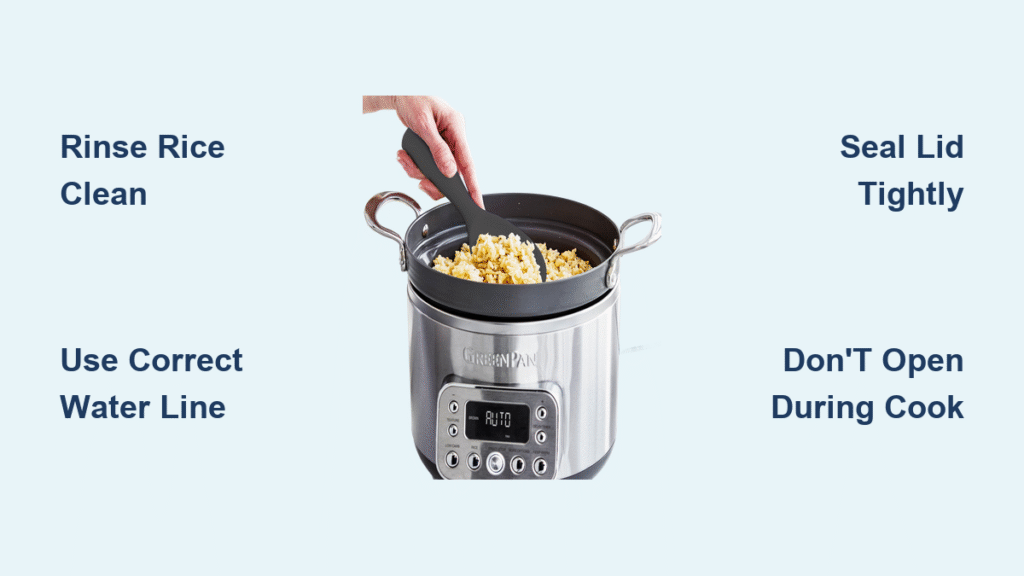
You just unboxed your GreenPan Elite 10-Cup Carb-Reducing Rice Cooker, ready to serve restaurant-quality grains with up to 37% fewer carbohydrates. But between the 14 preset functions and that mysterious carb-reducing tray, you’re staring at the control panel wondering where to begin. Don’t let the advanced features intimidate you—this guide delivers exactly how to use GreenPan rice cooker functions properly from day one. In under five minutes, you’ll transform from confused newbie to confident grain master.
Whether you’re cooking perfect jasmine rice for tonight’s takeout or steel-cut oats for tomorrow’s breakfast, these precise steps eliminate guesswork. You’ll harness the carb-reducing technology, decode indicator lights, and avoid common pitfalls that ruin rice texture. Forget generic manuals—this is the practical roadmap your shiny new appliance never came with.
Unbox and Prep Your GreenPan Elite Correctly
Wash all removable parts before first use—the cooking bowl, carb-reducing tray, steamer insert, measuring cup, and rice spatula are completely dishwasher-safe. Skip this step and residual manufacturing oils could affect your first cook. The stainless steel exterior only needs a quick wipe with a damp cloth—never submerge the main unit.
Claim your counter space wisely since the cooker measures 13.3 inches long and 10.6 inches wide. Position it away from walls to allow proper steam venting, and use the built-in cord wrap for tidy storage when not in use. That 8.13-pound unit stays firmly planted during operation, so no need to worry about vibrations.
Verify your accessories match the specs before cooking: the 8.25-inch carb-reducing tray must sit flush inside the 10-cup cooking bowl, while the steamer insert doubles for veggies. Everything nests neatly for storage—losing that specialized tray means losing carb-reduction capability.
Perfect Your First Rice Cook Immediately
Always measure rice with the included cup—standard kitchen cups deliver inconsistent results. Two critical facts: one cup of uncooked rice yields roughly three cups cooked, and the water level indicators inside the bowl correspond directly to this specific cup size. Guessing measurements causes mushy or crunchy disasters.
Rinse rice until water runs crystal clear to remove excess starch. Swirl rice in the bowl under running water, drain carefully through the lid’s steam vent, and repeat 2-3 times. Skipping this step creates gummy rice that clogs the carb-reducing tray. For brown rice, extend rinsing to eliminate bran residue.
Fill water precisely to the marked line matching your rice quantity. Two cups of rice? Fill to the “2” indicator. Overfilling causes boil-overs, while underfilling risks burning—especially with the carb-reducing tray in place. The fuzzy logic system relies on these exact ratios for perfect texture.
Seal the tempered glass lid with a firm click to activate the steam lock. That clear lid lets you monitor cooking without lifting (which releases crucial steam), and the vent prevents messy overflows. Never force the lid—it should close smoothly when aligned properly.
Activate Carb-Reduction Mode Properly

Place the carb-reducing tray directly on rice AFTER adding water but before starting the cycle. This 8.25-inch tray must sit completely flat and cover all rice grains—tilting it compromises the 37% carb reduction claim. If rice peeks through edges, redistribute for full coverage.
Select texture FIRST, then preset using the control panel. Choose “soft” for sushi rice, “medium” for everyday meals, or “firm” for distinct grains like basmati. The fuzzy logic automatically adjusts cooking parameters based on this selection—wrong texture settings sabotage carb reduction.
Press start IMMEDIATELY after closing the lid to prevent water absorption. The cooker begins temperature calibration within seconds, and delays cause uneven cooking. During the cycle, you’ll hear subtle shifts as it moves through precise heat phases—this is the carb-separation process working.
Never open the lid during cooking—steam loss interrupts the carb-reduction chemistry. The tempered glass lets you check progress without lifting, but resist the urge until the cycle completes. Premature opening is the #1 reason users fail to achieve reduced-carb results.
Troubleshoot Light Signals Like a Pro

Solid blue light means normal cooking—no action needed. This indicates the fuzzy logic system is actively managing temperature phases for optimal results. Disturbing the process now risks texture issues.
Slow blinking signals keep-warm mode after cooking finishes. Your rice stays perfectly moist for hours without drying out, but don’t leave it beyond 12 hours or quality degrades. Press any button to reactivate cooking functions.
No lights when plugged in? Check three things: 1) Power cord fully inserted into unit, 2) Outlet working with another device, 3) Circuit breaker not tripped. The Elite model requires standard household voltage—no special outlets needed.
Rapid blinking during operation means critical error—usually an unsealed lid or low water. Immediately add ¼ cup water if visible, reseat the lid firmly, and restart. Ignoring this risks burning and voids warranty coverage.
Fix Common Cooking Disasters Now
Gummy rice? You skipped proper rinsing or lifted the lid mid-cycle. Always rinse until water runs clear, and resist checking rice for the first 15 minutes. For sticky results, reduce water by 10% next time—especially with short-grain varieties.
Burnt bottom layer happens when the carb-reducing tray isn’t level or metal utensils scratched the Thermolon coating. Never use metal tools—the included spatula preserves the diamond-infused ceramic surface. Replace visibly damaged trays immediately.
Overflow messes stem from overfilling beyond 10 cups uncooked rice or clogged steam vents. Clean the vent weekly with a toothpick, and never exceed the “10” water line. For foamy grains like quinoa, add a teaspoon of oil to suppress bubbling.
Hard centers in brown rice indicate insufficient water or skipped soaking. Use the “brown rice” preset (45-50 minutes), fill to the “medium” water line, and soak grains 30 minutes first. The fuzzy logic needs these exact conditions to soften bran properly.
Clean Components Without Damage

Wait 30 minutes before handling—the stainless steel exterior cools fast, but the lid, steam vent, and bowl retain heat dangerously. Never immerse the main unit, but all accessories go straight into the dishwasher for effortless cleanup.
Scrub the carb-reducing tray weekly even if dishwasher-safe. Starch buildup in its perforations cripples carb reduction. Use a soft brush on the textured underside where rice particles lodge—this maintains the 37% reduction efficacy.
Wipe control panel with DRY cloth only—moisture seeps into electronics. Avoid sprays or wipes; a microfiber cloth removes fingerprints from the stainless housing without scratching the PFAS-free finish.
Descale monthly in hard water areas with a 50/50 white vinegar solution. Run a full cycle without rice, then rinse twice with plain water. Mineral deposits from tap water gradually impair temperature sensors and fuzzy logic accuracy.
Your GreenPan Elite transforms from confusing gadget to daily essential when you master these precise techniques. Start with basic white rice using the “medium” texture setting to build confidence, then progress to carb-reducing mode and specialty grains. Within weeks, you’ll effortlessly serve perfect rice that’s genuinely healthier—proving exactly how to use GreenPan rice cooker features to their full potential. That 37% carb reduction isn’t marketing fluff when you follow these steps—it’s your new kitchen reality.