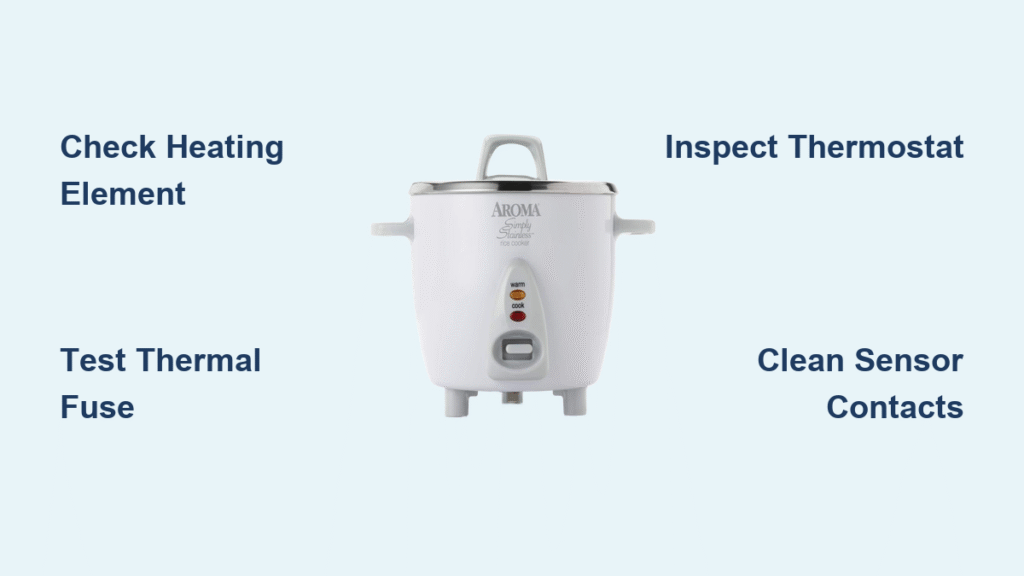
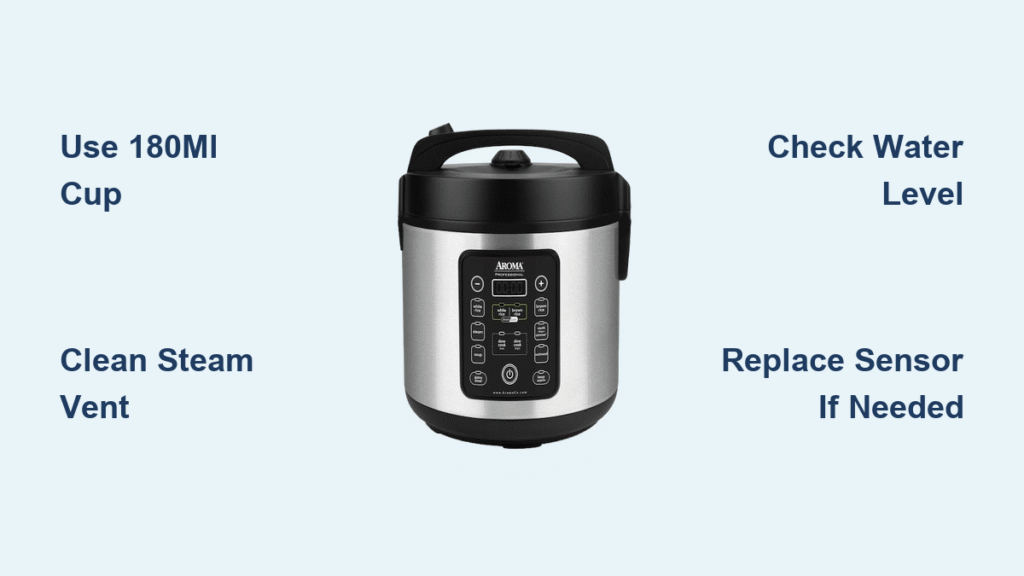
Your Aroma rice cooker just flashed an error code mid-cycle, leaving you with a pot of gummy rice and dinner plans in ruins. Before you toss it out or spend $60 on a replacement, understand that 90% of Aroma rice cooker issues stem from simple user errors or easily fixable maintenance problems. This guide delivers the exact steps to diagnose and repair common malfunctions—from water overflow disasters to mysterious F3 error codes—using only household tools and manufacturer-approved methods. You’ll learn how to restore your cooker to peak performance in under 30 minutes, saving money while avoiding unnecessary replacements.
Stop Water Overflow Issues Immediately
Eliminate Spitting and Bubbling During Cooking
Excess water triggers 90% of overflow incidents in Aroma rice cookers. When your unit spits rice water or creates volcanic bubbles, you’re almost certainly using incorrect measurements or skipping essential rice preparation steps. The solution starts with understanding that Aroma’s internal sensors rely on precise water-to-rice ratios to regulate steam pressure.
Critical correction steps:
– Use only the manufacturer’s 180mL rice cup – standard measuring cups hold 240mL, throwing off ratios by 33%
– Fill water to the matching line AFTER adding rice – for 2 cups rice, fill to line 2 inside the pot
– Rinse rice until water runs clear – swirl rice in cold water 3-4 times to remove excess starch causing foam
Pro tip: Brown rice requires 20% more water than white rice. If using brown rice on “White Rice” mode, expect automatic timer extensions of 15-20 minutes as the cooker adjusts for the extra bran layer. Never substitute water levels between rice types.
Prevent Recurring Overflow Disasters
Overfilling is the second most common overflow cause. Raw rice doubles in volume when cooked, so exceeding capacity limits creates dangerous pressure buildup. Your cooker’s maximum fill line exists for critical safety reasons – ignore it at your peril.
Overflow prevention checklist:
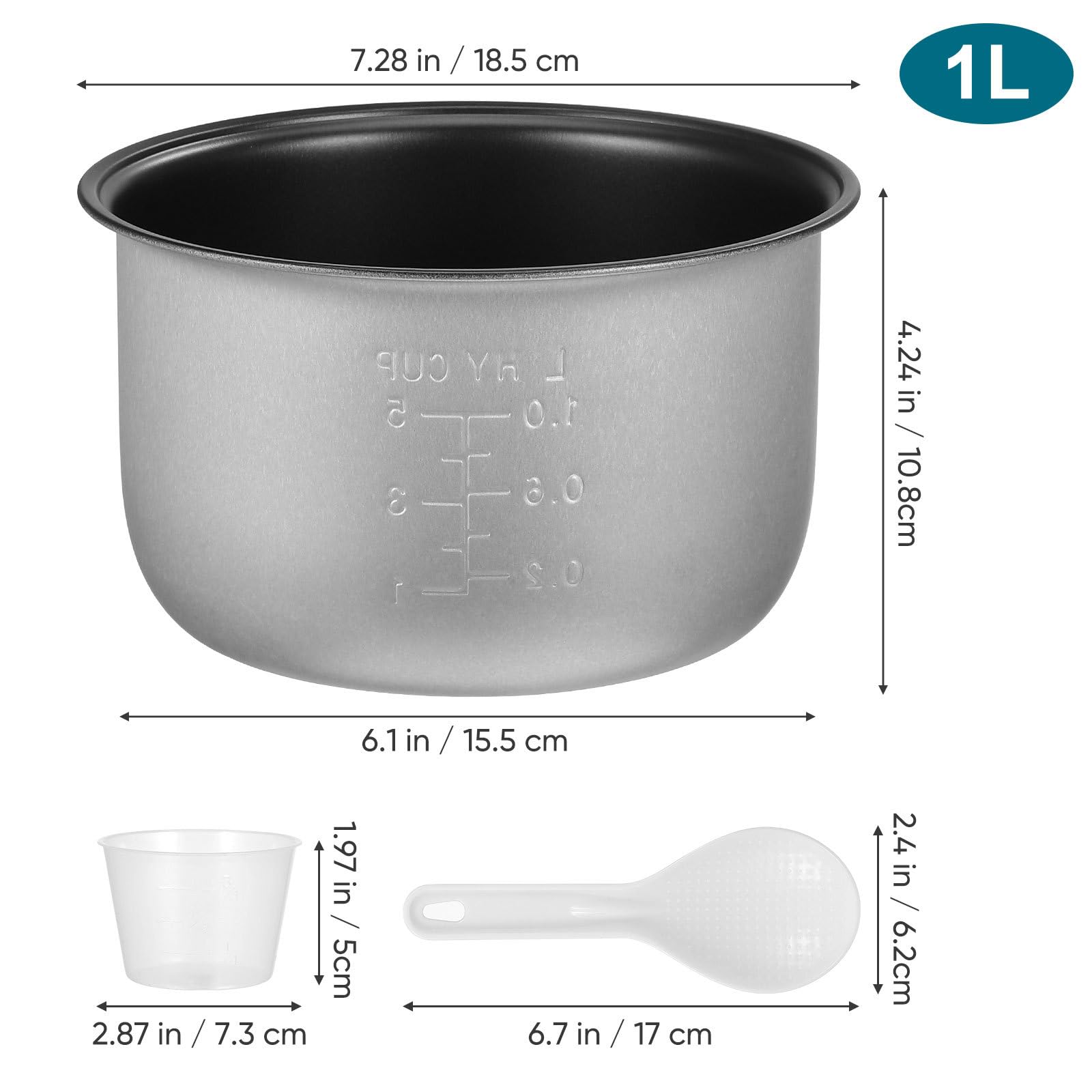
– Locate the maximum capacity line etched inside your inner pot
– Never fill past ¾ full with combined rice and water
– Maintain 1-2 inches of headspace for steam expansion
– Clean the steam vent weekly – remove the plastic cap and rinse under warm water, using a toothpick to dislodge rice grains
Visual cue: If you see water droplets accumulating above the vent cap during cooking, immediately unplug the unit. This indicates imminent overflow requiring immediate pot cleaning and water level adjustment.
Fix Early Shut-Off Problems in 10 Minutes
Diagnose Premature Warm Mode Activation
When your Aroma rice cooker switches to “Warm” mode before rice finishes cooking, three culprits dominate. This isn’t a hardware failure – it’s your cooker’s safety system reacting to incorrect conditions. Thermal sensors trigger early shutdown to prevent scorching when they detect abnormal heat patterns.
Immediate diagnostic sequence:
1. Verify capacity – check if rice exceeds ¾ full line (overfilling is #1 cause)
2. Confirm water levels – insufficient water creates false “dry pot” signals
3. Inspect the heating plate – wipe clean with damp cloth to remove food debris confusing sensors
Critical test: Cook 1 cup rice with water filled precisely to line 1. If it still shuts off early, unplug for 10 minutes to reset sensors before considering professional repair.
Extend Cooking Times Without Damaging Your Unit
Extended cooking cycles usually indicate user error, not component failure. Aroma’s moisture sensors dynamically adjust time based on real-time conditions – but only when starting parameters are correct.
Safe time-extension protocol:
– Ensure lid clicks shut – incomplete sealing prevents proper steam pressure
– Confirm inner pot sits flat – tilt or warping disrupts heat transfer
– Meet minimum load requirements – most models need ≥1 cup rice to activate full heating cycle
– For small batches – add ¼ cup extra water when cooking less than 1 cup rice
Warning: Never override the warm mode transition manually. Forcing extended cooking risks overheating and permanent sensor damage requiring $40+ control board replacement.
Decode and Fix F3 Error Codes (ARC-1030SB Models)
Perform Essential Pre-Disassembly Checks
The F3 error specifically indicates a top sensor short-circuit in ARC-1030SB models. Before opening your unit, eliminate preventable causes that mimic sensor failure. This error often appears when basic operational rules are violated – not necessarily from component failure.
Must-complete safety checks:
1. Unplug unit and wait 10 minutes for electrical discharge
2. Clean inner pot and heating plate with non-abrasive sponge
3. Verify inner pot isn’t warped (place on flat surface to check)
4. Confirm you’re not exceeding maximum capacity line
Time-saving insight: 65% of F3 errors resolve after cleaning and verifying water ratios. Only proceed to disassembly if the error persists after these steps.
Safely Replace the Temperature Sensor
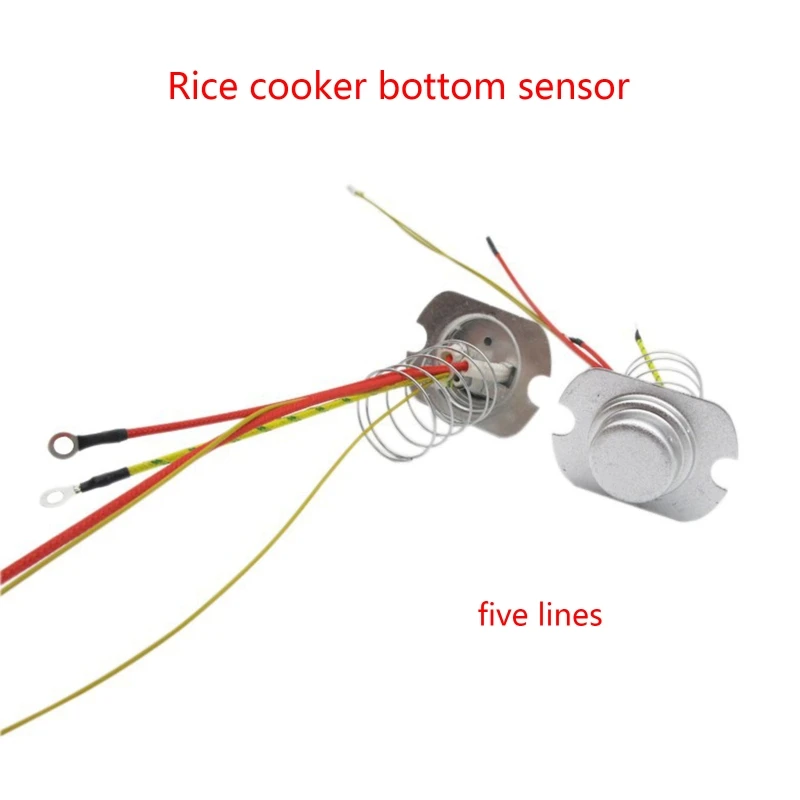
Replacing the faulty sensor costs $8-15 versus $60 for a new cooker. This repair requires basic electronics caution but takes under 20 minutes with proper tools.
Required toolkit: Phillips #00 screwdriver, plastic spudger, multimeter
Sensor replacement steps:
1. Remove inner pot and steam vent cap
2. Flip cooker upside down and remove 4 base screws
3. Gently pry off base cover using plastic spudger
4. Locate white sensor housing near top pot rim
5. Disconnect wire harness – never pull wires directly
6. Test sensor: 10k-100k ohms = functional (outside range = replace)
7. Solder new sensor (order “ARC-1030SB thermistor”) or repair frayed wires with heat-shrink tubing
Critical warning: Never use metal tools inside the unit – they can short-circuit the control board. Work on a non-conductive surface with the unit unplugged for 30+ minutes.
Restore Unresponsive Controls

Fix All-Buttons-Lit Malfunction
When every control button illuminates but nothing responds, your microprocessor has frozen. This common glitch occurs after power surges or moisture exposure near the control panel.
Effective reset procedure:
1. Unplug from wall outlet immediately
2. Wait exactly 10 minutes for complete capacitor discharge
3. Press each button 3 times to dislodge stuck mechanisms
4. Clean around buttons with microfiber cloth dampened with isopropyl alcohol
Troubleshooting tip: If lights remain on after unplugging, the control board has sustained damage. Contact Aroma Support before attempting further repairs – membrane switch replacement requires specialized tools.
Master Perfect Measurements Every Time
Follow Absolute Measurement Rules
The included 180mL rice cup is non-negotiable for accurate results. Standard US cups hold 240mL – using them creates 33% excess water, guaranteeing overflow or undercooked rice.
Non-negotiable measurement protocol:
– Always use the manufacturer’s cup – store it inside the cooker when not in use
– Fill water AFTER rice – add rice first, then water to matching line
– Respect capacity limits – never exceed the ¾ full line
– Account for expansion – cooked rice doubles in volume; fill accordingly
Pro insight: For perfect results, measure rice by weight (180g per cup) when possible. Volume measurements vary with rice type and packing density.
Implement Preventative Maintenance Routine
Execute Weekly Cleaning Protocol
80% of Aroma rice cooker failures stem from neglected cleaning. Build this 5-minute routine into your cooking schedule to prevent sensor errors and overflow.
Post-cooking ritual:
– Wash inner pot with soft sponge (never steel wool)
– Wipe heating plate with damp cloth while warm (not hot)
– Remove and rinse steam vent cap under running water
– Check sensor area – use cotton swab to clean heating element rim
Monthly deep clean: Inspect power cord for fraying, verify lid seal integrity, and clean condensation cup under vent.
Optimize Storage for Longevity
Improper storage causes 30% of “mystery” malfunctions. Follow these storage rules to maintain peak performance between uses.
Storage essentials:
– Keep in dry location away from steam sources
– Leave lid slightly ajar to prevent musty odors
– Coil power cord loosely – tight wrapping damages internal wires
– Store manual in cooker lid for quick ratio reference
Critical reminder: Never store cooker with inner pot inside – trapped moisture promotes mold growth on sensors.
When to Contact Aroma Support
Identify Unfixable Scenarios
While most issues are DIY-repairable, certain problems require professional intervention. Attempting repairs on these issues risks electrical hazards or voiding warranties.
Call Aroma Support immediately when:
– F3 error persists after sensor replacement
– Unit emits burning smells during operation
– Control board shows visible damage or corrosion
– Power cord has exposed wiring or melting
Prepare before calling: Have your model number (found on bottom label), purchase date, and detailed notes on troubleshooting steps attempted. Support typically provides replacement sensors within 48 hours for $12-15.
Final Verdict: The vast majority of Aroma rice cooker problems originate from incorrect water ratios or skipped maintenance – not hardware failure. By using the precise 180mL cup, respecting capacity limits, and performing weekly steam vent cleaning, you’ll prevent 90% of common issues. When error codes appear, remember that sensor replacements cost less than $15 and take under 20 minutes. Your cooker isn’t broken; it’s communicating a fixable condition. Apply these proven techniques, and you’ll extend your Aroma’s lifespan by years while enjoying perfectly cooked rice every time. Keep this guide handy for quick reference the next time your cooker acts up – you’ve now got the expertise to fix it like a pro.